

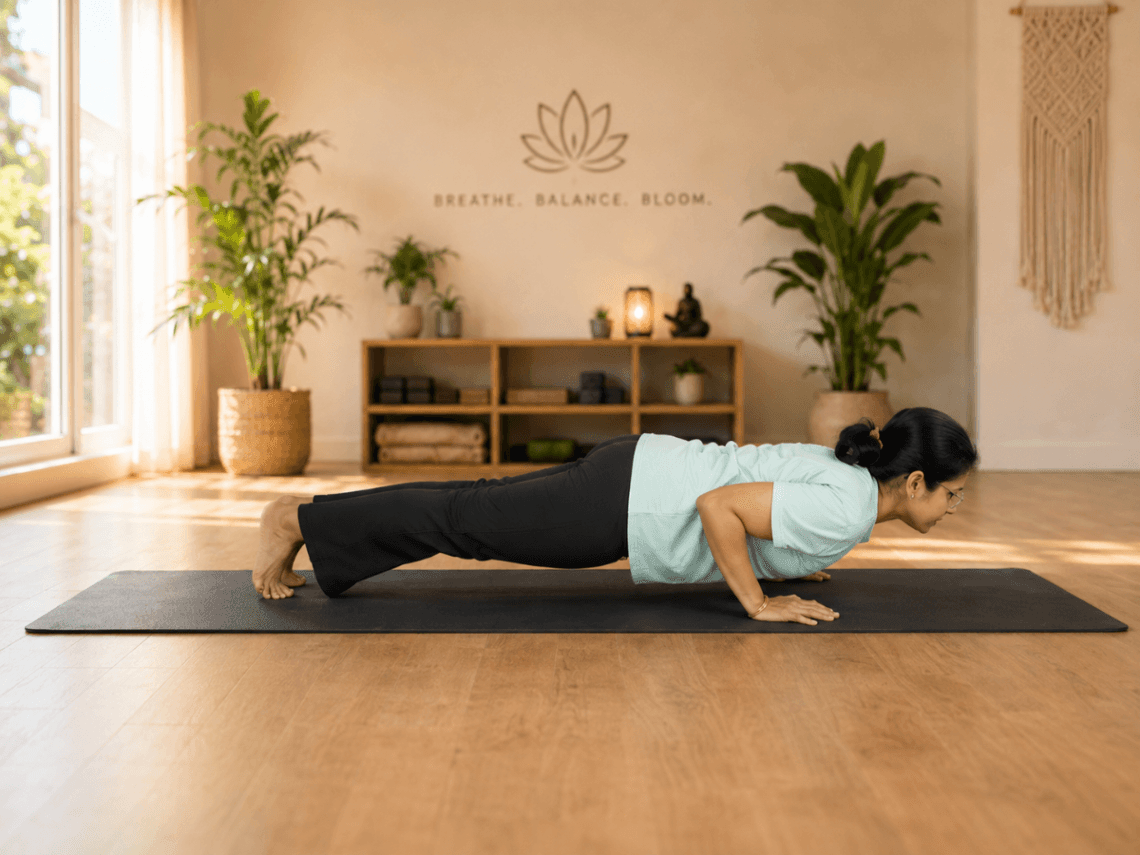




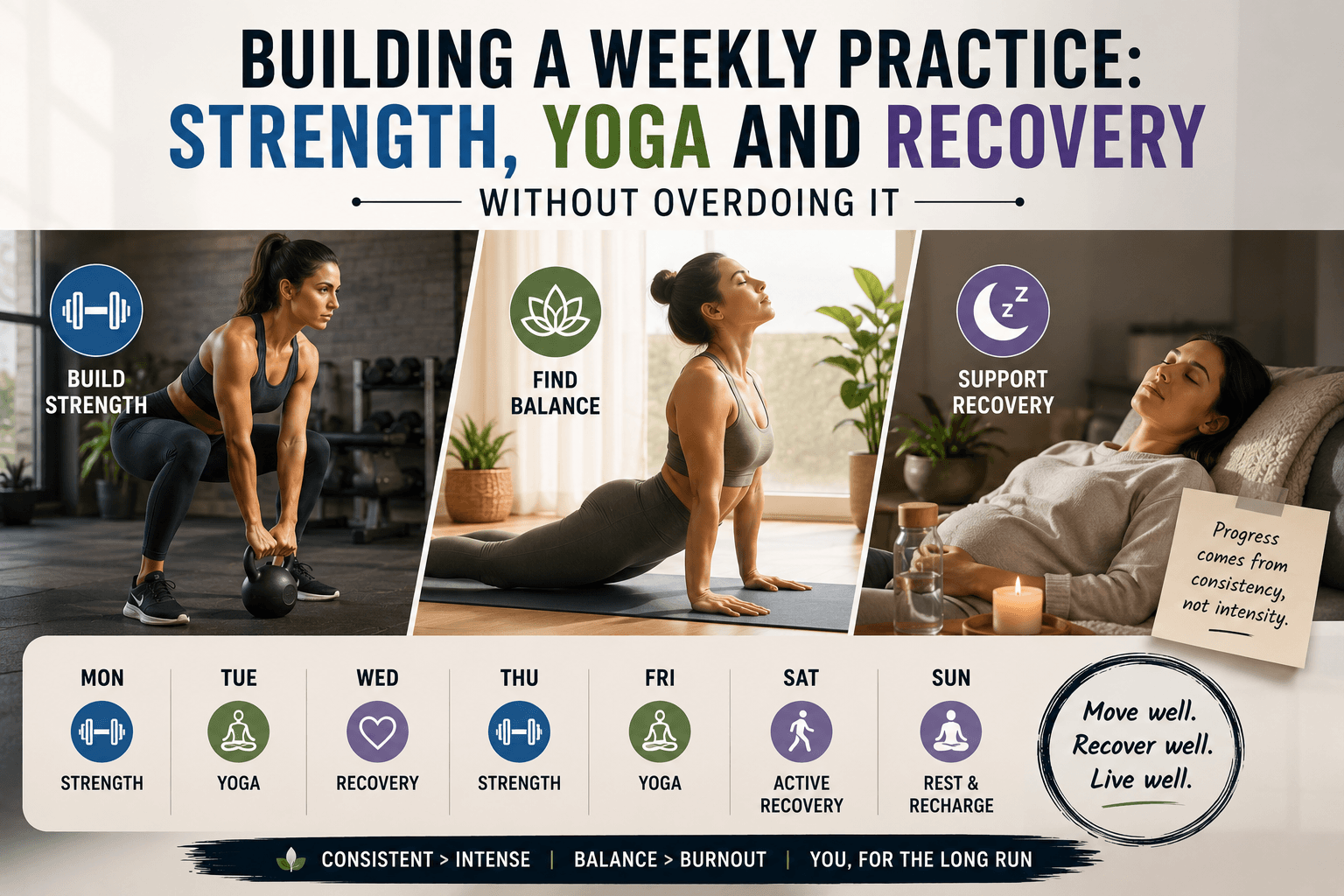
Building a weekly practice: strength, yoga and recovery without overdoing it
Most people design a week they've never once completed. Here's a smaller one that actually works — built on what the guidelines genuinely ask for, not what the internet implies.
The short answer
A sustainable week looks like two strength days, two or three movement days, and at least one day of complete rest — not five hard sessions. The CDC's guideline for adults is 150 minutes of moderate activity plus muscle-strengthening on two or more days a week, which is considerably less than most people think they're supposed to be doing.
The piece almost everyone gets wrong: yoga on rest days is active recovery, not a rest day. Gentle movement helps you recover. It doesn't replace actually resting. Most weeks need both.
The week most people design, and why it fails
Here's the schedule that gets written on a Sunday evening, usually with real conviction. Strength Monday, Wednesday, Friday. Yoga Tuesday and Thursday. Long walk Saturday. Sunday for "mobility." Six days, no gaps, every base covered.
It lasts about nine days.
The problem isn't discipline, and it isn't that the plan is wrong on paper. The problem is that it was built by someone imagining a good week — decent sleep, no work crisis, nothing unexpected — and then applied to actual weeks, which are not like that. A schedule with no slack in it converts one missed session into a failed plan, and a failed plan into nothing at all. That's the real mechanism behind most abandoned routines, and it's why a smaller week that survives a bad Tuesday beats a bigger one that doesn't.
There's a second problem hiding underneath, and it's the one this article mainly exists to fix. That six-day plan has no recovery in it. Mobility on Sunday isn't recovery if you treat it as another box to tick — and a "personalized workout plan" that schedules something every single day has quietly decided rest is optional. It isn't.
What the guidelines actually ask for
Worth grounding this in something other than opinion. The CDC's physical activity guidelines for adults, drawn from the Physical Activity Guidelines for Americans, ask for two things each week:
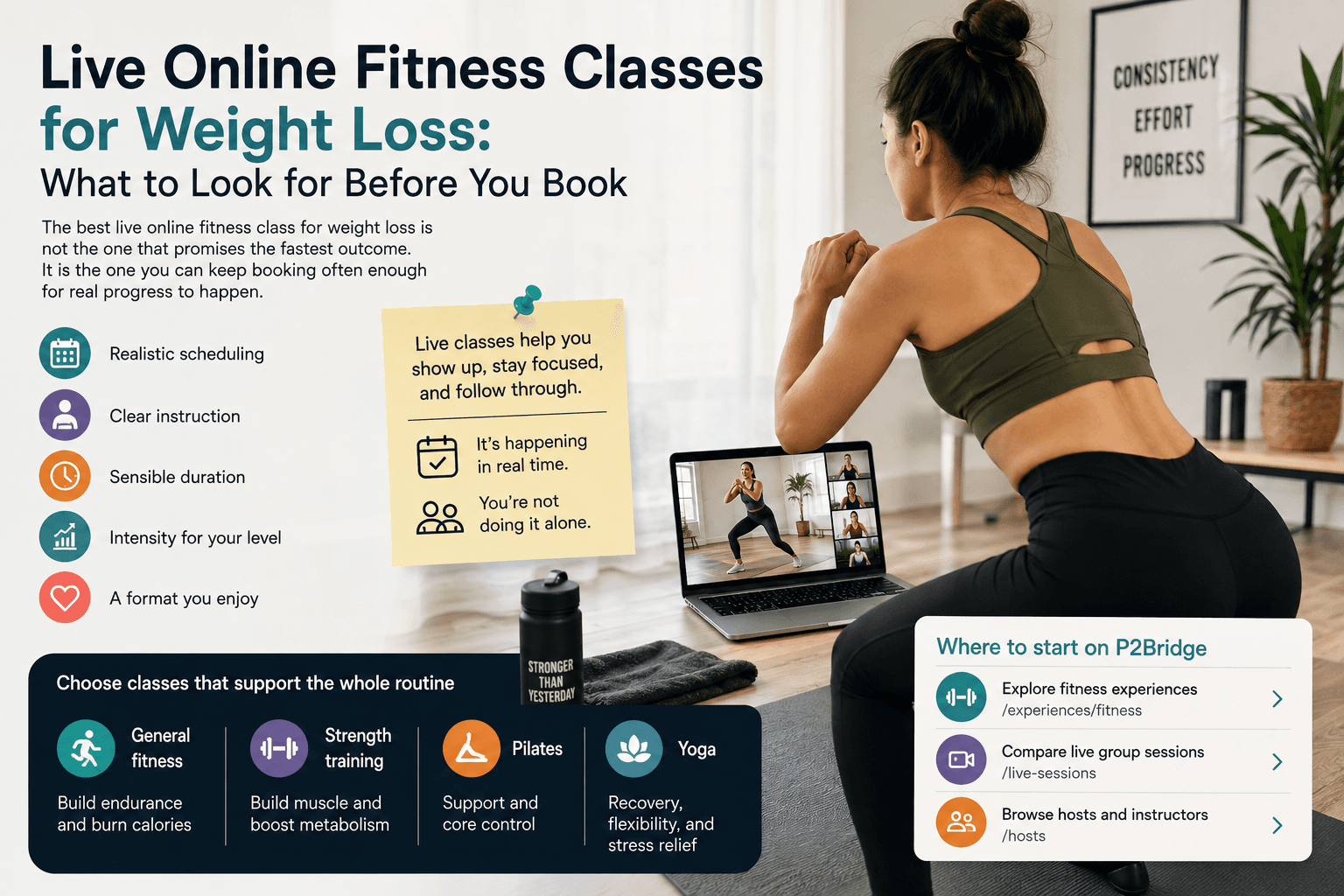
- 150 minutes of moderate-intensity aerobic activity — which can be broken up however you like, commonly 30 minutes across five days
- Muscle-strengthening activity on two or more days, working all the major muscle groups
Read that second line again, because it's the one that matters here. Two days. Not four, not six. The public-health baseline for strength training is two sessions a week that hit the major muscle groups, and the CDC's own guidance on what counts is similarly unfussy — one set of 8 to 12 repetitions is the entry point, with two or three sets for additional benefit.
For older adults specifically, the guidelines add balance training as a third component alongside aerobic and strengthening work, which is a genuine argument for including something like standing yoga or a mobility session rather than treating it as optional extra credit.
Some reassurance, if you need it
According to CDC survey data, only around a quarter of US adults meet both the aerobic and muscle-strengthening guidelines. If you're reading this feeling behind, you are comfortably in the majority — and the bar you're trying to clear is lower than the fitness internet implies. Two real strength sessions and some walking puts you ahead of most people.
Active recovery is not a rest day
This is the single most useful correction in the article, and it's one that even fairly experienced people get wrong.
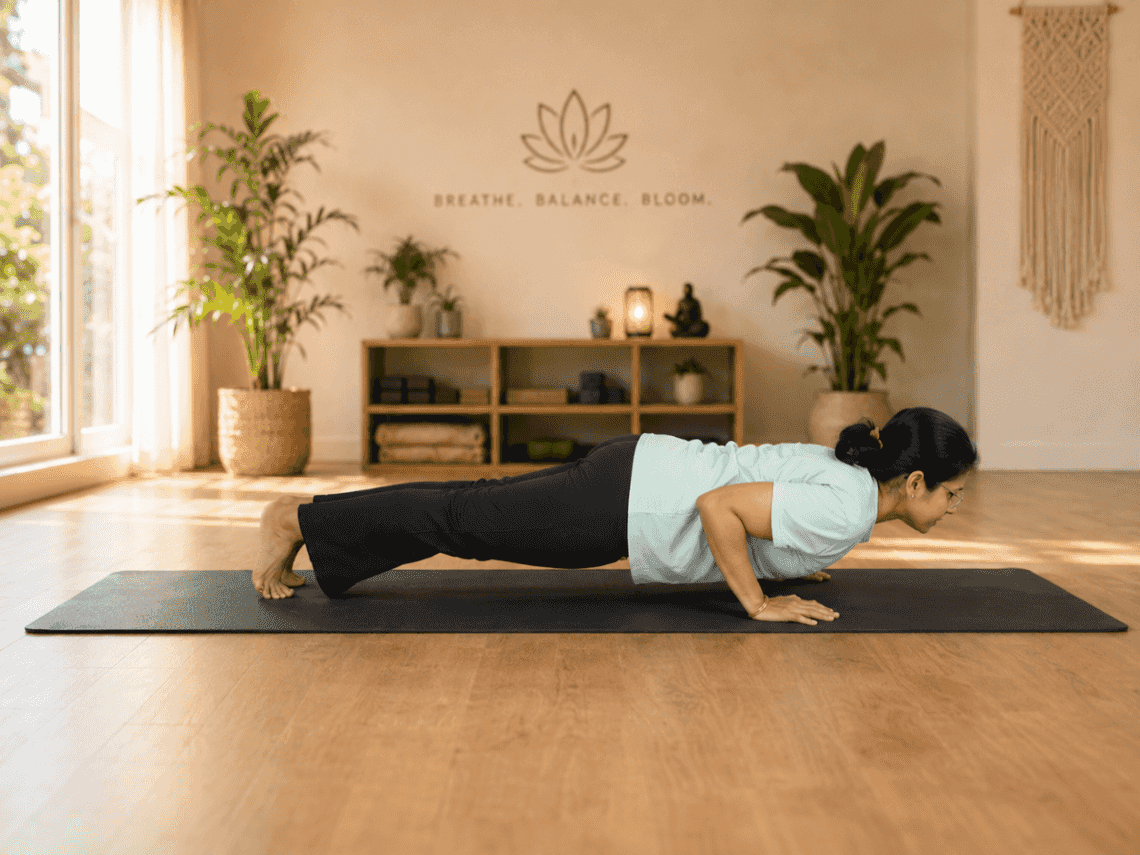
Active recovery means low-intensity movement on a day between harder sessions. Useful active recovery exercises include gentle yoga, an easy walk, mobility work, or light cycling — a recovery day workout should leave you feeling better than when you started, not more tired. It's genuinely useful: it keeps you moving, it often reduces stiffness, and psychologically it maintains the habit without adding fatigue. Yoga on rest days is one of the most common and sensible forms of this, and yoga for active recovery is a real, well-established practice rather than a marketing idea.
A rest day means you don't train. Not a light session. Not "just some stretching." Nothing structured at all.
Active rest days sit between the two: you're moving, but nothing about the session is demanding. Easy cardio recovery work — a walk, a slow cycle — belongs here just as much as gentle yoga does.
The confusion happens because the phrase "active rest day" gets used for both, and because a gentle session genuinely does feel restful compared to a hard one. But an active recovery day is still a day your body is doing something, and if every single day in your week has a session attached to it — even easy ones — you have built a seven-day training week and called it balanced. That's how people end up chronically tired while insisting they're taking it easy.
The week, mapped to real classes
Here's the CDC skeleton turned into something concrete: two strength days, movement days between them, and a genuine day off. Every class below is live and bookable, with real pricing and real review counts — these are virtual fitness classes with a real instructor watching, not recorded video you follow along to.
Treat it as a template, not a prescription. Shift the days around your life rather than the other way round.

Monday — Functional Bodybuilding
★★★★★5.0 (1 Review)Strength work built around biomechanics and movement quality rather than load for its own sake. Javier's own class notes are worth quoting: "Don't worry about your skill level. Here, you'll learn to move with ease." The class is tagged Advanced, so if you're genuinely new to structured strength work, start with the bodyweight options further down and come back to this.
Book Functional Bodybuilding — $10 group Javier's profile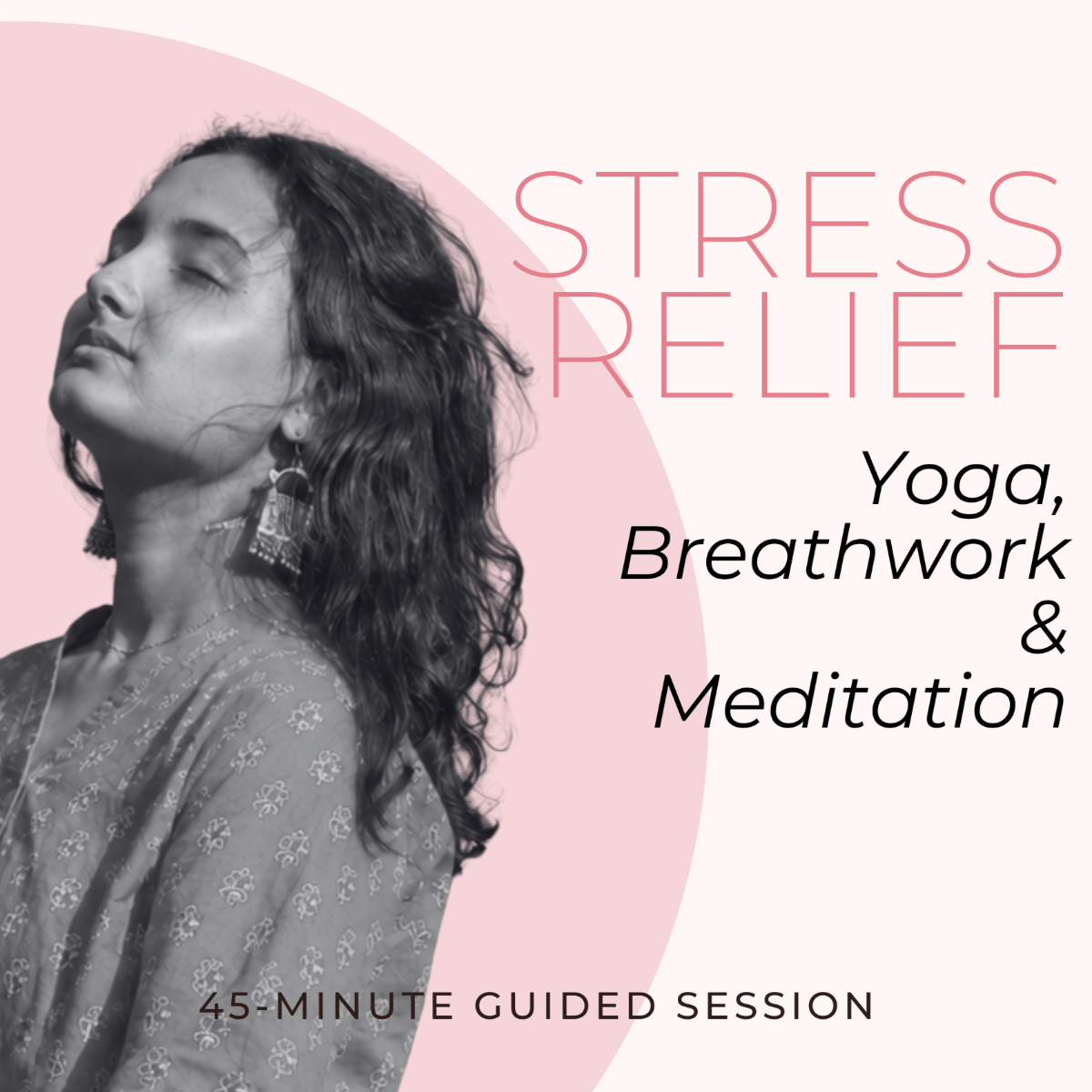
Tuesday — Stress Reset
★★★★★4.5 (4 Reviews)Breathwork, meditation and yogic relaxation — the day after a strength session is exactly where this belongs. It's low physical demand by design, which is the whole point of an active recovery day. Her class notes ask only for a quiet space and no prior meditation experience.
Book Stress Reset — $15 group Unnati's profile
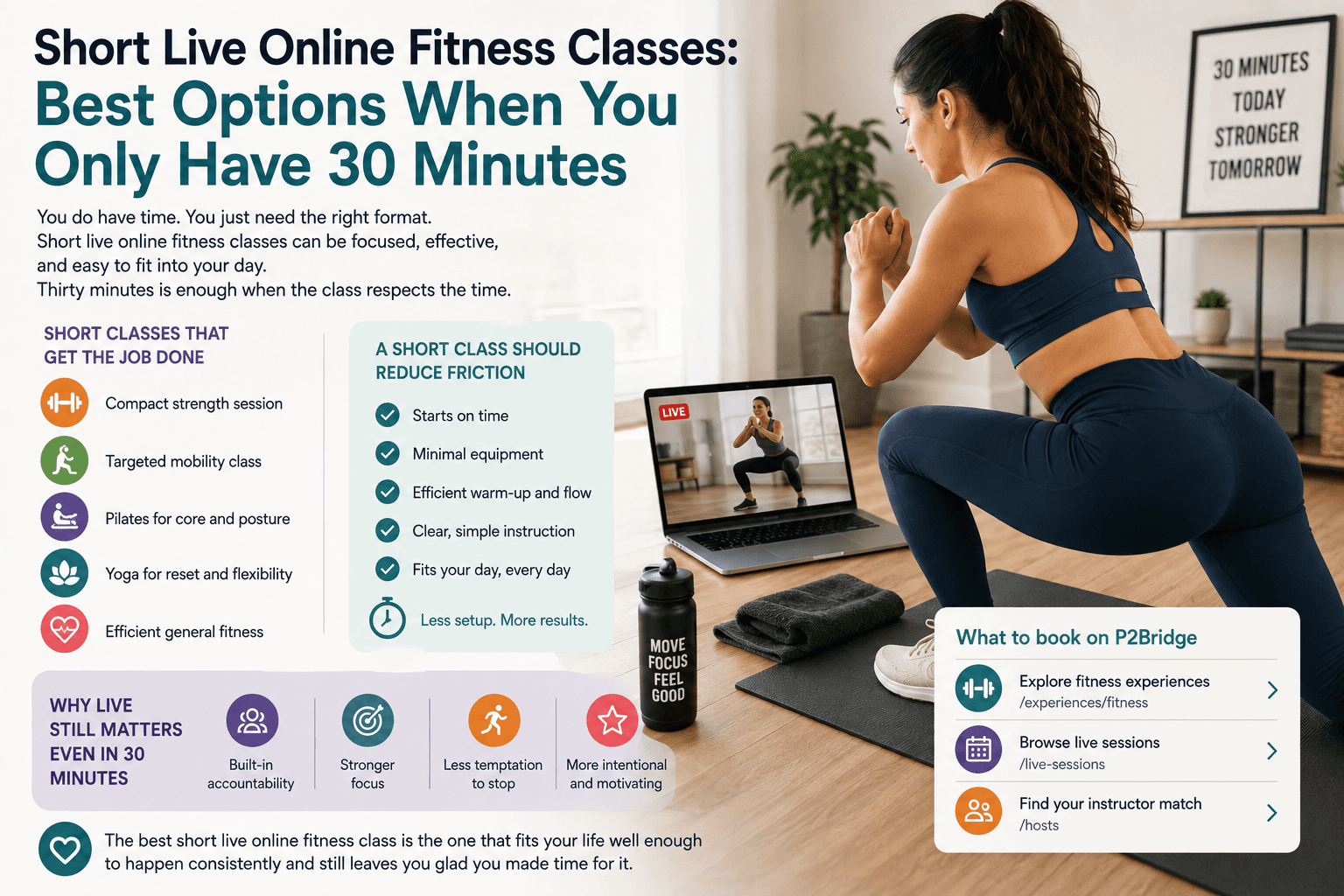
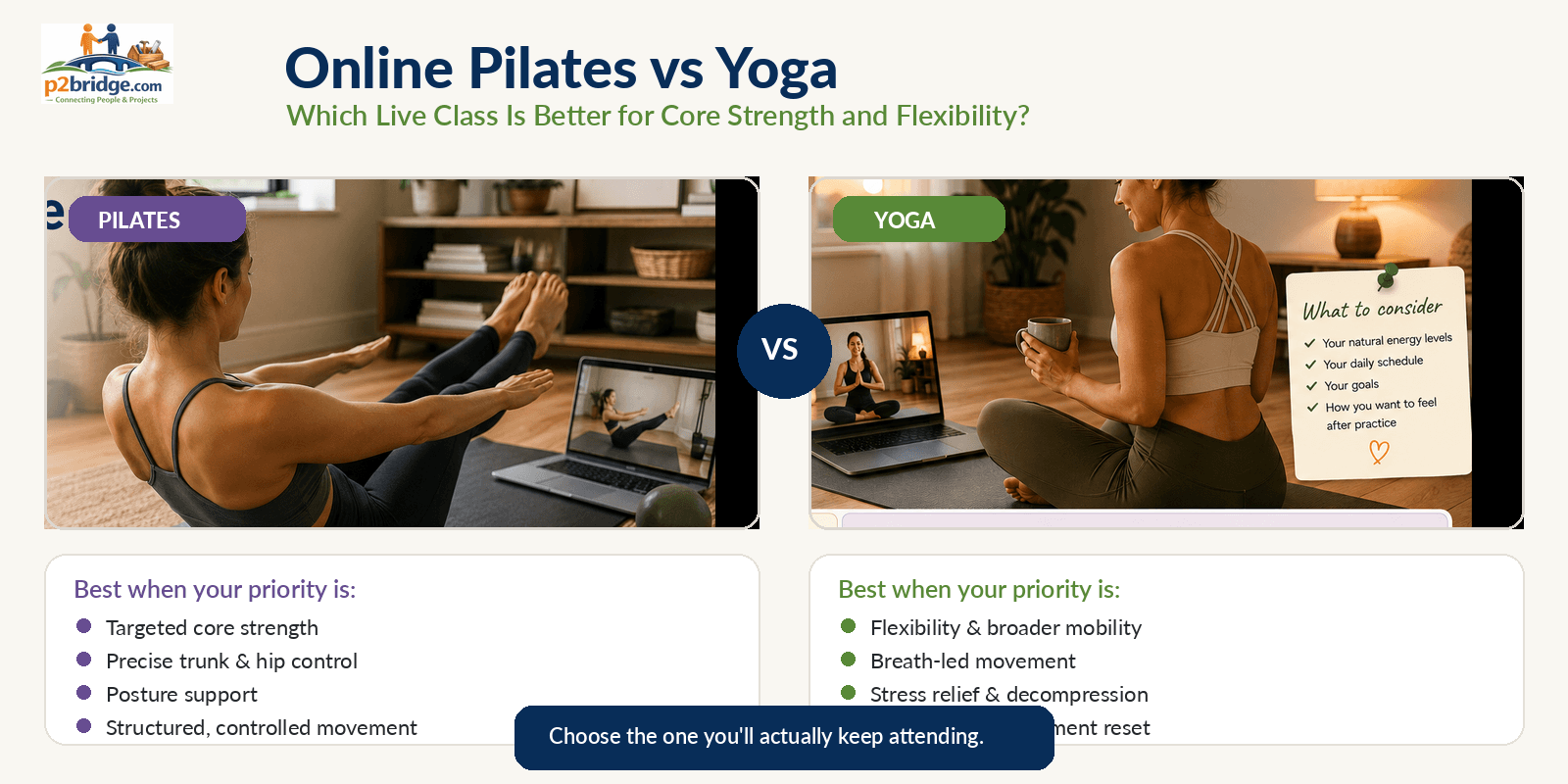
Wednesday — Yoga & Pilates Bodyweight
★★★★★4.9 (39 Reviews)The most-reviewed fitness host on the platform, at 39 reviews. A bodyweight yoga-Pilates blend sits usefully between a strength day and a recovery day — real work, no external load, and it counts toward the aerobic side of the guidelines rather than adding a third heavy session.
Book Yoga & Pilates — $10 group Rabab's profile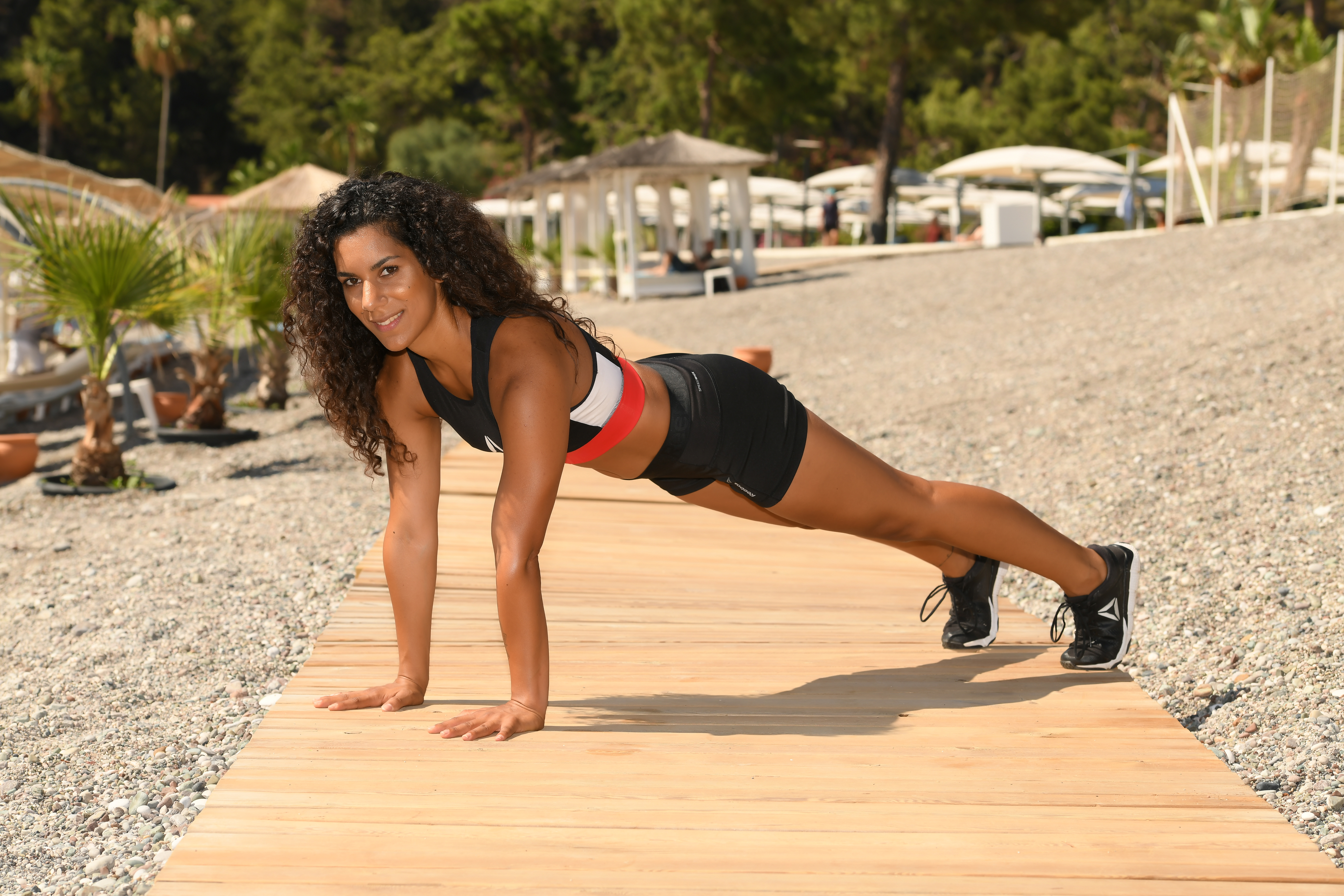
Thursday — Morning Mobility
★★★★★5.0 (8 Reviews)Hips, back, shoulders and spine — the areas that stiffen from both sitting and lifting. No equipment needed. Placed the day before your second strength session, this is a mobility warm up for the week's back half rather than a workout in its own right.
Book Morning Mobility — $18 group Sarah's profile
Friday — Home Workout Coach
★★★★★4.6 (27 Reviews)Your second — and per the guidelines, final necessary — strength session of the week. Structured home training with live form correction, no gym required. Also tagged Advanced, so the same caveat applies: build up to it rather than starting here cold.
Book Home Workout Coach — $17 group Younes's profile
Saturday — Beginner Vinyasa Flow
★★★★★4.9 (25 Reviews)A flowing, moderate-intensity session that contributes real minutes toward the aerobic guideline while being kind to a body that lifted on Friday. If Saturday's already busy, Yanina's 30-minute Chair Yoga Break ($20 private / $10 group) is the shortest thing on the platform and a perfectly legitimate substitute.
Book Vinyasa Flow — $10 group Yanina's profileSunday
Nothing. That's the entry. No class, no session, no "just a quick stretch." Sunday is the full rest day, and it's doing as much work for your week as Monday is. If the idea of a completely empty day makes you uneasy, that's worth noticing — it's usually a sign the rest day is exactly what's missing.
Start With Just the Two Strength Days
If the full week feels like too much, book only Monday and Friday first. Javier's Functional Bodybuilding runs $10 group (5.0★, 1 review) and Younes's Home Workout Coach runs $17 group (4.6★, 27 reviews) — that alone meets the CDC strength guideline.
Browse strength classes See all group classesSigns you're overdoing it
The reason "listen to your body" is useless advice is that it doesn't tell you what you're listening for. Here's what actually matters — the signs your body needs rest from exercise, in roughly the order people notice them. These are also the signs you are too tired to workout on a given day, which is a different and more immediate question than whether you're overtrained generally.
- Dread. If you're dreading a session you were genuinely looking forward to three days ago, that's data, not weakness. It's usually the earliest signal and the one people override most often.
- Sleep getting worse, not better. Training generally improves sleep. When it starts disrupting it — trouble falling asleep, waking at 3am, waking unrefreshed — that's a meaningful flag.
- Soreness that stops resolving. Normal soreness fades in a day or two. Soreness still there four days later, or arriving after sessions that never used to cause it, means recovery isn't keeping up.
- Fatigue that outlasts the session. Some workout fatigue is normal and passes within a few hours. Post workout fatigue that flattens your whole afternoon, or day after workout fatigue that has you dragging through a normal Tuesday, is a different signal. Feeling tired after training is expected; feeling wrecked by it is not.
- Everything feels heavier. Weights that moved fine last week feeling immovable, or a familiar yoga sequence feeling suddenly hard — signs of overexertion often show up as unexplained drops in capacity.
- Getting ill more often. Repeated minor colds during a heavy training block is a well-recognised pattern.
- Mood, irritability, low motivation across the board — not just about training.
Taken together, these are the recognised signs and symptoms of overexertion, and the useful thing about them is that they show up well before an injury does. What to do about it is simpler than people expect. Take the rest day you skipped. If several of these are present at once, take a genuine rest week — taking a week off from exercise will not undo months of work, and it very often resolves the problem entirely. The people who get injured are rarely the ones who rested too much.
Worth saying plainly
Individual capacity varies enormously, and no article can know your history, your sleep, your stress, or your injuries. If you have a diagnosed condition, a recent injury, are returning after a long layoff, or any of the signs above persist after a rest week, speak with a doctor or physiotherapist before pushing on. The National Institute on Aging's guidance on exercising with chronic conditions is a good, non-commercial starting point for that conversation.
Adapting the week down
The template above is six sessions. Plenty of people should be doing three, and that's a complete week — not a compromised one.
The three-day version: one strength day, one movement day, one active recovery day. Everything else is a rest day. This still puts you within reach of the guidelines once you count ordinary walking, and it's dramatically more survivable than six. If you've wondered is it good to workout every other day rather than on consecutive days, this is essentially that structure, and it works well.
One caution about the 30 day workout plan format that's everywhere online: a fixed month-long block assumes your next thirty days will be uneventful. They won't be. Build a repeatable week instead and let it flex, rather than a countdown you abandon on day eleven and never restart.
If you're short on time rather than energy, swap the 60-minute classes for shorter ones. Yanina's Chair Yoga Break is 30 minutes at $10 group. Unnati's Stress Reset and Sarah's Morning Mobility are both 45. A shorter session you finish beats a longer one you skip, which is the argument our morning mobility guide makes in more detail.
If you're older, or working around limited mobility
Worth its own answer rather than a footnote, since it's a large and genuinely underserved group. The CDC guidelines add balance training as a third component for older adults, alongside the aerobic and muscle-strengthening work — which makes standing yoga and mobility sessions a specified part of the week rather than an optional extra.
An elderly exercise class or senior fitness class doesn't need to be a separate, lesser category of training. The same weekly structure applies: two strengthening days, movement between them, real rest. What changes is the format and intensity, not the logic. Yanina's 30-minute Chair Yoga Break is a genuine entry point here — seated or chair-supported, no floor transitions, and short enough to be repeatable. Our guide to chair, gentle and restorative yoga covers how those formats actually differ.
Build the Recovery Days First
Most people add strength and forget rest. If you're starting from scratch, book the gentle sessions first: Unnati's Stress Reset at $15 group (4.5★, 4 reviews) and Rabab's Yoga & Pilates at $10 group (4.9★, 39 reviews).
Browse yoga classes Meditation & breathworkHow to actually stick with it
Three things matter more than the schedule itself.
Book the sessions in advance rather than deciding each morning. Scheduled class workouts beat open-ended intentions almost every time. A booked class at a fixed time removes the daily negotiation, and the small commitment of having reserved a spot with a real person does more for adherence than motivation does. Private sessions are easier to lock into a recurring slot than group classes, and it's worth checking current offers if you're booking several.
Protect the rest day like it's a session. It's the first thing that gets filled in when you're feeling good, and the omission you'll pay for three weeks later.
Expect to adjust it. The first version of anyone's week is a guess. After a month you'll know whether Wednesday is realistic or whether it should always have been Thursday. If none of the listed times work for your timezone, the custom experience request exists for exactly that, and the full host directory shows who else teaches what.
A note on formats, since the terminology online is a mess. What P2Bridge runs are live classes online with a real instructor present — virtual exercise classes in the sense that you and the teacher are both there at the same time, not a library of recordings. Both online group fitness classes and one-to-one sessions are available, and virtual group fitness works better than most people expect for exactly the reason a recording doesn't: someone is watching. If you want a fuller picture of what's available, the core training and Pilates categories sit naturally alongside the week above, and teams can book sessions together through P2Bridge for Teams.
And if you teach any of this yourself, live online workout classes are something you can host — see become a host. More of our fitness writing is on the blog.
Book Your First Week
Six live classes, six real instructors, rated 4.5★ to 5.0★, from $10 to $18 per group session. Or start with one and build from there — that's genuinely the better move.
Browse all fitness classes Book a private sessionQuestions people ask
Can I do yoga on rest days?
Yes, and it's one of the most sensible things to put there — but understand what you're doing. Gentle yoga on a rest day is active recovery, not rest. It keeps you moving and often reduces stiffness without adding meaningful fatigue. What it doesn't do is replace a day of complete rest, so a well-built week generally includes both: active recovery days and at least one day with nothing scheduled at all.
Is it fine if I dont have a rest day?
For most people, no — at least not sustainably. Training every day without a genuine break is how accumulated fatigue turns into stalled progress, poor sleep, and eventually injury. If every day of your week has a session attached, even easy ones, you've built a seven-day training week. One full rest day is the minimum most people need, and two is common.
How many strength days a week do I actually need?
The CDC guideline for adults is muscle-strengthening activity on two or more days per week, working all major muscle groups. Two is genuinely the baseline — considerably fewer than most training content implies. More can be appropriate for specific goals, but two well-executed sessions with adequate recovery beats four rushed ones.
What's the difference between active recovery and a rest day?
Active recovery is low-intensity movement — gentle yoga, mobility work, an easy walk — done between harder sessions, usually 20 to 45 minutes. A rest day means no structured training at all. Both belong in a week; they do different jobs. The common mistake is treating a gentle session as a rest day and then wondering why fatigue keeps building.
What are the signs I'm overdoing it?
The earliest is usually dread — not wanting to do a session you were looking forward to recently. After that: sleep getting worse rather than better, soreness that doesn't resolve within a couple of days, familiar workloads suddenly feeling heavy, getting ill more often, and low mood or irritability beyond training. Any one of these is worth a rest day; several together is worth a rest week.
Can you do cardio on rest days?
Light cardio on rest days is fine and often helpful — an easy walk or gentle cycle counts as active recovery rather than training. What turns cardio on off days into a problem is intensity: a hard interval session is a workout, whatever you label it. A rest day cardio workout should be conversational-pace and leave you fresher, not more tired. If you want the movement without the fatigue, cardio yoga or a gentle flow does the same job.
How long should I rest between workouts?
For most people, 48 hours between sessions that train the same muscle groups is a sensible default — which is exactly why the week above puts Monday and Friday as the two strength days. How long rest between workouts should be depends on intensity, sleep and age, so treat 48 hours as a starting point rather than a rule. If you are still sore or noticeably weaker when the next session comes round, wait.
How do I recover from a workout quickly?
The honest answer is that there is no shortcut worth much. Sleep does more than anything else, followed by eating enough and staying hydrated. Gentle movement the next day helps with stiffness. What does not work is training through it — and if you find yourself searching how to recover from a workout quickly on a regular basis, the real issue is usually that the week is too demanding rather than that recovery is too slow.
Is working out every other day good?
It's a perfectly reasonable structure, and for many people it's better than trying to train five or six days. Alternating days gives a built-in recovery window between sessions and naturally produces three to four sessions a week, which comfortably accommodates two strength days plus movement work.
Will taking a week off from exercise undo my progress?
No. A week of rest does not meaningfully reverse months of training, and it frequently resolves accumulated fatigue that was quietly holding progress back. People far more often lose progress through injury caused by pushing through than through resting when they needed to.
Can I combine yoga and weight training in the same week?
Yes, and they complement each other well — strength work builds capacity, yoga maintains the range of motion that lets you use it. The practical rule is not to schedule a demanding yoga session immediately after a heavy strength day. Put a gentler practice there instead and save the more vigorous flow for a day when you're fresher.