













Yoga for gut health: what it can and can't do
One pose has a genuine mechanical effect. The claim that twists "massage your organs" doesn't. Here's the honest version — including when the answer isn't yoga at all.
The short answer
What it can do: gentle movement genuinely helps trapped gas move, and Pawanmuktasana — the wind-relieving pose — works by simple mechanical compression. Physical activity also supports gut transit generally, and because stress affects digestion through the gut–brain axis, relaxation and breathwork have real value here.
What it can't do: yoga does not treat IBS, IBD, coeliac disease or any diagnosed condition. It does not "detox" anything. And twists do not massage or wring out your intestines, however often you've read that.
See a doctor rather than a yoga mat if you have blood in your stool, constant abdominal pain, unexplained weight loss, vomiting, fever, or you can't pass gas at all.
What yoga can genuinely do
There are two real mechanisms here. One is specific and mechanical. The other is general and better-evidenced than most people realise. Neither is mystical, and neither requires exaggeration.
1. Physical compression moves trapped gas
This is the most concrete claim in the whole topic, and it's the one worth leading with. When you draw your knees into your abdomen, you compress the colon. Gas that was sitting in a bend gets nudged along. That's it — no metaphysics required, and it's the same reasoning behind pushing a colicky baby's knees toward their chest.
Which is why positions that release gas, and gas yoga exercises generally, look remarkably similar across every tradition that has thought about it: knees up, abdomen compressed, sometimes a gentle rock side to side.
2. Movement supports transit, and stress works against it
The National Institute of Diabetes and Digestive and Kidney Diseases states plainly that getting regular physical activity may help relieve constipation symptoms. That's not a yoga-specific finding — walking counts too — but yoga is physical activity, and stretches for digestion are a perfectly reasonable way to get some.
The second half is the gut–brain axis, and it's covered properly further down. Short version: stress genuinely alters how your gut moves and how sensitive it feels, which is why the calmest-looking intervention in this article may be the most effective one.
What it can't do
Now the part most articles skip, which is a shame, because it's the part that tells you whether to trust the rest.
It doesn't massage your organs
You will read constantly that twists "wring out" the intestines like a towel, "massage the digestive organs," or "squeeze out toxins." This is repeated so often it has the texture of fact. It isn't one. Your abdominal organs are not accessible to that kind of targeted manipulation through a spinal twist, and no credible physiological mechanism supports the claim.
Twists are still worth doing. They mobilise the thoracic spine and they feel good. Just not for the reason you were told.
It doesn't detox anything
Your liver and kidneys handle that, continuously, without instruction. No pose accelerates them. "Detox" in a yoga context is marketing language, not physiology.
It doesn't treat diagnosed conditions
IBS, inflammatory bowel disease, coeliac disease, SIBO — these are medical conditions requiring medical management. Gentle movement and stress reduction may help you feel better alongside proper treatment. That is a genuinely different statement from "yoga treats IBS," and the difference matters.
It doesn't work immediately, mostly
The exception is trapped gas, where compression can bring relief within minutes. For everything else — sluggish digestion, general discomfort — you're looking at a habit, not a fix. Anyone promising instant results is selling something.
Pawanmuktasana: the one with a real mechanism
The Sanskrit is literal: pawan is wind, mukta is release. The wind relieving pose is named for exactly what it does, and among yoga asanas for gas relief it's the one with a defensible physical explanation rather than a traditional one.
Wind Relieving Pose
Pawanmuktasana · supine · 30–60 seconds
Lie on your back. Draw both knees toward your chest and wrap your arms around your shins. Let the lower back settle into the floor. Breathe normally — this isn't a stretch you need to force. Rocking gently side to side often helps more than holding still.
For a single-leg version, extend one leg along the floor and hug only the other knee in. Some people find the right-knee version more effective, which makes anatomical sense given the direction the colon travels.
Why it works: direct abdominal compression displaces trapped gas. That's the whole mechanism, and it's enough. This wind relieving posture is one of the few gas release poses where relief can genuinely arrive within minutes.
The wind relieving yoga pose has variations throughout the tradition, and the yoga wind relieving pose is taught under both names — it's the one posture nearly every digestive yoga sequence includes — and yoga poses for trapped gas nearly all reduce to this shape: knees in, abdomen compressed, breath easy.
Learn the Full Sequence Live
Rabab Bazar's Yoga for Gut Health focuses on digestion and immunity — 60 minutes, $10 group or $30 private, rated 4.9★ from 42 reviews. It's tagged Intermediate, so see the gentler options below if you're starting out.
Book Yoga for Gut Health — $10 Browse yoga classesThe rest of the poses worth knowing
These are the yoga poses for digestion that show up in almost every sequence built for this purpose. Each one below says honestly what it does and what it doesn't.
Knees-to-Chest
Apanasana · supine · 1 minute
Similar to Pawanmuktasana but softer — knees drawn in with hands on the shins, less compression, more rocking. Often more comfortable if your abdomen feels tender.
Honest assessment: a gentler version of the same mechanism. Good among yoga positions for digestion when the full pose feels like too much.
Supine Twist
Supta Matsyendrasana · supine · 1–2 minutes each side
Lying on your back, drop both bent knees to one side, arms wide, gaze the other way. Stay and breathe.
Honest assessment: it does not massage your intestines. It does mobilise the thoracic spine and settle the nervous system, and plenty of people find it eases discomfort. Both things can be true.
Child's Pose
Balasana · kneeling · 1–3 minutes
Knees wide or together, hips back toward the heels, forehead down, arms forward or alongside. With knees together there's gentle abdominal compression; with knees wide there's none.
Honest assessment: primarily a rest position. Its real value here is nervous-system downshift, not mechanical effect.
Garland Pose
Malasana · deep squat · 30–60 seconds
Feet slightly wider than hips, sink into a deep squat, elbows inside the knees. Heels on the floor if they reach, on a folded blanket if not.
Honest assessment: the deep squat is a posture humans have used for elimination for most of history, and the hip angle it produces is genuinely relevant. One of the more useful yoga poses to help with constipation.
Cat-Cow
Marjaryasana-Bitilasana · hands and knees · 1–2 minutes
On all fours, alternate arching and rounding the spine with the breath. Slow, unhurried, no end position to reach.
Honest assessment: gentle, rhythmic, and the alternating abdominal pressure is mild but real. Also the safest thing on this list to do when you feel unwell.
The same shapes double as yoga poses for bloating, since trapped gas is what most everyday bloating actually is. A short sequence of these — five or ten minutes of yoga asanas for digestion — is a more realistic daily habit than an hour-long class, and habit is what actually matters. Stretches for stomach ache work the same way: little and often beats occasional and ambitious.
The gut–brain axis, and why breathwork belongs here
Here's the mechanism with the strongest evidence behind it, and it isn't a pose at all.
Your gut and brain are in constant two-way communication. Stress changes how your gut moves and how sensitive it feels — which is why anxiety produces stomach symptoms, and why a stressful week can disrupt digestion in someone whose diet hasn't changed at all. This isn't fringe; it's why relaxation-based approaches have reasonable support for functional digestive symptoms.
Practically, that means the least athletic-looking thing in this article may be the most useful. Slow breathing, meditation, and genuine rest act on the system that's actually driving a lot of everyday digestive discomfort.
It also means that if your symptoms flare during stressful periods and settle when life calms down, a breathwork class may do more for you than any sequence of yoga moves for digestion.
If Stress Is the Driver, Start Here
Dhwani's Breathwork & Guided Meditation is 30 minutes, beginner level, $10 group or $30 private — rated 5.0★ from 7 reviews. The shortest and gentlest option in this article.
Book a breathwork class — $10 Meditation & breathworkWhen to practise, and when not to
Not straight after a full meal. Give it two hours before anything vigorous. Compressing a full stomach is uncomfortable and can worsen reflux. Rabab's class guidance specifies eating at least two hours beforehand, which is standard and sensible.
Gentle supine work is the exception. Knees-to-chest or a soft twist an hour after eating is generally fine, and is often exactly when trapped wind becomes annoying.
Morning suits transit. The colon is naturally more active after waking and after eating, so morning movement — even a few minutes — tends to be well-timed.
Stop if it hurts. Discomfort that increases during a pose is a reason to come out of it, not to push through. This applies to all exercise, and doubly when the area already feels wrong.
When it isn't yoga you need
See a doctor right away
Per NIDDK guidance, seek medical care promptly if you have constipation together with any of the following:
- Bleeding from your rectum, or blood in your stool
- Constant pain in your abdomen
- Inability to pass gas at all
- Vomiting or fever
- Lower back pain
- Losing weight without trying
Also see a doctor if symptoms don't resolve with self-care, if you have a family history of colon or rectal cancer, or if your bowel habits have changed and stayed changed. None of this is a reason to panic — it's a reason to get checked rather than to keep searching for the right pose.
Worth saying plainly: an article is not a diagnosis. If something feels wrong and has felt wrong for a while, the useful next step is a GP appointment, not a longer yoga sequence. The National Institute on Aging makes the same point for older adults, where changes in bowel habits warrant more attention rather than less.
Learning it live
The advantage of a live class over a video here is modest but real: an instructor can tell you when a pose is too much for how you feel today, and can offer the gentler variation before you've spent ten minutes in something that isn't helping.

Yoga for Gut Health
★★★★★4.9 (42 Reviews)Described simply as focusing on digestion and immunity — a yoga flow built for this purpose rather than a general class with a twist added. The most-reviewed host on the platform, at 42 reviews. Note the Intermediate tag: if you're feeling unwell or new to yoga, her gentle class below is the better starting point.
Book — $10 group Rabab's profile
Breathwork & Guided Meditation
★★★★★5.0 (7 Reviews)Thirty minutes, beginner level, and the highest-rated class here. If your symptoms track your stress levels — flaring in busy weeks, settling on holiday — this is arguably the most useful thing on the page, however little it looks like a digestion class.
Book — $10 group Dhwani's profile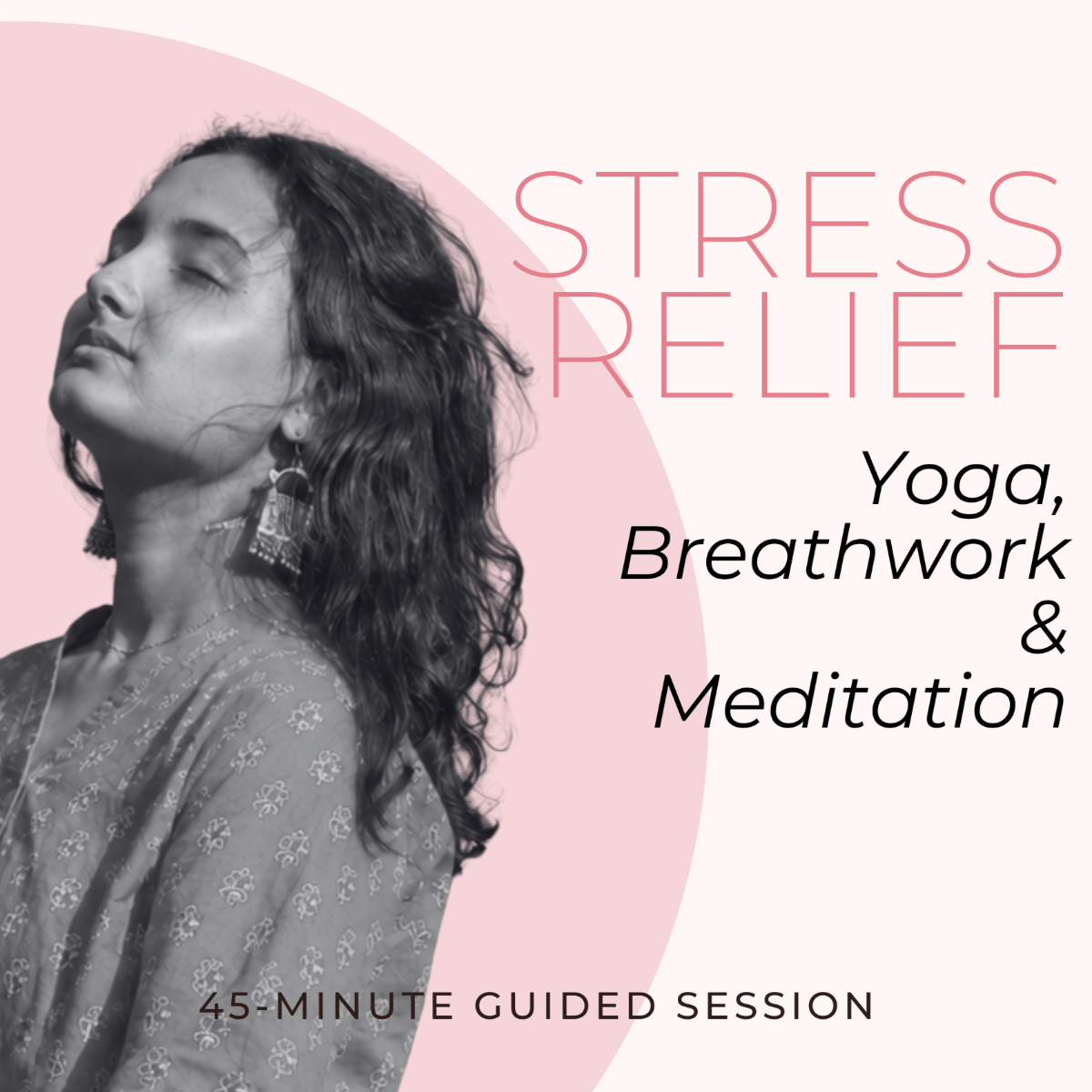
Stress Reset: Yoga, Breathwork & Meditation
★★★★★4.5 (4 Reviews)A combined session — gentle movement, breathwork and meditation together — which suits people who want some physical practice alongside the nervous-system work rather than sitting still for the whole session.
Book — $15 group Unnati's profileStart Gently If You're Not Feeling Great
Rabab's Gentle Yoga to Stretch and Relax is beginner level, 60 minutes, $10 group or $30 private — 4.9★ from 42 reviews. Softer than the gut health class, and a sensible first session.
Book Gentle Yoga — $10 See all group classesFor related reading, our guide to chair, gentle and restorative yoga covers the gentler formats, morning mobility routines makes the case for short daily practice, and building a weekly practice covers fitting it around everything else. Browse the fitness category, the full host directory, private sessions, or more writing on the blog.
Questions people ask
What is the wind relieving pose and does it work?
Pawanmuktasana — literally "wind release pose" — involves lying on your back and drawing both knees into the chest. It works through simple mechanical compression: the drawn-up knees press on the abdomen and physically help trapped gas move along. It's one of the few yoga poses where relief can arrive within minutes rather than over weeks.
Do yoga twists really massage your internal organs?
No. This claim appears constantly in yoga writing but has no supported physiological mechanism — a spinal twist does not wring out or massage the intestines. Twists remain worth practising for thoracic mobility and relaxation, just not for the reason usually given.
Which yoga poses help with constipation?
Deep squat (Malasana) is among the more useful, since the hip angle it creates is genuinely relevant to elimination. Knees-to-chest, gentle supine twists and cat-cow are commonly included too. Bear in mind these support a process rather than trigger one — NIDDK notes that regular physical activity generally may help relieve constipation, and yoga counts as physical activity.
Can yoga help me have a bowel movement quickly?
For trapped gas, compression poses can bring relief fairly quickly. For constipation, honestly, no — nothing in a yoga sequence reliably produces a bowel movement on demand. What movement does is support normal transit over time. If you need something to work immediately and regularly, that's a conversation with a doctor or pharmacist rather than a yoga question.
Does yoga help with bloating?
It can, when the bloating is from trapped gas — compression poses genuinely help there. When bloating comes from other causes, including food intolerances or a medical condition, yoga won't address the underlying issue. Persistent bloating that doesn't resolve is worth getting checked.
Can yoga treat IBS?
No. IBS is a medical condition requiring medical management. What yoga may reasonably offer is help with the stress component, since stress affects gut motility and sensitivity through the gut–brain axis, and relaxation-based approaches have some support for functional symptoms. That's a supportive role alongside proper care, not a treatment.
How soon after eating can I practise?
Wait around two hours before anything vigorous — compressing a full stomach is uncomfortable and can aggravate reflux. Gentle supine poses like knees-to-chest are generally fine an hour or so after eating, which is often exactly when trapped wind becomes bothersome.
Is there a "detox" benefit to yoga for digestion?
No. Your liver and kidneys handle that continuously and no pose accelerates them. "Detox" in a yoga context is marketing language rather than physiology. The genuine benefits — gas relief, transit support, stress reduction — are real enough without it.
When should I see a doctor instead?
Promptly, if you have constipation together with rectal bleeding, blood in your stool, constant abdominal pain, inability to pass gas, vomiting, fever, lower back pain, or unexplained weight loss. Also if symptoms persist despite self-care, or if you have a family history of colon or rectal cancer. Persistent changes in bowel habits deserve a proper assessment.