Vietnamese at Home
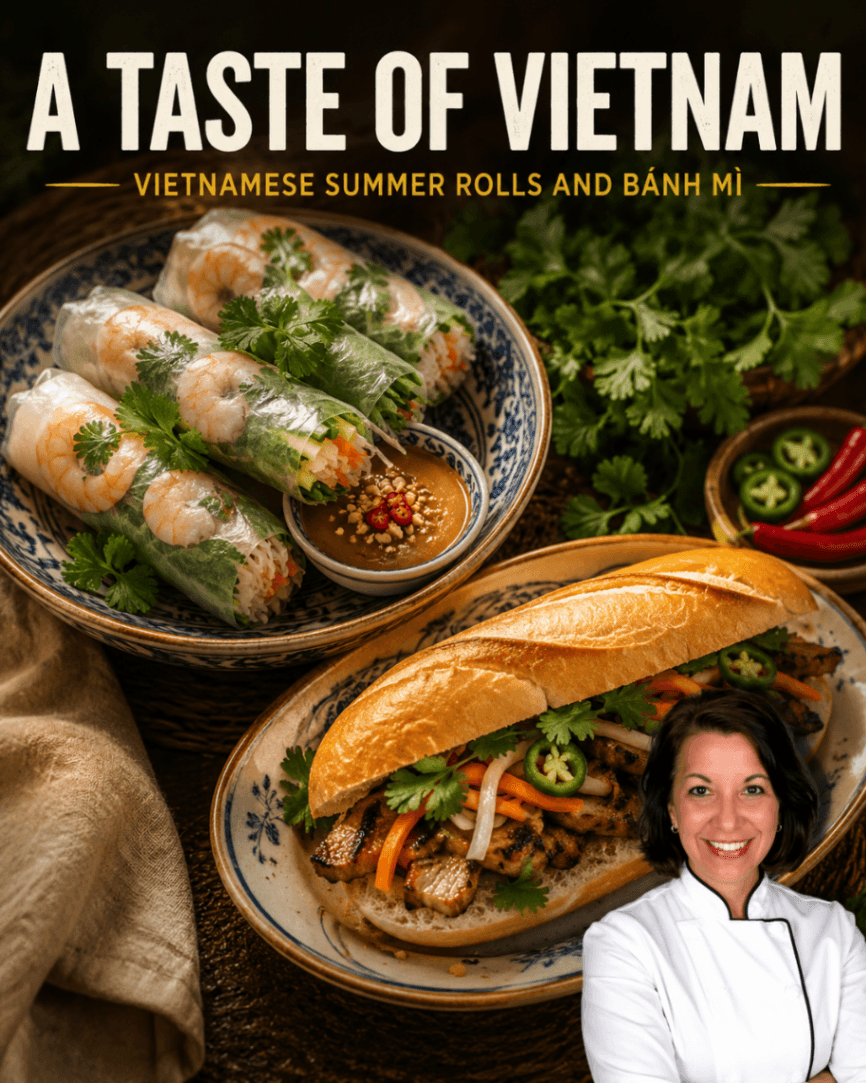
Traditional Vietnamese cooking is admired for its fresh ingredients, minimal use of dairy and oil, complex flavors, and fresh herbs and vegetables. This class will make an herb, vegetable, and shrimp filled summer roll in rice wrappers and a pork bánh mì on baguette with herbs and quick-pickled veg.
General Info & Pricing
90 mins
Session Duration
beginner
Level
$50
Private Session
$35
Group Class

I am a culinary instructor and food writer who brings global flavors and cultural inspiration into every cooking class. As a chef leading culinary programs for Columbus State in Columbus, Ohio. I specialize in travel-inspired cuisine rooted in my experience living and working across Europe. My engaging and approachable teaching style helps guests build confidence in the kitchen while exploring the connection between food culture and tradition. I can teach a broad range of classes, ranging from global cuisine such as Indian, Thai, Vietnamese, Korean, and various European dishes, to specialized techniques like hand-making pasta, dumplings, tamales, beef Wellington, paella, and churros. I can also customize menus for a cohesive meal that includes a starter, entree, side, and dessert if guests want a dinner meal plan. I have been teaching for 15 years at a variety of venues, as well as offering private instruction in people's homes and video instruction from my home kitchen
General Info & Pricing
90 mins
Session Duration
beginner
Level
$50
Private Session
$35
Group Class
Ingredients
Tips & Swaps
Traditional Vietnamese cooking is celebrated for its fresh ingredients, vibrant herbs and vegetables, minimal use of dairy and oil, and remarkably complex flavors. Vietnamese cuisine is all about balance—bringing together hot and sweet, sour and aromatic, fresh and fermented, with the distinctive savory depth of fish sauce. A classic Vietnamese flavor foundation is the “holy trinity” of fish sauce, palm sugar, and lime. Together, these ingredients create the signature balance of salty, sweet, and sour that defines so many Vietnamese dishes. Regional differences are an important part of Vietnamese cooking. Northern Vietnam, which borders China, shows strong Chinese influence, particularly in its stir-fries, noodle dishes, and lighter, more delicate flavors. As you travel south, the cuisine generally becomes sweeter, reflecting influences from neighboring Cambodia and Thailand. Southern Vietnam’s tropical climate and abundant rice paddies contribute to the generous use of rice, coconut milk, tropical fruits, and ingredients such as jackfruit. Vietnam’s history has also left its mark on the cuisine. Nearly six decades of French colonial rule introduced ingredients and techniques that became firmly woven into Vietnamese food culture, including crusty baguettes, coffee, and French-influenced broths and soups. The beloved Bánh Mì, a crisp baguette filled with savory meats, pickled vegetables, herbs, and sauces, is perhaps the most delicious example of this culinary fusion. Cooking Tips: Balance is key. Vietnamese dishes often rely on a careful interplay of salty, sweet, sour, spicy, and aromatic flavors. Use herbs generously. Fresh herbs aren't simply garnishes—they are an essential part of the dish and provide freshness and contrast. Taste as you go. Fish sauce, lime juice, and palm sugar vary in intensity, so adjust them gradually to achieve the right balance. Don't overdo the fish sauce. Its savory character should enhance the dish without overwhelming the other flavors. Think texture, too. Vietnamese cooking often combines crisp, crunchy, tender, and chewy elements in the same dish, creating a more dynamic eating experience. Vietnamese Summer Rolls Summer rolls are one of Vietnam’s most refreshing appetizers—light, colorful, and wonderfully crisp. Unlike fried spring rolls, summer rolls are wrapped in delicate, translucent rice paper and served fresh and chilled, allowing the vibrant ingredients inside to shine. The beauty of summer rolls is their versatility. Fill them with shrimp, shredded pork, rice noodles, fresh herbs, leafy greens, and crunchy vegetables, creating endless combinations to suit your taste. They’re easy to customize and fun to assemble, making them an especially appealing dish for entertaining. For the finishing touch, summer rolls are traditionally served with a flavorful dipping sauce, most commonly a creamy peanut sauce or a spicy, savory fish sauce. The contrast of fresh, crunchy fillings with the bold dipping sauce is what makes these simple rolls so irresistible. Bánh Mì The name Bánh Mì translates simply to “bread,” a fitting name for this iconic Vietnamese sandwich built around a crisp French-style baguette. It’s a delicious example of the French influence on Vietnamese cuisine, combining a crusty loaf with flavorful Vietnamese fillings and fresh, vibrant toppings. Pork is the traditional protein, but Bánh Mì is wonderfully adaptable. Chicken or beef can easily be substituted, while marinated tofu or a plant-based protein makes an equally satisfying vegetarian version. Whatever filling you choose, the baguette is key: look for one with a crisp, crackly crust and a light, airy interior. Avoid bread that is too soft or dense—the contrast between the crunchy baguette and tender, flavorful filling is part of what makes Bánh Mì so irresistible.
Preparation
In a small skillet of water, steam the shrimp for a few minutes until pink and curled up. Drain, rinse under cold water, slice in half lengthwise, and set aside for the summer rolls. Cook the vermicelli rice noodles according to package directions (whether it is boiling for a few minutes or steeping in hot water), then rinse in cool water. Set aside in a bowl of cold water for later use in the summer rolls. Make the quick pickled vegetables in advance so they have time to marinate as a condiment for the Banh Mi. In a small saucepan over medium heat, bring both vinegars, water, sugar, and salt to a gentle boil, then remove from heat. Add the carrot, radish, and cucumber into the pickling liquid and let simmer for 15 minutes. Turn off the heat and let steep for 30 minutes to several hours. Any pickled veg you do not use on the sandwich, place in a lidded container and refrigerate for up to three weeks. Equipment List: Cutting board (or two, since we will be cutting raw meat) Your favorite knife/ paring knife, if you prefer Bowl (to mix the peanut sauce) Prep bowl for summer roll vegetables Whisk (or fork to whisk) Marinating (plastic gallon) bag or bowl for the pork marinade. Medium bowl to soak rice wrappers in hot water Cast iron skillet or grill pan, preferably, or stainless steel / ceramic skillet Knife (to spread condiments) Tongs (or fork) for the quick pickles Serving bowl to transfer dipping sauce Plates for summer rolls and banh mi.
Nutrition Facts
More Experiences You Might Like
Brazilian Coxinha (Chicken Croquette)