Classic Italian Sauces
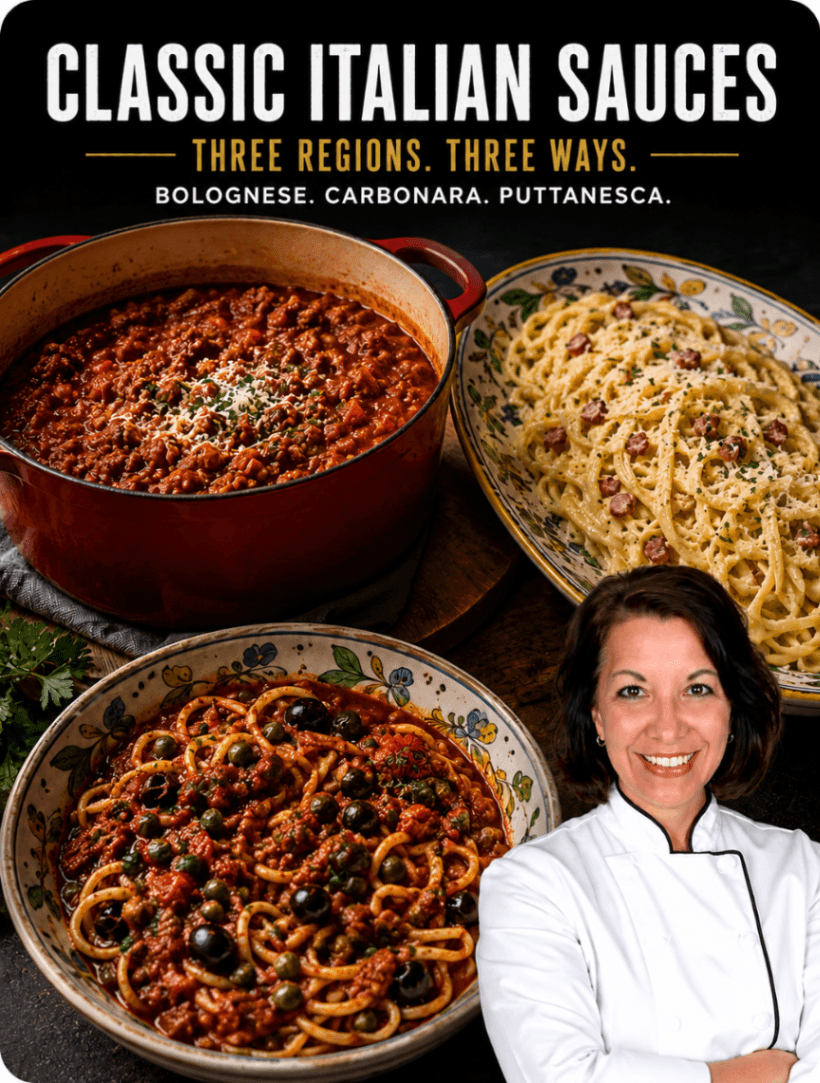
Master the techniques behind three of Italy’s most iconic pasta sauces. Prepare a quick, rich Bolognese silky Roman Carbonara, and bold Puttanesca. Learn how regional ingredients, sauce structure, texture, and pasta come together to create authentic Italian flavors. Three regions. Three sauces.
General Info & Pricing
90 mins
Session Duration
beginner
Level
$50
Private Session
$30
Group Class

I am a culinary instructor and food writer who brings global flavors and cultural inspiration into every cooking class. As a chef leading culinary programs for Columbus State in Columbus, Ohio. I specialize in travel-inspired cuisine rooted in my experience living and working across Europe. My engaging and approachable teaching style helps guests build confidence in the kitchen while exploring the connection between food culture and tradition. I can teach a broad range of classes, ranging from global cuisine such as Indian, Thai, Vietnamese, Korean, and various European dishes, to specialized techniques like hand-making pasta, dumplings, tamales, beef Wellington, paella, and churros. I can also customize menus for a cohesive meal that includes a starter, entree, side, and dessert if guests want a dinner meal plan. I have been teaching for 15 years at a variety of venues, as well as offering private instruction in people's homes and video instruction from my home kitchen
General Info & Pricing
90 mins
Session Duration
beginner
Level
$50
Private Session
$30
Group Class
Ingredients
Tips & Swaps
This course introduces students to the techniques and traditions of Italy’s most iconic pasta sauces. Emphasis is placed on the culinary principles of balance, texture, and regional variation. Through guided preparation, students will prepare three benchmark sauces: Bolognese (slow-simmered meat sauce), Carbonara (egg-based Roman classic), and Puttanesca (tomato with anchovy, olive, and caper), Instruction highlights ingredient selection, sauce structure, and methods for properly pairing sauces with pasta. Quick Bolognese: Northern Italy (Emilia-Romagna, especially Bologna) This quick Bolognese is inspired by the hearty meat sauces of northern Italy. This streamlined version combines ground beef, Italian sausage, mushrooms, vegetables, tomatoes, red wine, and a touch of cream to create deep, slow-simmered flavor in about 30 minutes. Carbonara Sauce - Lazio, especially Rome Carbonara is a classic Roman pasta dish made with eggs, grated hard cheese, pancetta, and black pepper. The objective is to create a stable, creamy coating for the pasta without curdling the eggs. Achieving the perfect texture requires careful temperature control and continuous agitation, allowing the proteins in the eggs to thicken gradually while incorporating pasta starch and rendered fat. Proper technique ensures a glossy, velvety emulsion that clings to each strand. Puttanesca Sauce - Campania, particularly Naples Puttanesca is a bold Neapolitan sauce built on the principles of balance and umami layering. Anchovies provide a rich depth, while briny capers and olives contribute salinity and complexity. A base of high-acid canned plum tomatoes ensures a bright, concentrated flavor and a sauce that emulsifies properly as it reduces. Traditionally finished with crushed red pepper flakes for controlled heat, this preparation demonstrates how proper sequencing of aromatics—gently blooming garlic and anchovies in oil before adding tomatoes—creates a rich, stable sauce without long cooking.
Preparation
Prepare in advance of class: Pre-cook long noodles (spaghetti, linguine, or fettuccine) and short tubes (ziti, penne, or rigatoni). Strain and place in separate bowls, tossed with a little olive oil so they don't stick together. Prepare beef stock if making from bouillon or concentrate. Open cans of tomatoes for bolognese and puttanesca Make sure Parmesan and Pecorino cheese is grated Have eggs at room temperature Equipment list: Cutting board Knife (to prep vegetables) 2 saucepans (one for bolognese and one for puttanesca) 1 skillet (for the carbonara) Rubber/silicon spatulas (for carbonara) and stirring spoons for the others
Nutrition Facts
More Experiences You Might Like


Real borscht with a deep, fragrant broth and garlic bread