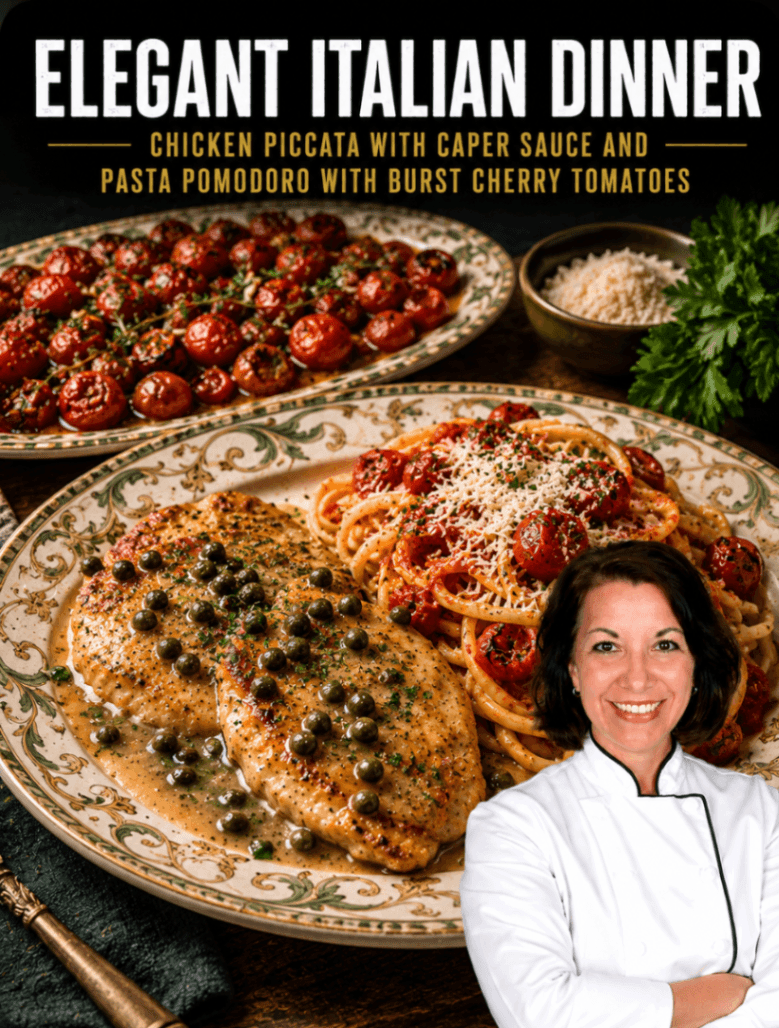
Elegant Italian Dinner
DATE NIGHT! Bring classic Italian-American flavors to your kitchen with Chicken Piccata in a bright, buttery lemon-caper sauce and Pasta Pomodoro topped with burst cherry tomatoes. Learn simple techniques for creating an elegant, restaurant-worthy dinner with fresh, balanced flavors. Easy weeknight!
General Info & Pricing
90 mins
Session Duration
beginner
Level
$60
Private Session
$35
Group Class

I am a culinary instructor and food writer who brings global flavors and cultural inspiration into every cooking class. As a chef leading culinary programs for Columbus State in Columbus, Ohio. I specialize in travel-inspired cuisine rooted in my experience living and working across Europe. My engaging and approachable teaching style helps guests build confidence in the kitchen while exploring the connection between food culture and tradition. I can teach a broad range of classes, ranging from global cuisine such as Indian, Thai, Vietnamese, Korean, and various European dishes, to specialized techniques like hand-making pasta, dumplings, tamales, beef Wellington, paella, and churros. I can also customize menus for a cohesive meal that includes a starter, entree, side, and dessert if guests want a dinner meal plan. I have been teaching for 15 years at a variety of venues, as well as offering private instruction in people's homes and video instruction from my home kitchen
General Info & Pricing
90 mins
Session Duration
beginner
Level
$60
Private Session
$35
Group Class
Ingredients
Tips & Swaps
A Brief History: Italian-American Classics Chicken Piccata Piccata is rooted in Italian cooking, where piccata refers to meat that is thinly sliced, lightly floured, sautéed, and served with a bright sauce typically featuring lemon, butter, and capers. In Italy, the dish is more traditionally associated with veal (piccata di vitello) than chicken. Chicken piccata became especially popular in Italian-American restaurants, where chicken was more readily available and affordable than veal. The combination of tender chicken, tart lemon, salty capers, and a savory pan sauce has become a defining Italian-American restaurant classic. Pasta Pomodoro Pomodoro simply means “tomato” in Italian, and pasta with tomato sauce is one of Italy’s most enduring dishes. Tomatoes originated in the Americas and arrived in Europe in the 16th century, but they did not become a major part of Italian cooking until later. By the 18th and 19th centuries, tomato-based pasta sauces had become firmly established, particularly in southern Italy. Classic pasta al pomodoro is deliberately simple: pasta tossed with tomatoes, olive oil, garlic, and often basil. Italian immigrants brought these traditions to America in the late 19th and early 20th centuries, where they evolved alongside abundant American ingredients and restaurant culture. Italian-American pasta pomodoro retains the spirit of the original—simple ingredients, bright tomato flavor, and properly cooked pasta—but often features a more generous, richly seasoned sauce. A shared Italian-American tradition: Both dishes demonstrate a hallmark of Italian and Italian-American cooking: simple ingredients transformed through technique. The lemon-caper sauce of Chicken Piccata and the fresh tomato sauce of Pasta Pomodoro rely on balance—acid, salt, richness, and texture—to create dishes that are greater than the sum of their parts.
Preparation
Prepare in advance of class: Pound out the chicken breast evenly to 1/2-inch thick. Pat dry with paper towels and keep wrapped in cling wrap or covered with a paper towel. Pre-cook pasta of choice (according to directions on package) and set aside in a bowl. Long noodles are most appropriate, but tubes will work as well. Toss lightly with olive oil to keep noodles from sticking. This will be heated up in the sauce. Equipment List: Cutting board Knife/ paring knife Whisk Silicone or rubber spatula/ Stirring spoons Few bowls or pans for dredging chicken Dutch oven or saucepan (for Pomodoro sauce) Medium Skillet (to pan-fry chicken cutlets and make caper sauce) Small skillet ot pan (cook cherry tomatoes) Plate (to rest chicken while making sauce) Serving platter or individual plates for serving Serving owl for burst cherry tomatoes