










Prenatal yoga at home: what to know before your first class
Yes, it's safe for most pregnancies once your doctor has cleared you. Yes, it works well online. Here's what actually changes trimester to trimester, and the handful of things genuinely worth avoiding.
Before anything else: talk to your OB-GYN or midwife before starting prenatal yoga, especially in the first trimester or if you have any pregnancy complication. This article is general information, not medical advice — more detail at the end.
The short answer
Prenatal yoga is considered safe for most pregnancies once you've been cleared by your doctor or midwife, and it adapts to live online instruction better than most fitness categories — nobody needs to physically spot you the way some exercises benefit from hands-on help. What matters is that your instructor can actually see your whole body on camera and knows what changes by trimester.
A handful of things are genuinely off the table at different stages — mostly lying flat on your back for long periods, deep twists, and anything with real fall risk. None of it is complicated once someone walks you through it.
What actually happens in a class
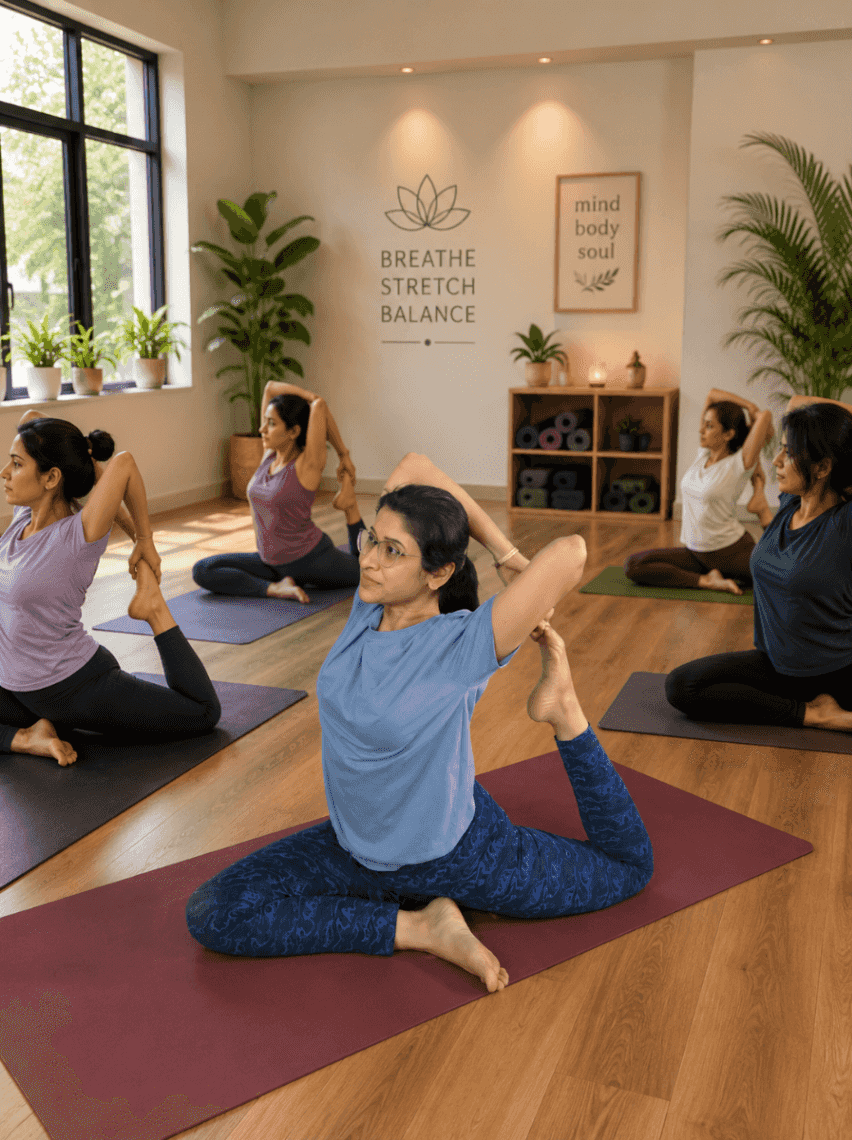
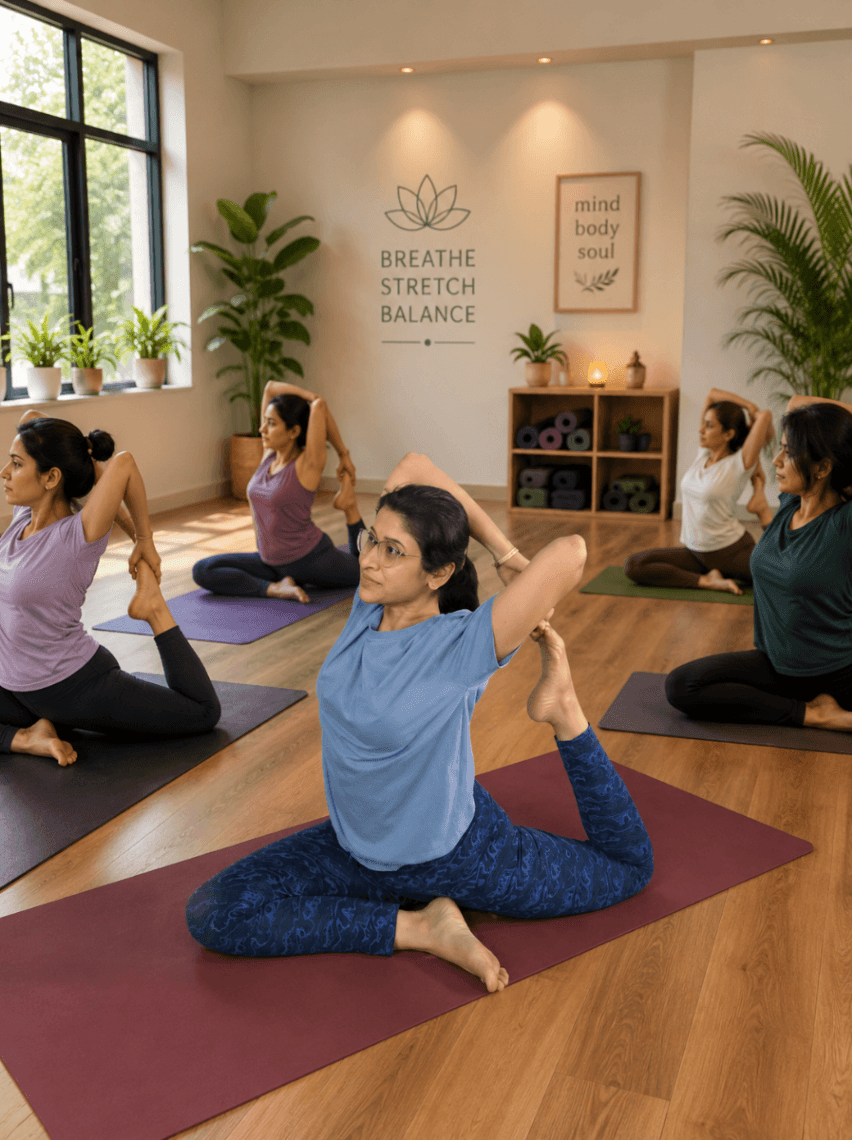
Prenatal yoga looks like yoga, slowed down and reorganized around a body that's changing week to week. Less about achieving a shape, more about breath, stability, and staying comfortable in your own skin for the next forty minutes.
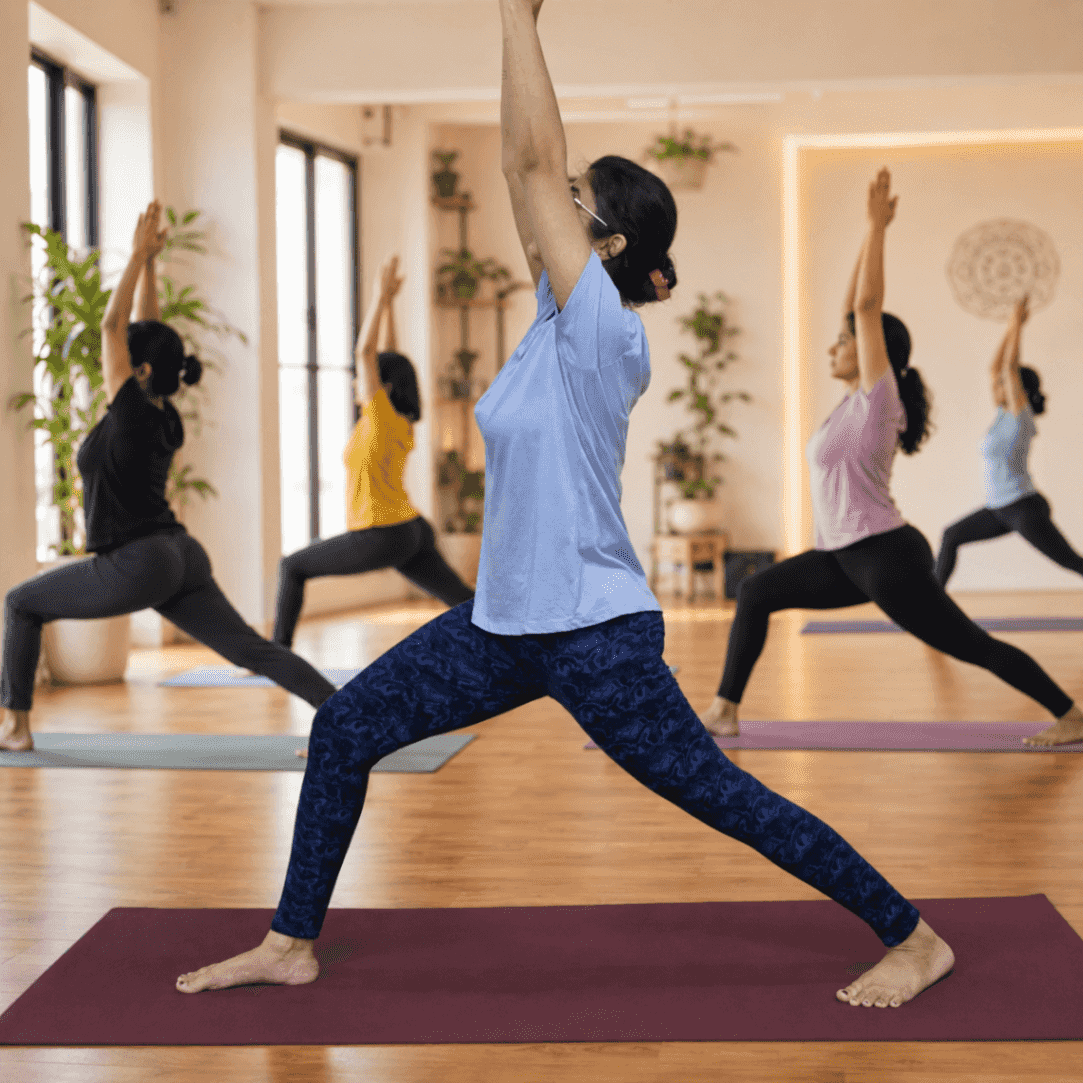
A typical session moves through gentle mobility work for the hips and spine, modified standing poses using a wall or chair for balance, seated or side-lying stretches instead of anything flat on the back, and breathing practice that doubles as labor preparation later on. It's unhurried by design. If a regular vinyasa class is a conversation, this is closer to a slow walk with someone who knows exactly where you are in the pregnancy and adjusts accordingly.
The instructor's actual job here is less about demonstrating poses and more about watching you specifically — your balance today, your energy today, whether something that felt fine last week doesn't anymore. That's a different skill than teaching general yoga, and it's worth choosing someone who's actually done it before rather than someone winging modifications on the spot.
Trimester by trimester
Most prenatal yoga content treats pregnancy as one state. It isn't. What's appropriate in week 9 and week 34 can be almost unrecognizable, and an honest class adjusts constantly rather than running the same sequence for nine months.
First trimester
The paradox of the first trimester is that you often feel worst when you look most "normal." Fatigue and nausea are frequently the real limiting factor, not physical capacity. A good class in this window is genuinely gentle, with permission built in to rest, and no expectation of keeping pace with anyone else in the room. This is also the trimester where getting medical clearance first matters most, since early pregnancy carries the highest miscarriage risk of any stage, and exercise itself isn't the concern so much as making sure nothing else is going on that needs monitoring.
Second trimester
Many people describe this as the easiest stretch — nausea has often eased, energy comes back, and the bump isn't yet large enough to limit movement much. This is a reasonable window to build some strength and start practicing the balance and stability work that becomes more important later. It's also roughly when instructors start phasing out extended time lying flat on the back, moving toward side-lying and seated alternatives instead.
Third trimester
Balance changes week to week now, sometimes faster than it feels like it should. Standing poses lean on a wall or a sturdy chair rather than free balance. Space in the torso is limited, so twists get shallow and forward folds get wide-legged. A lot of the value here shifts toward hip opening (genuinely useful for labor) and breathing practice, which is less about flexibility and more about a skill you'll actually use in a few weeks.
What's off the table, and why
Short list, and every item on it has a specific, understandable reason — none of this is caution for its own sake.
Two of these deserve a bit more explanation. Supine hypotension — the concern with lying flat on your back — happens because the growing uterus can press against the inferior vena cava, a major vein carrying blood back to your heart, and this can leave you lightheaded or short of breath. It's why later-pregnancy classes shift to side-lying and seated variations instead of anything flat.
Diastasis recti is a separation of the abdominal muscles along the midline that's extremely common in pregnancy and can worsen with the wrong kind of core work — think traditional crunches, not gentle engagement. A prenatal-experienced instructor builds around this automatically; a generic instructor might not think about it at all.
If you notice this, stop and modify
If your belly domes or bulges along the center line during any exercise, that's your body's signal that it isn't ready for that movement yet. Come out of the pose and mention it to your instructor — this applies whether you already know you have diastasis recti or you're noticing it for the first time.
Is online really as good as in-person for this?
Genuinely, mostly yes — with one honest exception worth naming.
Prenatal yoga is a good fit for live online instruction because so little of it depends on hands-on adjustment from a teacher. Unlike, say, learning a new strength movement where a coach might need to physically correct your form, prenatal yoga is largely about pacing, breath, and knowing which modification applies to you right now — all things an instructor can see and guide over video just as well as in a studio.
The honest limitation: a teacher in the room can offer a hand getting up off the floor, or physically support a pose in a way a screen can't. For most sessions this doesn't matter much. If you're managing significant balance issues or a higher-risk pregnancy, that's worth factoring in alongside your doctor's guidance.
What matters more than the format is whether your instructor actually understands prenatal modification, not just yoga in general. That's a genuine skill gap between "a yoga teacher who'll figure out modifications on the fly" and someone who's taught this population specifically. Ask before booking, whatever platform you use.
An instructor who actually specializes in this
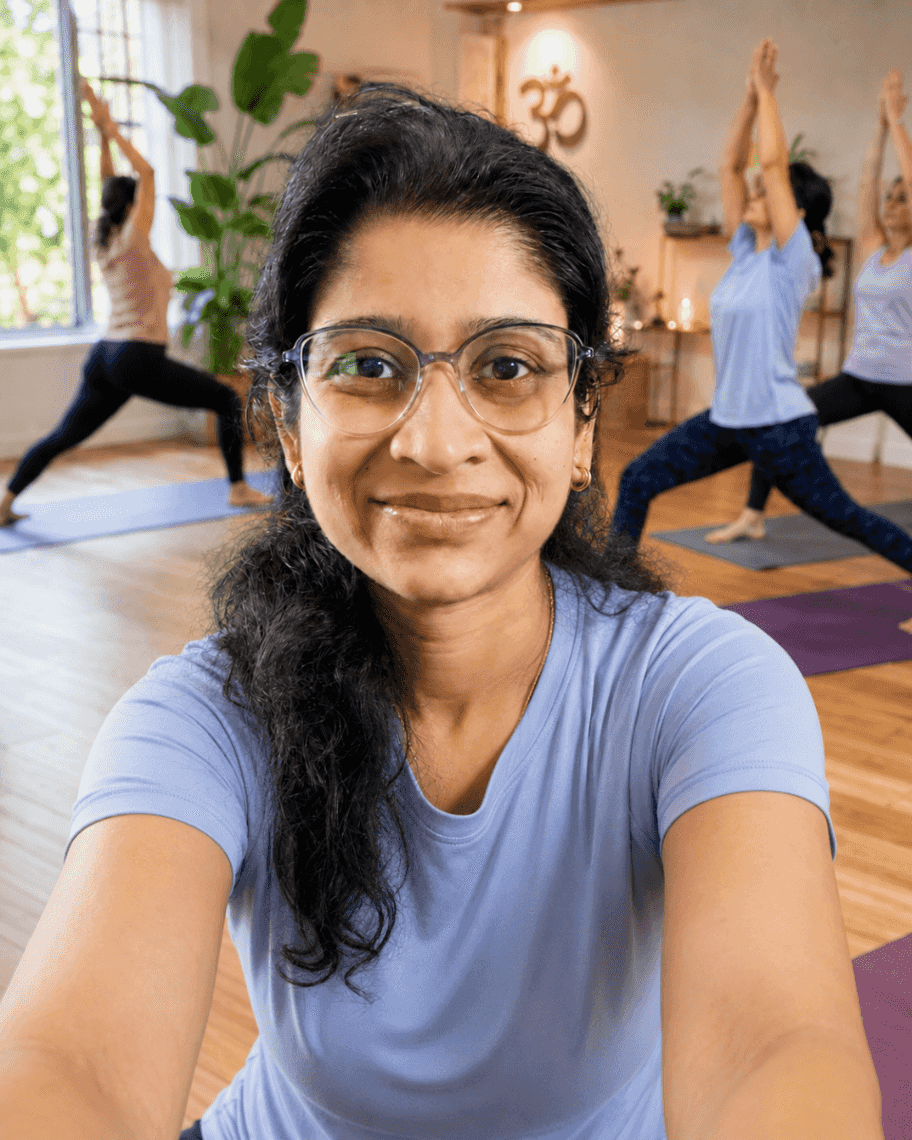
Yanina Nesteruc, a certified yoga teacher with 8 years of teaching experience, lists Prenatal and Postnatal Yoga specifically among her specialties, alongside Vinyasa. Book a private session and mention your trimester so the class is built around where you actually are.
View Yanina's profile Browse private sessionsWhat to have ready for your first session
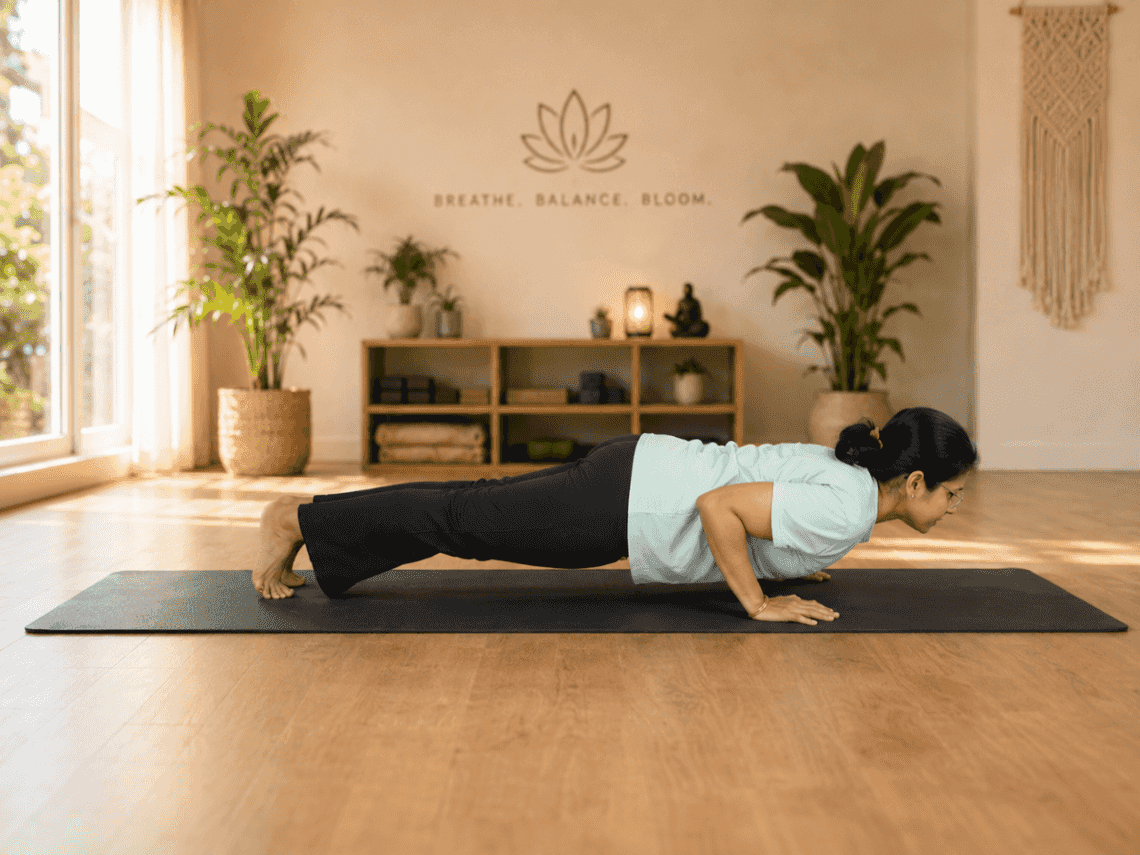
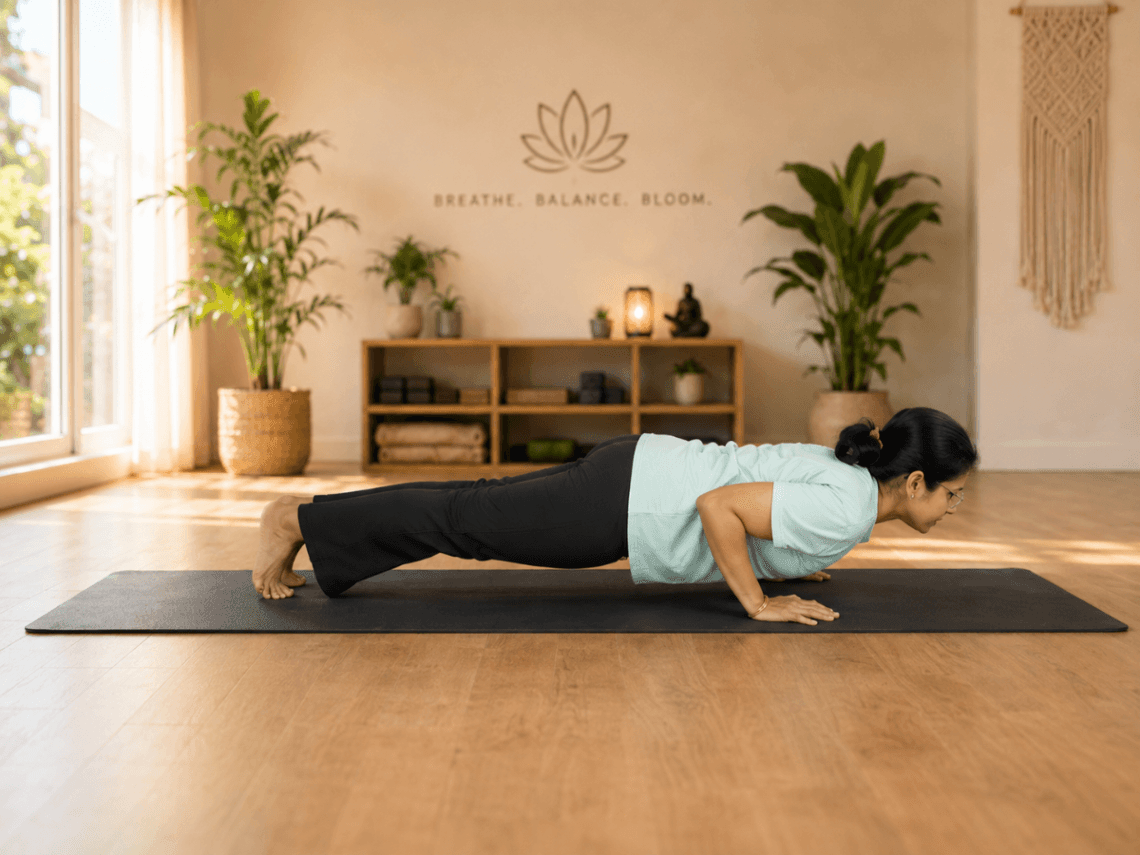
- Space to step back from the camera so your instructor can see your whole body, not just your upper half — this is how they actually catch balance and alignment issues
- A mat, plus a cushion or folded blanket and a sturdy chair, since seated and supported variations replace a lot of floor-based work later in pregnancy
- Water within reach — pregnancy increases hydration needs, and this matters more here than in a typical fitness class
- A note of your trimester and anything relevant — any pain, prior injury, or complication your doctor has flagged, mentioned before class starts rather than mid-session
- Permission to stop or modify anytime — this isn't a class to push through discomfort in, and a good instructor will say so directly
Postnatal: what's different afterward
Worth covering here rather than treating as a separate topic, since the same instructor specialty applies and the search for one often follows the other.
Postnatal yoga isn't simply "prenatal yoga in reverse." The priorities shift toward gently rebuilding core and pelvic floor strength, addressing whatever degree of diastasis recti is present, and working around the reality of significantly less sleep and, often, holding or feeding a baby between poses. Timing matters too — most guidance suggests waiting for medical clearance at your postpartum checkup before returning to structured exercise, longer after a cesarean birth than a vaginal one, and always following what your own provider says rather than a general timeline.
The pelvic floor deserves specific mention. Pregnancy and birth both affect it substantially, and postnatal yoga done well incorporates pelvic floor awareness rather than ignoring it or, just as unhelpfully, treating every posture as an automatic pelvic floor exercise. This is exactly the kind of nuance a generic postnatal fitness video won't have and a specialist instructor will.
Who should be extra careful
Talk to your provider before starting if any of this applies
Placenta previa, preeclampsia or high blood pressure related to pregnancy, risk of preterm labor, cervical insufficiency, carrying multiples, significant bleeding at any point, or any condition your doctor has specifically flagged. This isn't an exhaustive list, and it isn't a reason to assume yoga is off-limits — it's a reason to get individual guidance rather than general guidance before you start.
The American College of Obstetricians and Gynecologists publishes plain-language guidance on exercise during pregnancy that's a solid starting point for the conversation with your provider.
Learning this from someone who actually teaches it
The gap between "a yoga teacher" and "a yoga teacher who specializes in pregnancy" is real, and it's the single biggest factor in whether a class feels genuinely tailored to you or just generally gentle. Modifications in pregnancy aren't guesswork — they follow from a real, if not enormous, body of understanding about what changes and when, and an instructor who's taught this population repeatedly applies it automatically rather than reasoning it out live.
On P2Bridge, that's a genuine, if small, part of the roster rather than a marketing claim layered onto a general yoga category. If you'd rather have a session scheduled specifically as prenatal from the start, the Request a Custom Experience option lets you say exactly that when you reach out, and it gets matched accordingly rather than you guessing which general class might flex to fit.
If you're weighing prenatal yoga against other styles generally, our broader guide to Hatha, Vinyasa, and Yin covers how those styles differ outside of pregnancy — useful background, though pregnancy-specific modification is really its own skill on top of any of them.
Ready to book your first session?
A private session lets your instructor build the class around your trimester specifically. Bring your doctor's clearance and any notes on how you're feeling, and take it from there.
Book with Yanina See all hostsQuestions people ask
Is prenatal yoga safe during the first trimester?
Generally yes, once your doctor or midwife has cleared you, though the first trimester is exactly when that clearance matters most, since it's the highest-risk window for pregnancy complications generally. Gentle movement itself isn't usually the concern; making sure nothing else needs monitoring first is. Fatigue and nausea are often the real limiting factor at this stage rather than physical capacity.
Can I do prenatal yoga online, or do I need to be in a studio?
Online works well for most of prenatal yoga, since the practice relies much less on hands-on physical adjustment than some other fitness categories do. What matters most is that your instructor can see your whole body on camera and has real experience with pregnancy-specific modification, not just general yoga teaching.
What poses should I avoid while pregnant?
The main ones: extended time lying flat on your back after roughly the first trimester, deep abdominal twists, anything involving overheating including hot yoga, intense core exercises like traditional crunches, and any pose with meaningful fall risk. A prenatal-specific instructor builds around all of these automatically.
When should I stop lying on my back during yoga?
Many instructors begin phasing this out during the second trimester, though it varies by individual. The concern is that the weight of the uterus can compress a major vein and reduce blood flow, sometimes causing lightheadedness. Side-lying and seated variations replace most flat-on-the-back work from this point.
Is prenatal yoga different from postnatal yoga?
Yes, meaningfully. Prenatal yoga adapts around a changing pregnant body and prepares for labor through breathwork and hip opening. Postnatal yoga focuses on gently rebuilding core and pelvic floor strength, addressing diastasis recti where present, and working around a very different daily reality. Most guidance suggests waiting for your postpartum medical clearance before returning to structured postnatal exercise.
Do I need a special instructor, or can any yoga teacher modify for pregnancy?
A specialist is genuinely worth seeking out. Pregnancy modification isn't guesswork — it follows established guidance about what changes at each stage — and an instructor who's taught this population before applies it automatically rather than reasoning it out during your session.
What if I've never done yoga before I got pregnant?
That's completely fine, and a common starting point. Prenatal yoga is generally gentler than a typical beginner yoga class already, and a good instructor will start from real fundamentals rather than assuming prior experience.
How often should I do prenatal yoga?
There's no single right answer — it depends on your energy, your provider's guidance, and how you're feeling week to week. Some people practice several times weekly, others far less. Consistency at a pace that feels sustainable matters more than hitting a specific number of sessions.