










Chair yoga, gentle yoga, or restorative — what's actually different?
They aren't three intensity levels of the same practice. Each one assumes something different about your body, and knowing which assumption fits you is the whole decision.
The short answer
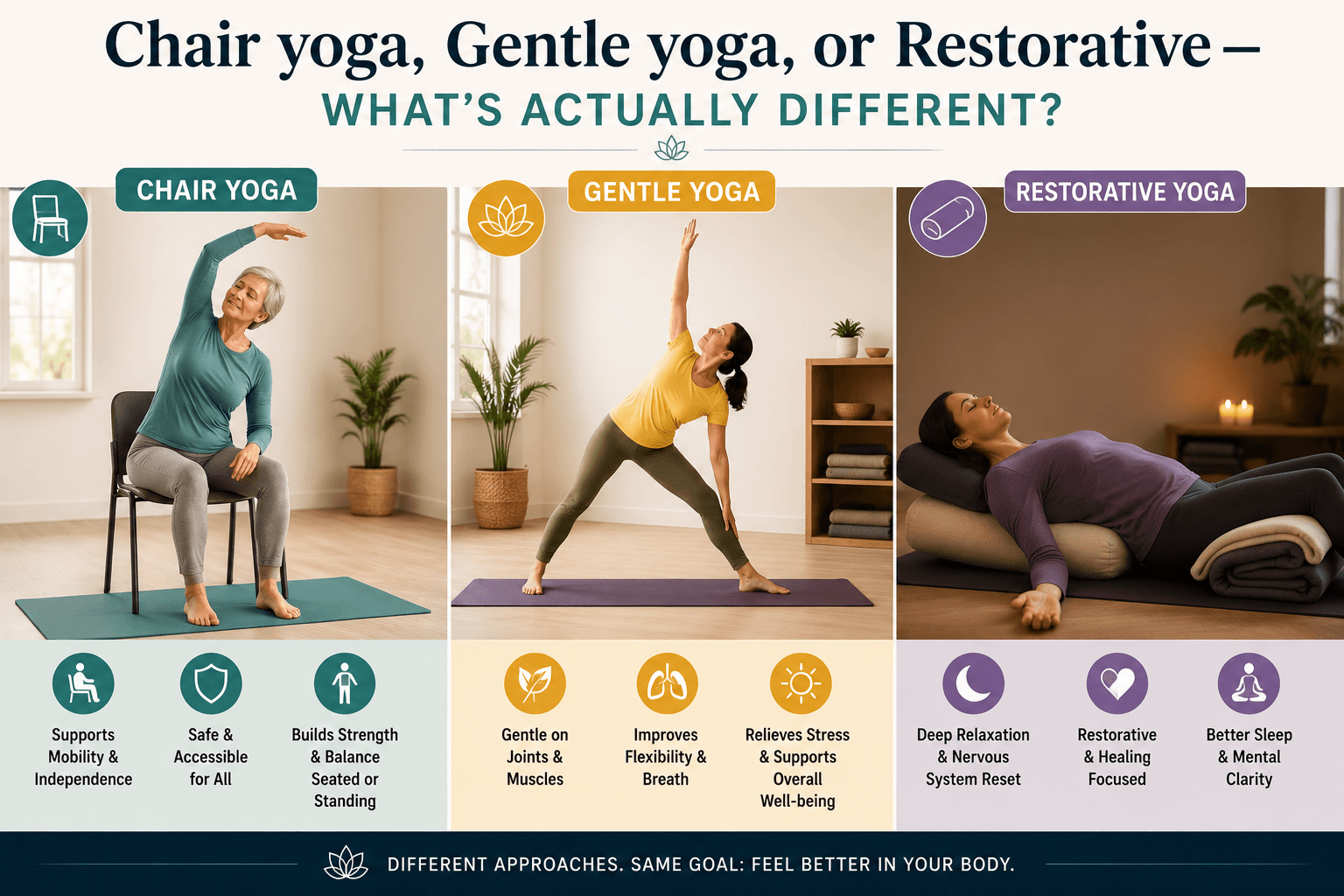
What is a yoga chair practice, exactly? Chair yoga is yoga built around a seated or supported position — for limited mobility, a desk break, or anyone who can't or doesn't want to get on the floor. What is gentle yoga? A full standing-and-floor practice, just slower and lower-intensity than a regular class. What is restorative yoga? Different in kind, not just degree — near-zero effort, props doing all the work, poses held for minutes so your nervous system can actually downshift.
Honest disclosure: P2Bridge doesn't currently have a class labeled restorative yoga. What we do have — a gentle full-body stretch and relax session — gets close to the same benefit without the exact method. More on that below.
What each style assumes about your body
Most articles on this topic treat chair, gentle, and restorative yoga as three points on one dial — turn it down a little for gentle, turn it down more for chair, turn it all the way down for restorative. That's not quite right, and it's why people end up in the wrong class.
Each one starts from a different assumption about what your body can or wants to do today. Chair yoga assumes a seated or supported position is the starting point, not an accommodation — it's built for that constraint from the ground up, not regular yoga with the floor poses removed. Gentle yoga assumes you can move through a full standing and floor-based practice, just without pushing pace or edge. Restorative yoga assumes something else entirely: that your body doesn't need to do anything right now except be supported while it rests. No stretching for flexibility, no strengthening — a handful of fully propped poses, held for a long time, doing essentially nothing except letting your nervous system settle.
That last one is worth sitting with, because it's the piece almost everyone gets wrong: restorative yoga isn't "very gentle gentle yoga." It's a different tool solving a different problem.
Chair yoga, in detail
Chair yoga is exactly what it sounds like, and it's more capable than the name suggests. Seated twists, supported forward folds, shoulder and neck work, gentle spinal movement — a surprising amount of a regular yoga practice translates into yoga chair positions, and none of it feels like a consolation prize once you're actually in the session. A basic seated yoga pose like a supported spinal twist works nearly the same muscles as its floor equivalent, just without the transition.
It's built for a specific situation: limited mobility, recovery from an injury or surgery, a desk-break format for computer workers, or simply someone who doesn't want to get up and down off the floor repeatedly. That last use case surprises people — chair yoga isn't only for limited mobility, and it's not gendered either; chair yoga for men is exactly as common a search as for women, since the format suits anyone at a desk. A simple chair yoga chart mapping which poses target the neck, shoulders, hips, and spine is often all a beginner needs to get started. Research specifically on remote chair yoga — including a National Institutes of Health feasibility study on home-based, remotely supervised chair yoga — has found the online format genuinely workable for older adults, which lines up with what live chair yoga on a platform like P2Bridge is actually built to do.
Yanina's Chair Yoga Break
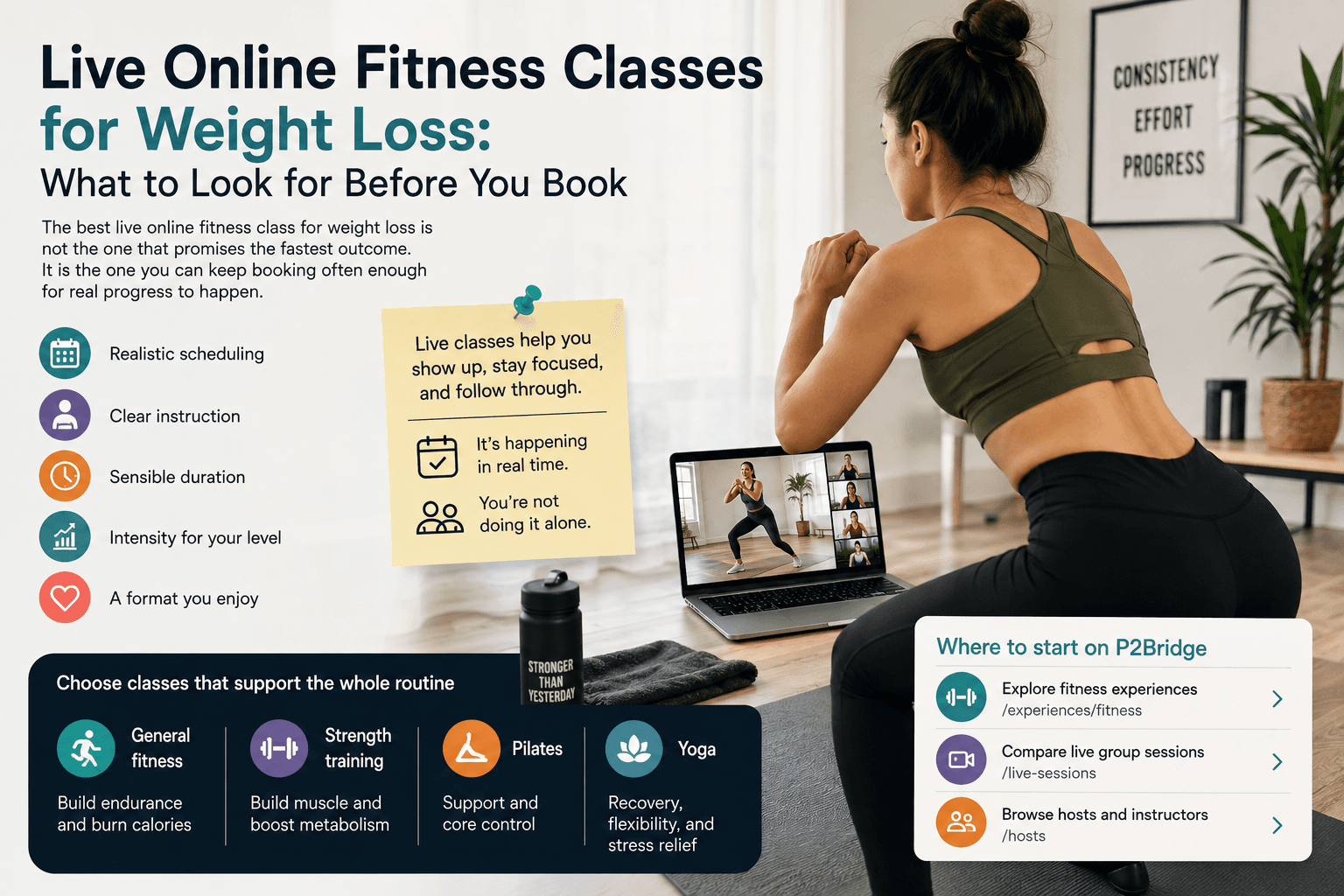
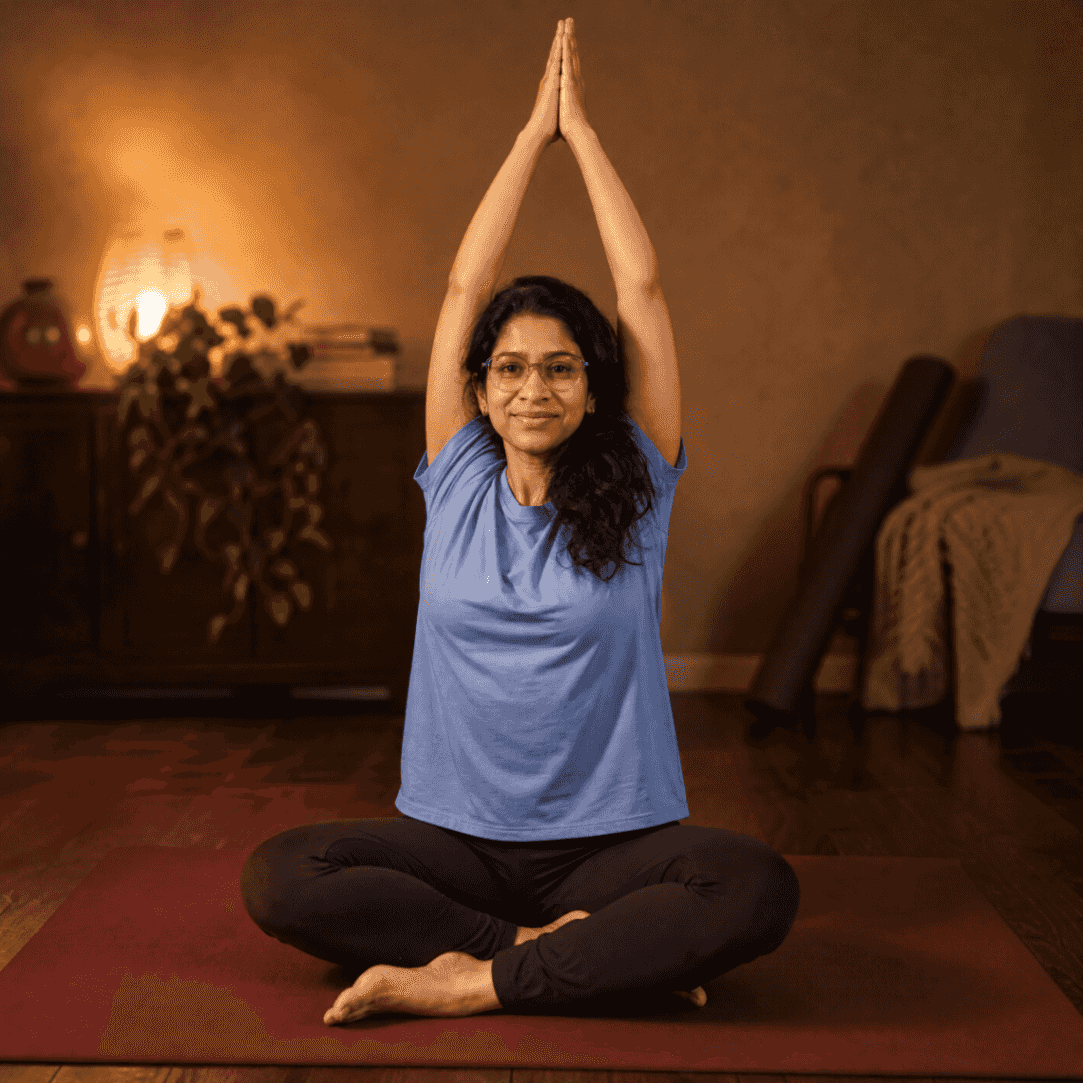
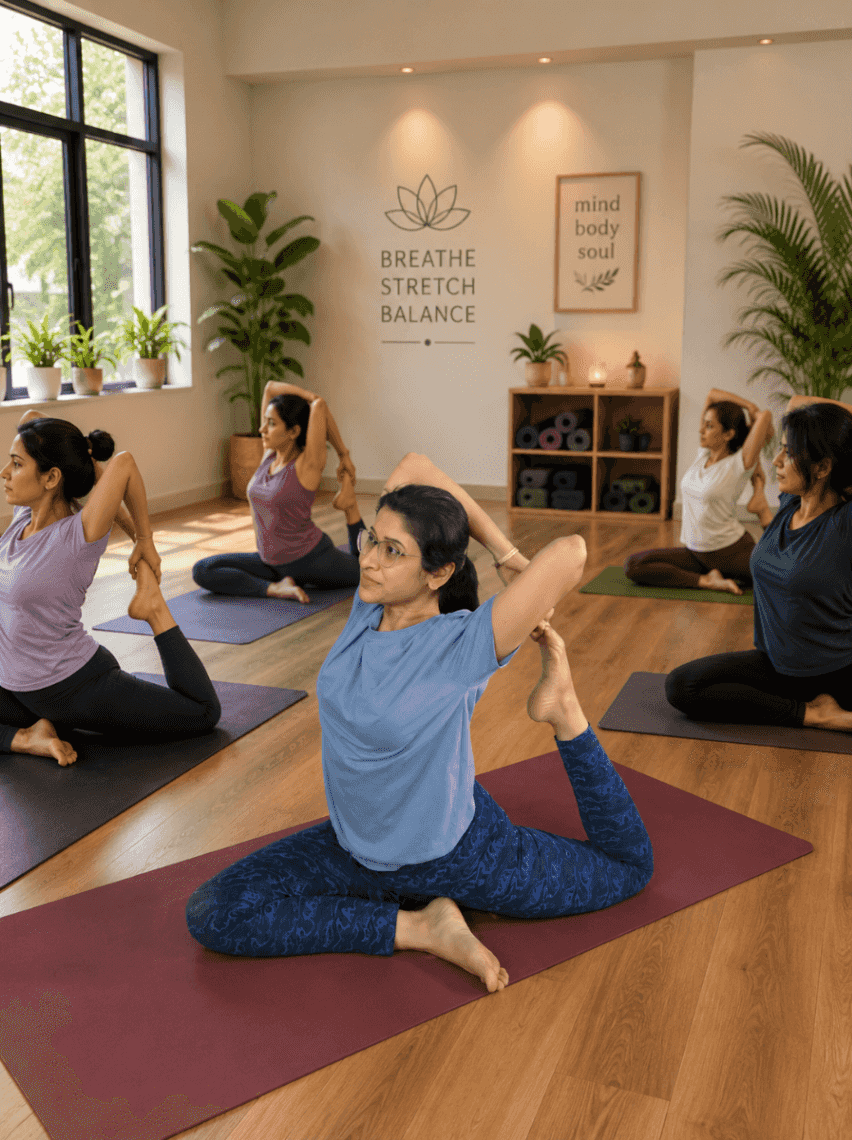
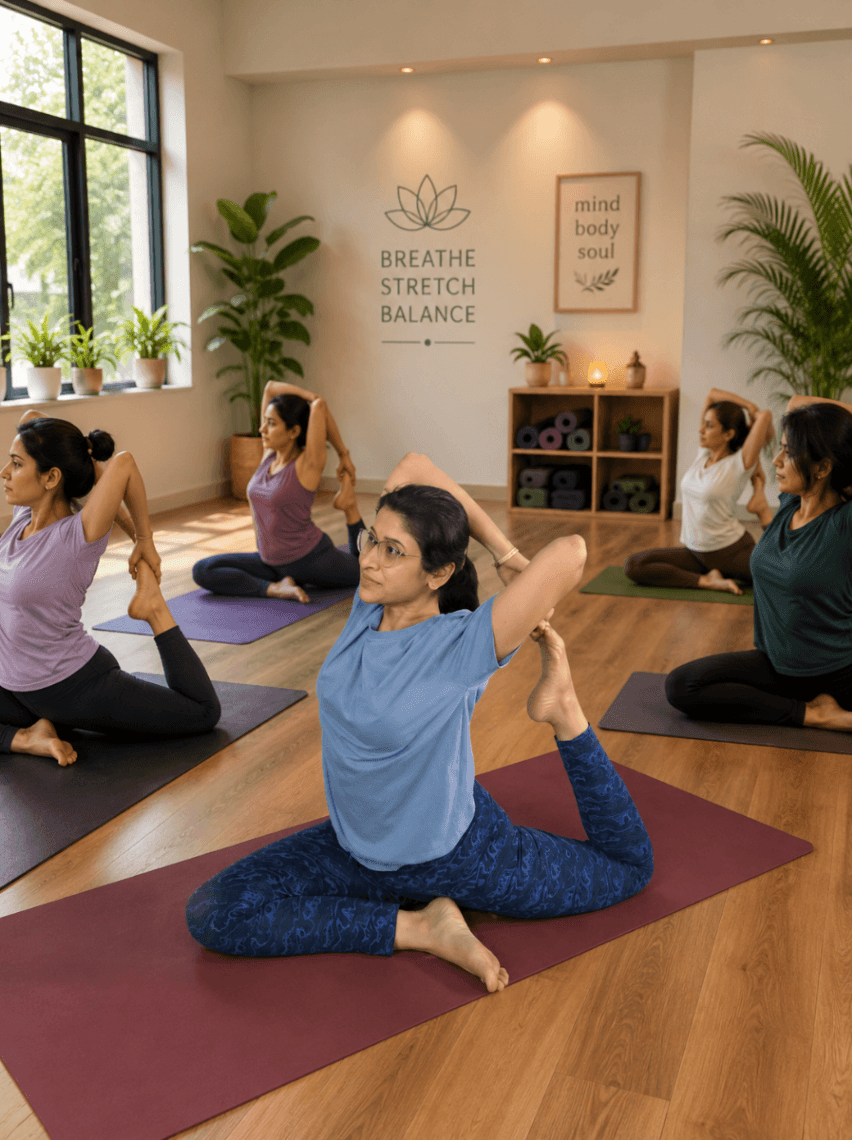
Chair YogaYanina Nesteruc teaches a 30-minute Chair Yoga Break built specifically around releasing tension from long hours of sitting — neck and shoulders especially, with gentle whole-body movement worked in. All you need is a sturdy chair. It's shorter and priced lower than her other yoga offerings, which fits the format: this is a reset, not a full practice. See her full background on her host profile.
Book a 30-minute reset
Yanina's Chair Yoga Break runs $10 for a group class or $20 for a private session — a genuine mid-day reset, not a full workout.
Book Chair Yoga Break Browse all hostsGentle yoga, in detail
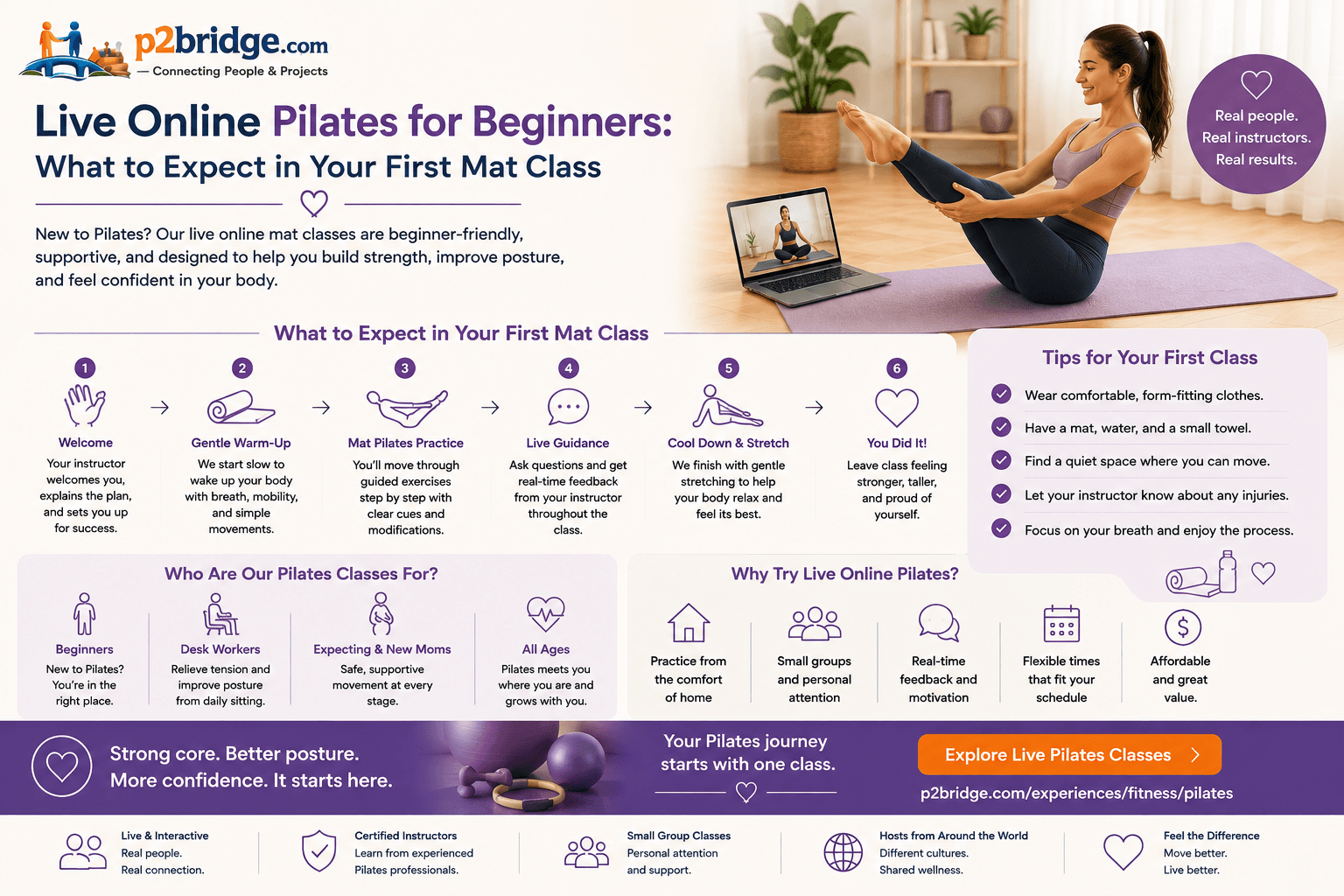
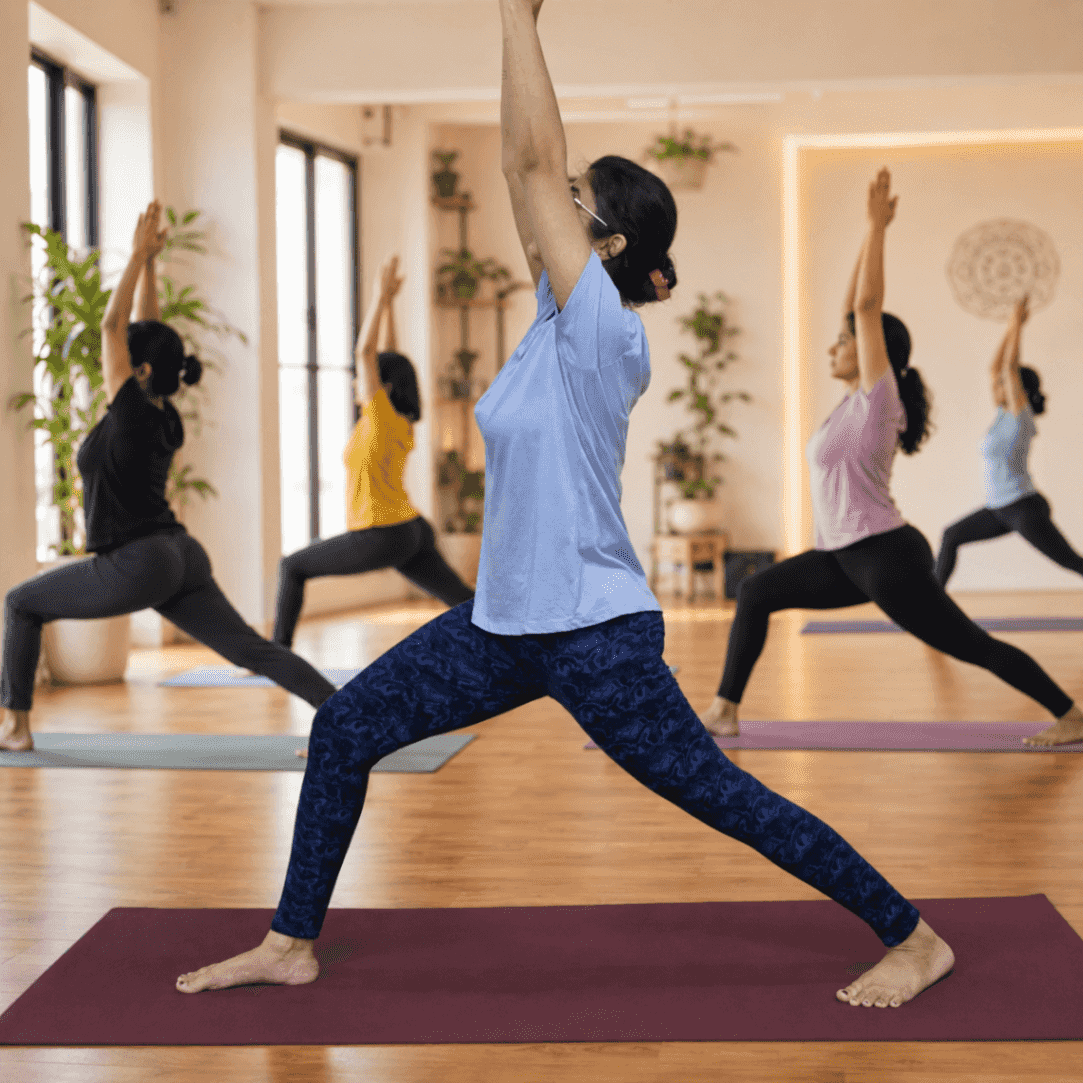
Gentle yoga keeps the full shape of a yoga practice — standing poses, floor work, a real sequence — and turns down the pace and intensity rather than removing whole categories of movement. A typical gentle yoga sequence still moves through a genuine warm-up, standing poses, and a cool-down; it's just a slower gentle yoga flow throughout, with more breath and less push. It's the style for someone who wants a complete practice without the faster flow or physical demand of a Vinyasa-style class.
Two different hosts on P2Bridge teach it, which is genuinely useful to know, because it shows gentle yoga isn't one fixed style — it's a category multiple teachers interpret their own way.
Two Real Teachers, Two Approaches
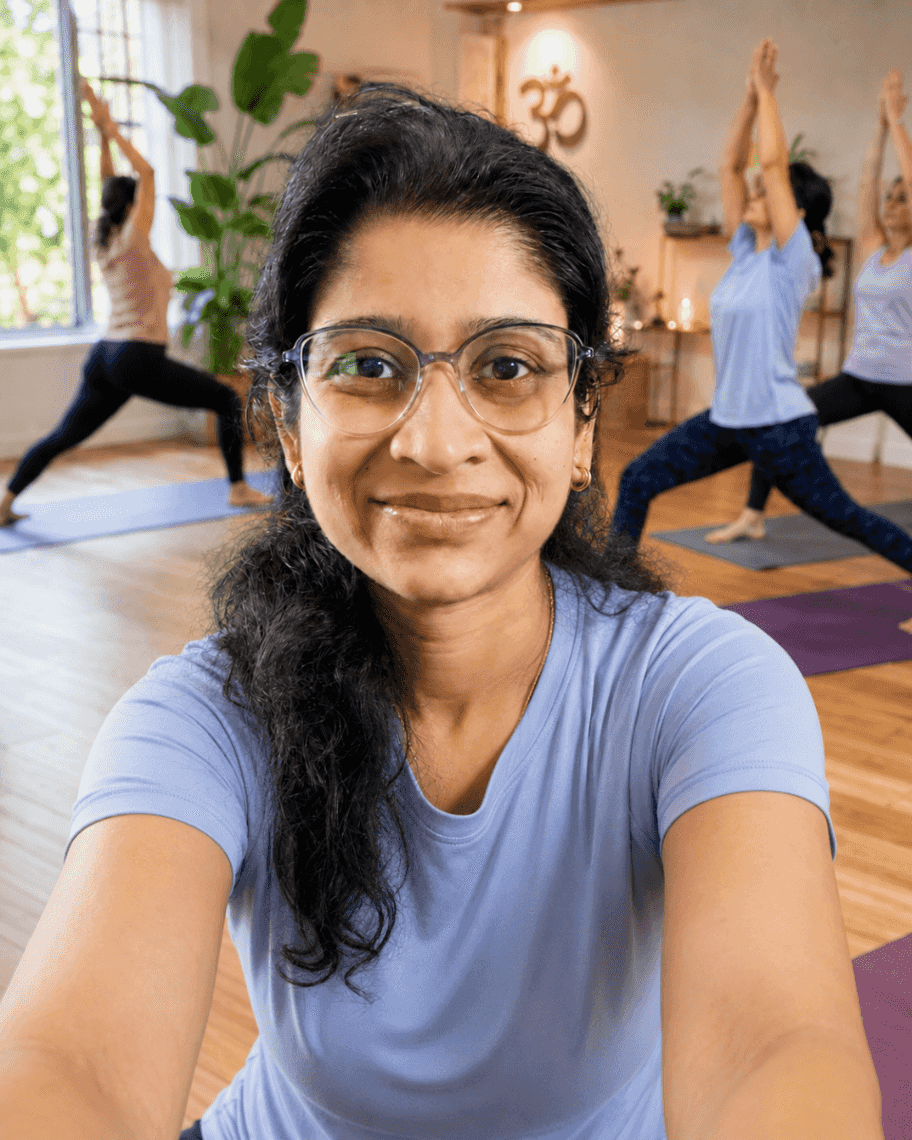
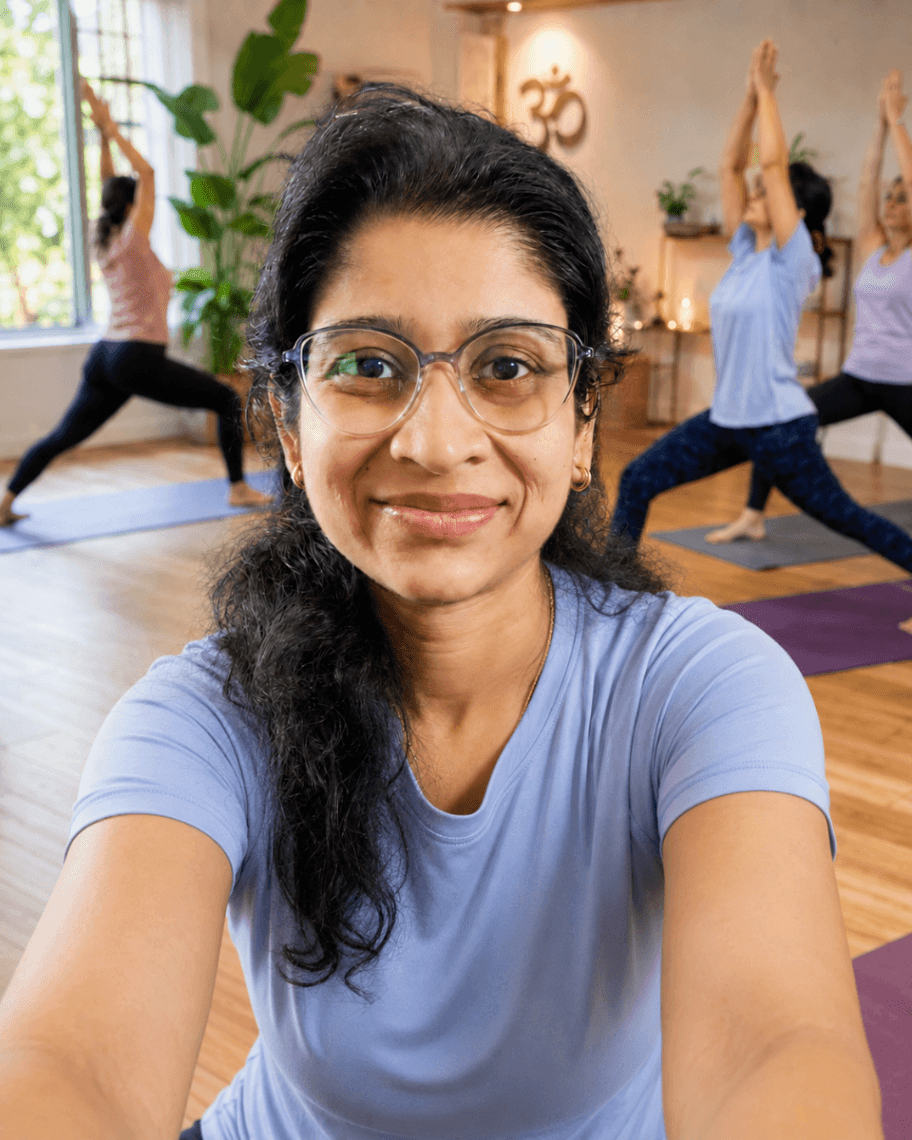
Gentle YogaYanina's "Gentle Yoga for Stress Relief and Inner Calm" ($30 private / $10 group, 60 min) leans into mindful movement and calming stretches specifically aimed at reducing stress — the same instructor who teaches Chair Yoga Break, applying a different tool to a different need: a full session rather than a short reset.
Rabab Bazar's "Gentle Yoga to Stretch and Relax" ($30/$10, 60 min) is taught by P2Bridge's most-reviewed host on the platform, at 39 reviews — see her full host profile. Her class focuses on releasing physical tension through relaxing poses, with the same live-correction advantage that matters across every style here — an instructor watching whether you're actually holding a pose correctly today, not a video assuming you're fine.
Choose your gentle yoga teacher
Both classes run $30 private / $10 group, 60 minutes. Pick based on which teacher's style fits — try either, or both.
Book with Yanina Book with RababWhat is restorative yoga, really?
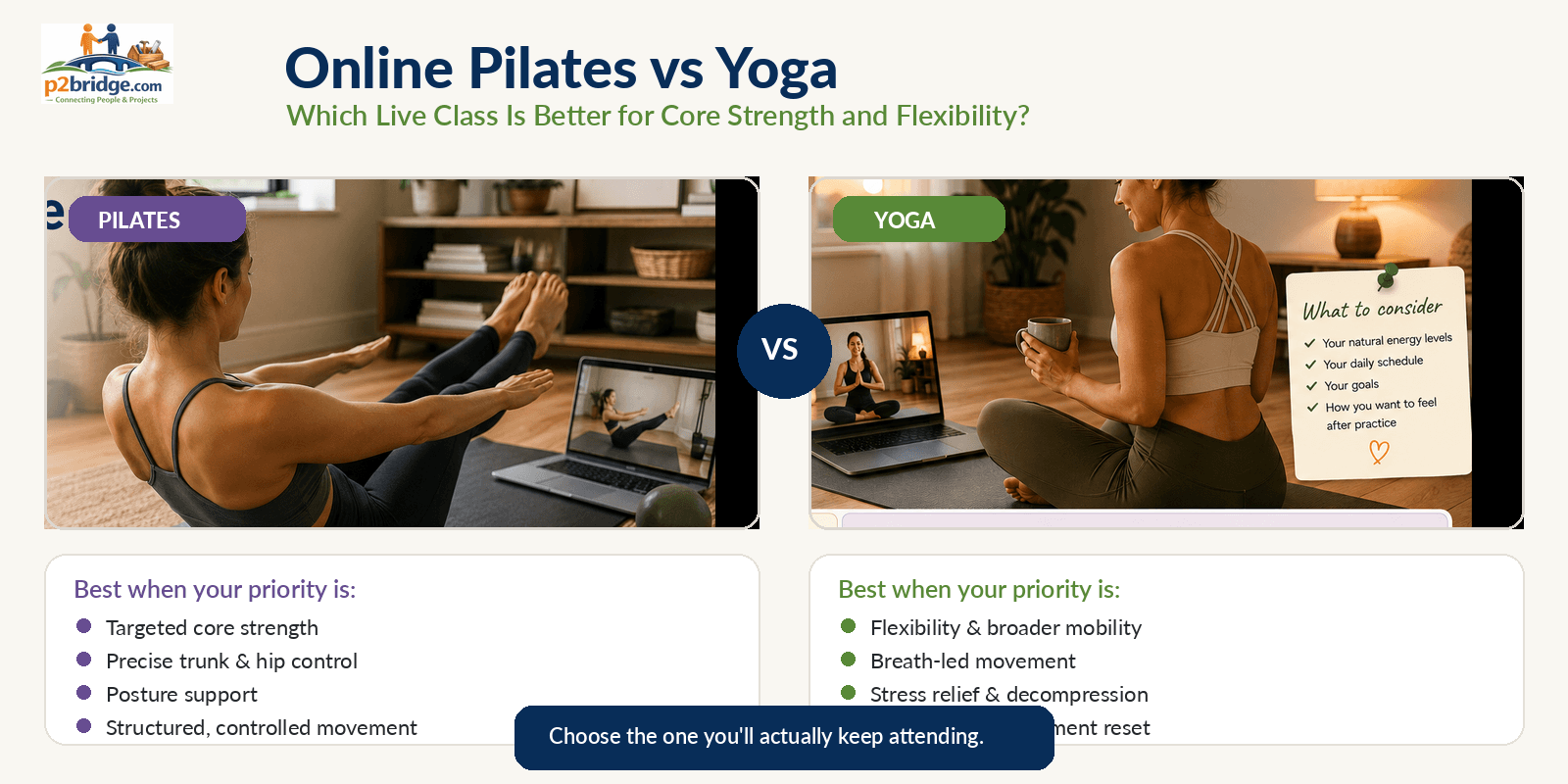
Here's the honest answer to the question a lot of people are actually asking — whats restorative yoga, in plain terms: it's built around complete passive support. Bolsters, blankets, and blocks hold your body in a small number of restorative poses — often four or five in an entire session — each held for five to twenty minutes, with essentially no muscular effort involved. By definition, restorative yoga isn't about stretching or strengthening. It's letting your nervous system shift out of a stressed, alert state, which takes time and stillness rather than a moving restorative yoga flow.
This is why restorative yoga poses with props look almost identical to just lying on the floor with cushions arranged around you — because that's close to what's actually happening. If you're looking for real examples, poses for restorative yoga typically include supported child's pose, legs-up-the-wall, and a propped reclined bound angle pose — held for fifteen minutes or more while you do nothing but breathe. That's the whole method. Harvard Health Publishing outlines a similar sequence for winding down before bed, which gives a good sense of what a real restorative session actually looks like pose by pose. A typical restorative yoga sequence might move through just three or four poses like this across an hour — a fraction of the pose count in a standard class, and that's by design, not a shortcut.
If deep rest and nervous-system downshift are really what you're after, it's also worth knowing this overlaps meaningfully with guided meditation — several P2Bridge hosts blend breathwork and stillness practices that solve a very similar problem from a different angle.
A few practical notes if you're exploring this style for the first time. Restorative yoga for beginners is genuinely one of the most approachable entry points into any yoga practice, since there's no flexibility or strength prerequisite at all — you're supported the whole time. It also overlaps with restorative yin yoga, since both hold poses for extended periods, though yin still asks your connective tissue to do some work; restorative asks for none. Looking specifically for restorative yoga online rather than in a studio is a reasonable preference too — nothing about the method requires a physical room, since the support comes from your own props, not a teacher's hands.
Worth being direct about
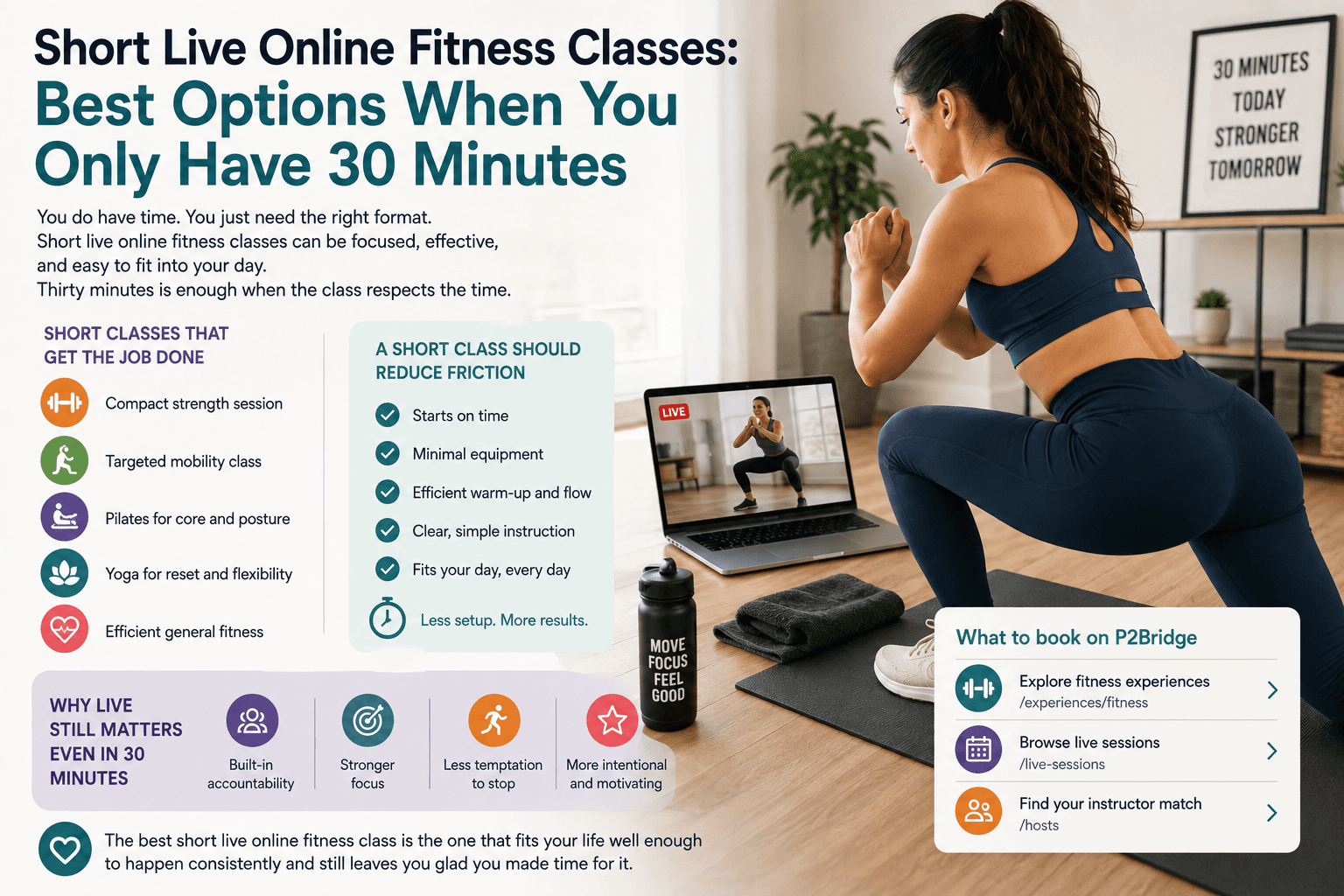
By any working restorative yoga definition — and it's worth being precise here, since so much content blurs it with gentle yoga — P2Bridge does not currently have a class specifically labeled or taught as restorative yoga in this technical sense. If you searched to define restorative yoga and hoped to book the exact method, the closest live option is Younes Eddiki's "Full Body Stretch & Relax" ($50 private / $17 group, 60 min) — see his host profile — a gentle full-body stretching session aimed at flexibility, recovery, and reducing muscle tension. It shares restorative yoga's goal of relaxation and recovery, but it's a stretching-based session, not the specific propped, held-pose restorative method. If you're specifically looking for the technical restorative style, it's worth saying so directly when booking or messaging a host, since the format can be adapted for the right learner.
The closest live option right now
Younes's Full Body Stretch & Relax runs $50 private or $17 group — recovery-focused, beginner-friendly, no equipment required.
Book Full Body Stretch & Relax Browse the yoga categorySide by side
| Chair Yoga | Gentle Yoga | Restorative Yoga | |
|---|---|---|---|
| Starting position | Seated / supported | Standing & floor | Fully propped, lying/seated |
| Effort level | Low–moderate | Moderate | Near zero |
| Pose count | Several, adapted | Full sequence | Four or five, held long |
| Hold time | Brief to moderate | Brief to moderate | 5–20 minutes each |
| Goal | Accessible movement | Lower-intensity full practice | Nervous system downshift |
| Good for | Limited mobility, desk breaks | Beginners, recovery, lower intensity | High stress, deep rest, insomnia |
| On P2Bridge | Yes — Yanina | Yes — Yanina & Rabab | Not by this exact name — see above |
The senior yoga question
Worth addressing directly rather than dancing around it, since a lot of the real search demand behind this topic comes from people searching beginning yoga for seniors, or looking for yoga classes online for seniors specifically after a doctor or physio suggests "something gentle."
None of these three styles are "for seniors" in some separate, lesser sense — they're simply well-suited to bodies that want lower intensity, more support, or an easier entry point, which plenty of younger people want too. A hatha yoga for seniors class and a gentle yoga class for a 30-year-old recovering from a long illness are solving nearly identical problems. The age framing matters less than the actual body and situation in front of the instructor, and a good live teacher adjusts to that regardless of what the class was originally marketed as.
Who should check with a doctor first
Worth a quick check before booking
None of these styles are inherently risky, which is part of why they're popular starting points. That said, if you have a recent injury, a diagnosed condition affecting mobility or balance, are recovering from surgery, or are pregnant, mention it to your instructor before the session and check with your doctor or physiotherapist first if you're at all unsure. A live instructor can adapt around almost anything once they know — the only real risk is not mentioning it. The National Institute on Aging's guidance on exercising with chronic conditions is a genuinely useful, non-commercial starting point for that conversation with your doctor.
How to choose, by real situation
- You sit at a desk all day and need a reset, not a workout. Chair yoga — Yanina's 30-minute Chair Yoga Break specifically.
- You want a full, complete yoga practice, just slower. Gentle yoga — either Yanina's or Rabab's class, whichever teaching style you connect with.
- You're stressed, wired, or not sleeping well and want deep rest, not stretching. Restorative is the technical answer, though Younes's Full Body Stretch & Relax is the closest live option today — mention what you're after when booking.
- You have limited mobility or are recovering from something. Chair yoga first, gentle yoga once you're ready for more.
- You genuinely don't know which you need. That's a completely reasonable place to start — message a host directly and describe your situation rather than guessing from a class title.
Not sure which one fits? Ask a real person
Every host listed here teaches live, so you can describe your actual situation before booking, not just guess from a title.
Book with Rabab — $30/$10 Browse all yoga classesQuestions people ask
What is restorative yoga?
Restorative yoga is a style built around complete passive support — props like bolsters, blankets, and blocks hold your body in a small number of poses, each held for five to twenty minutes, with almost no muscular effort involved. The goal is nervous-system rest, not stretching or strengthening, which makes it categorically different from gentle yoga rather than simply a gentler version of it.
What's the difference between chair yoga and gentle yoga?
Chair yoga is built around a seated or supported position as the starting point, designed for limited mobility, recovery, or a seated desk-break format. Gentle yoga keeps a full standing and floor-based practice, just at a slower pace and lower intensity. Chair yoga adapts around a constraint; gentle yoga is a complete practice done more gently.
Does P2Bridge have a restorative yoga class?
Not under that exact name currently. The closest live option is Full Body Stretch & Relax, a gentle full-body stretching session focused on recovery and relaxation. It shares restorative yoga's relaxation goal but uses stretching rather than the specific held, fully-propped restorative method. Mentioning what you're looking for when booking helps a host adapt the session accordingly.
Is chair yoga only for seniors or people with limited mobility?
No. While it's genuinely useful for limited mobility or recovery, chair yoga also works well as a short reset for desk workers of any age, or anyone who wants gentle movement without getting up and down off the floor repeatedly during a session.
Which style is best for stress relief?
Restorative yoga is technically the strongest match, since it's specifically designed to shift the nervous system out of a stressed state through stillness and support. Gentle yoga focused on stress relief, like Yanina Nesteruc's class, is a strong practical alternative if a fully restorative-method session isn't available to you.
Can beginners start with any of these three styles?
Yes — all three are commonly recommended starting points for complete beginners, more so than a faster-paced style like Vinyasa. Chair yoga in particular removes any concern about floor transitions, which is often what makes a first class feel intimidating.
How long does a typical class run?
It varies by format. Yanina's Chair Yoga Break runs 30 minutes as a focused reset. The gentle yoga classes from both Yanina and Rabab run a full 60 minutes. A true restorative session often runs similarly long, since poses are held for extended periods rather than moved through quickly.