

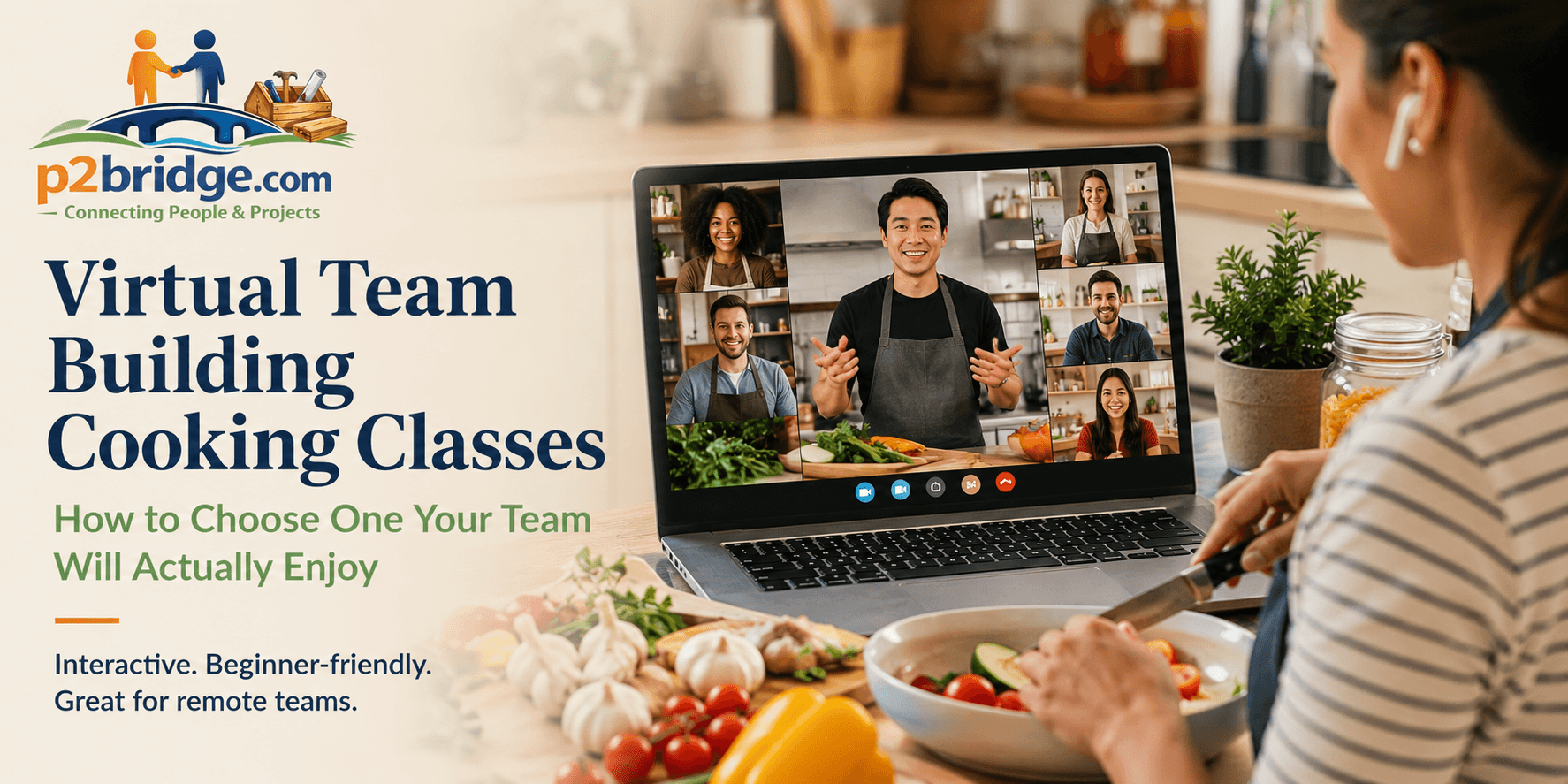
Most remote team-building ideas fail for the same reason: they ask people to show up, but they do not give them much to do.
Cooking classes are different when they are chosen well. People are moving, asking questions, laughing at the same mistakes, comparing results, and sharing something concrete by the end of the session.
That makes virtual team building cooking classes one of the better options for remote teams. But only if the class is actually built for a group.
The class has to work for mixed skill levels
This is the first filter.
In a work setting, you are never booking for a room full of equally confident cooks. Some people love cooking. Some barely use their stove. Some are excited. Some are just hoping the activity does not embarrass them.
A good remote team cooking class should work across that whole spectrum.
Look for formats that:
- keep ingredients accessible
- avoid advanced knife work or precision-heavy baking
- have a clear beginning, middle, and end
- let people recover easily if they fall behind
- give the host enough room to keep the group together
If the recipe depends on everyone performing at the same level, it is a bad corporate pick no matter how delicious it sounds.
Choose engagement over culinary complexity
The goal is not to create the most ambitious dish your team has ever seen. The goal is to create shared participation.
That usually means choosing a class with:
- lots of visible steps
- opportunities for interaction
- enough repetition that people can catch up
- a finish that feels satisfying on camera
Think dumplings, pasta, tacos, sauces, rice dishes, desserts with assembly, or region-specific recipes with a strong story behind them. Those formats create conversation naturally because people can compare progress as they go.
The more silent and technical the class becomes, the less it feels like team building.
Host style matters as much as the recipe
For a remote team, the host is carrying more than instruction. They are carrying energy.
You want a host who can:
- explain clearly
- keep people relaxed
- invite small moments of participation
- handle questions without derailing the group
- bring cultural or personal context that makes the session memorable
That is often what separates a nice activity from a genuinely good company experience. The dish brings people in. The host makes them stay engaged.
Think through logistics before you book
A team class becomes much easier to run when the operational pieces are simple.
Before booking your online cooking class for team building, decide:
- how long the class should be
- whether everyone is buying ingredients themselves
- whether the team needs a beginner-friendly shopping list
- how large the group is
- whether you want a relaxed social feel or a more guided hosted experience
The easiest wins usually come from keeping the ingredient list straightforward and the session length reasonable. A team that will gladly give you 60 to 90 focused minutes may not want a three-hour culinary challenge on a weekday.
What to book on P2Bridge
If you are planning a remote team event, start by browsing culinary experiences on P2Bridge and reviewing the host directory for teaching styles that feel clear and group-friendly.
If you want a sense of live pacing first, explore group sessions.
The best virtual team-building cooking class is not the one with the most complicated menu. It is the one where everyone feels comfortable joining, participating, and ending the session with something they actually made.