







Are Live Online Cooking Classes Worth It? What Actually Happens in One
Worth it if you need someone to correct you while you're cooking. Not worth it if you want to pause, rewind, or start whenever you feel like it. That's the whole trade. You're buying a person watching your pan — and on every other measure, a recorded video beats this format.

The short answer, and the condition attached
Let's deal with the obvious objection first, because it's a fair one.
YouTube is free. It has more recipes than you'll cook in a lifetime, better production, and you can watch at 2 a.m. in your dressing gown. On availability, cost, convenience and range, a recorded video wins comfortably and it isn't close.
There's exactly one thing it can't do, and whether that thing is worth $25 to you is the entire question.
A video can't see your pan. It doesn't know your dough is too sticky, that your oil isn't hot enough yet, that you've been standing there for forty seconds not sure whether to keep stirring. It can't tell you that the thing you're worried about is fine and the thing you haven't noticed is the actual problem.
So the honest answer is conditional. Worth it when you need real-time correction. Not worth it when you don't.
To work out which of those you are, it helps to know what a session actually consists of — so here's what 276 people who've done it describe.
What actually happens, minute by minute
This is reconstructed from published reviews rather than from a marketing page, which means the awkward parts are in it too.
| When | What happens |
|---|---|
| After booking | The session goes into your calendar. Reminder emails arrive — reviewers mention one at 30 minutes and one at 5 minutes before |
| Joining | Sessions run on Google Meet. Most reviewers describe this as straightforward; several found it fiddlier on a phone than a laptop |
| First 5 minutes | Host introduces themselves, often with an icebreaker. Reviewers repeatedly mention the host asking what ingredients they've actually got in front of them |
| Before cooking | Substitutions get sorted. This comes up constantly — missing ingredients swapped for what you have, before anything hits a pan |
| The main stretch | Host cooks alongside you, pausing to let people catch up and checking each person's progress before moving on. Several mention two camera angles or close-up work on hands |
| When it goes wrong | Real-time rescue. Reviewers describe failed doughs diagnosed and fixed mid-class rather than written off |
| Throughout | Conversation. Cultural background of the dish, questions, and — a recurring theme — strangers in different countries talking while they cook |
| The end | Several reviewers describe tasting the finished dish together on camera. One mentions a screen-side toast |
| Afterwards | Reviewers mention receiving the detailed recipe by email, and a feedback request from the platform |
The bit that surprised me, reading through all of it, is how much of the value sits in the first five minutes rather than the cooking.
One reviewer describes turning up to a Thai class nervous and openly sceptical, finding the ingredient list intimidating, and realising she didn't have lemongrass or kaffir lime leaf. The host worked out replacements from what she did have before the class started. She then describes a cultural exchange, losing track of the time, and wanting to do it again.
Nothing about that is exotic. But a recipe can't do it, and a video can't do it, and the class was effectively saved before any cooking happened.

The one thing a recording cannot do
One review says it better than any marketing page has managed, and it's about pierogi dough.
The reviewer describes the host explaining exactly how the dough should feel and what consistency to look for — and then makes the point directly: that's the kind of thing you can't get from a written recipe alone.
That's the whole argument in one observation from someone who paid for it.
Think about how recipes actually describe texture. "Until smooth." "Slightly tacky." "It should come away from the bowl." Those phrases are perfectly accurate and completely useless the first time, because they describe a sensation you haven't had yet. You can watch a video of someone else's dough and still not know whether yours is right, because yours is in your hands and theirs is on a screen.
Someone watching you closes that gap in about four seconds. "More flour." "That's it — stop."
The same reviewer notes that the detailed recipe arrived afterwards, so she could make them again alone. That's the actual shape of the value: you pay once for the calibration, and the recipe is what you keep.

The dough-consistency class itself
Kseniia Mishchenko is a Premier Host teaching Slavic and Eastern European cooking from Sweden. Her pierogi class runs 90 minutes at intermediate level, and reviewers consistently mention that she waits for everyone before moving on and makes it easy to ask questions mid-class.
What reviewers say, over and over
Reading 276 reviews, the same five things surface repeatedly. Not the marketing claims — the things people bother to mention unprompted.
- Real-time correction. Overwhelmingly the most common. Form, technique, temperature, texture. People notice it because it's the thing they weren't expecting to get.
- Substitutions. Missing an ingredient, or avoiding one. Repeatedly sorted at the top of the class, sometimes in advance by message.
- Small groups. Culinary group classes cap at five. Reviewers mention being able to ask questions out loud and get an answer about their own pan.
- Cultural context. Where the dish comes from, why it's made that way, what it means at a table — from someone it belongs to. This comes up far more than I expected.
- The company. Several reviewers say directly that they usually cook alone and valued having other people there. One mentions strangers in different countries introducing themselves and talking through the session.
That last one isn't what the format is sold on, and it's mentioned about as often as the teaching.
What goes wrong
Now the part a marketing page wouldn't print. These complaints are on the same public reviews page as the praise, and if you're deciding whether to spend money you should have them.
| What went wrong | How often | What reduces the risk |
|---|---|---|
| The host didn't show up | At least five reviews across cooking and fitness. Reported waits of 30 and 45 minutes | The most serious complaint on the page. Book hosts with a substantial review count — it correlates with reliability |
| Audio problems | Recurring | Hard to hear the host over your own pan. Use headphones, not laptop speakers |
| Incomplete ingredient list | Several | People arrived missing something. Read the list days ahead and message the host if anything is unclear |
| Measurements in cups, not grams | Several | Ask in advance if you bake by weight. One reviewer's dough went wrong over egg-white volume |
| Pace too fast | A few, on complex recipes | Do the advance prep. Most pace complaints trace back to starting behind |
| Price | One explicit objection | A reviewer felt $25 for a single group session was steep and wanted packages with a progression |
| You're the only attendee | Several | A private class at the group price if you wanted tuition. A letdown if you came for the company |
| Mobile joining | More than one | Reviewers found it fiddlier on a phone. Use a laptop or tablet if you have one |
The no-show one deserves to be stated plainly rather than buried in a table. If a host doesn't turn up, you've cleared an evening, shopped for ingredients, prepped for an hour, and got nothing. That's a materially worse outcome than a video that buffers.
It isn't common across 276 reviews. It isn't rare enough to leave out either.
The practical hedge: book a host with a meaningful number of reviews. Someone with thirty reviews at 4.8 has turned up thirty times. Someone with one review might be excellent, but you're taking a position on incomplete information.
Is it worth the money?
Group culinary classes run roughly $20 to $35 per person. Private sessions, $25 to $65.
Set that against what you'd otherwise spend. A middling restaurant main is $25 and you learn nothing. A recorded course is $50 and the completion rates on those are famously grim. A cookbook is $30 and you'll cook four things from it, which is above average.
But the useful comparison isn't cost, it's what you're buying. You're paying for attention, and attention is the one component of teaching that can't be duplicated, stored, or sold twice. That's why it costs what it costs, and it's also why it can't get much cheaper.
Whether that's worth $25 depends on one thing: whether you'd otherwise get it wrong. If you've made pierogi four times and they're fine, don't book a pierogi class. If you've never worked with a dough like that and the last three attempts were disappointing, the class is cheaper than the ingredients you're about to waste.
Who it's for, and who it isn't
Worth it if: you've plateaued from recipes and can't tell why; you're cooking an unfamiliar cuisine and don't know what "right" looks like; you want the cultural context alongside the method; you actively want other people in the room; or there's a specific technique — a dough, an emulsion, a sear — where you need someone to say "that's it, stop."
Not worth it if: you want to pause and rewind; you can't hold a fixed 60 to 90 minutes; you'd rather not be watched while you cook; or you're mainly after the recipe, in which case the internet has it free.
I'd add one that doesn't get said: it's not worth it if you won't do the prep. Turn up without your ingredients measured and you'll spend the session behind, and the host's attention — the thing you paid for — goes on catching you up instead of teaching you anything. We wrote a separate guide on what to have ready before your first class, and it matters more than the equipment does.
The hosts whose reviews describe this best
Chosen by what their reviewers actually wrote, not by cuisine.

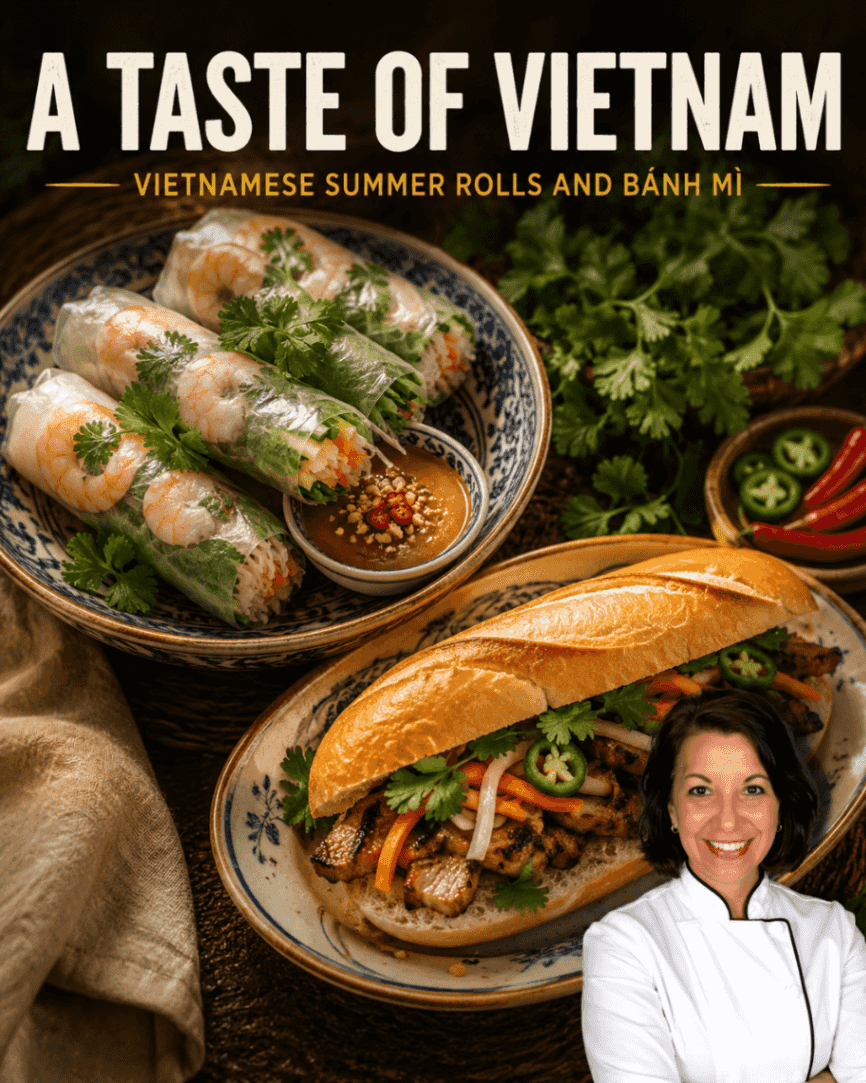
★★★★★ 4.830 reviews · 13 experiences — the most-reviewed cooking host
Premier Host · Cuisine Specialist · Brazil · Professional Chef, Recipe Developer & Food Content Creator · Portuguese, English, Spanish
The rescue stories cluster around her — a failed dough fixed mid-class, an over-sticky one diagnosed instantly, ingredients checked before starting. Reviewers also mention two camera angles. Her reviews include criticism too: audio that was hard to hear while cooking, and requests for gram measurements.

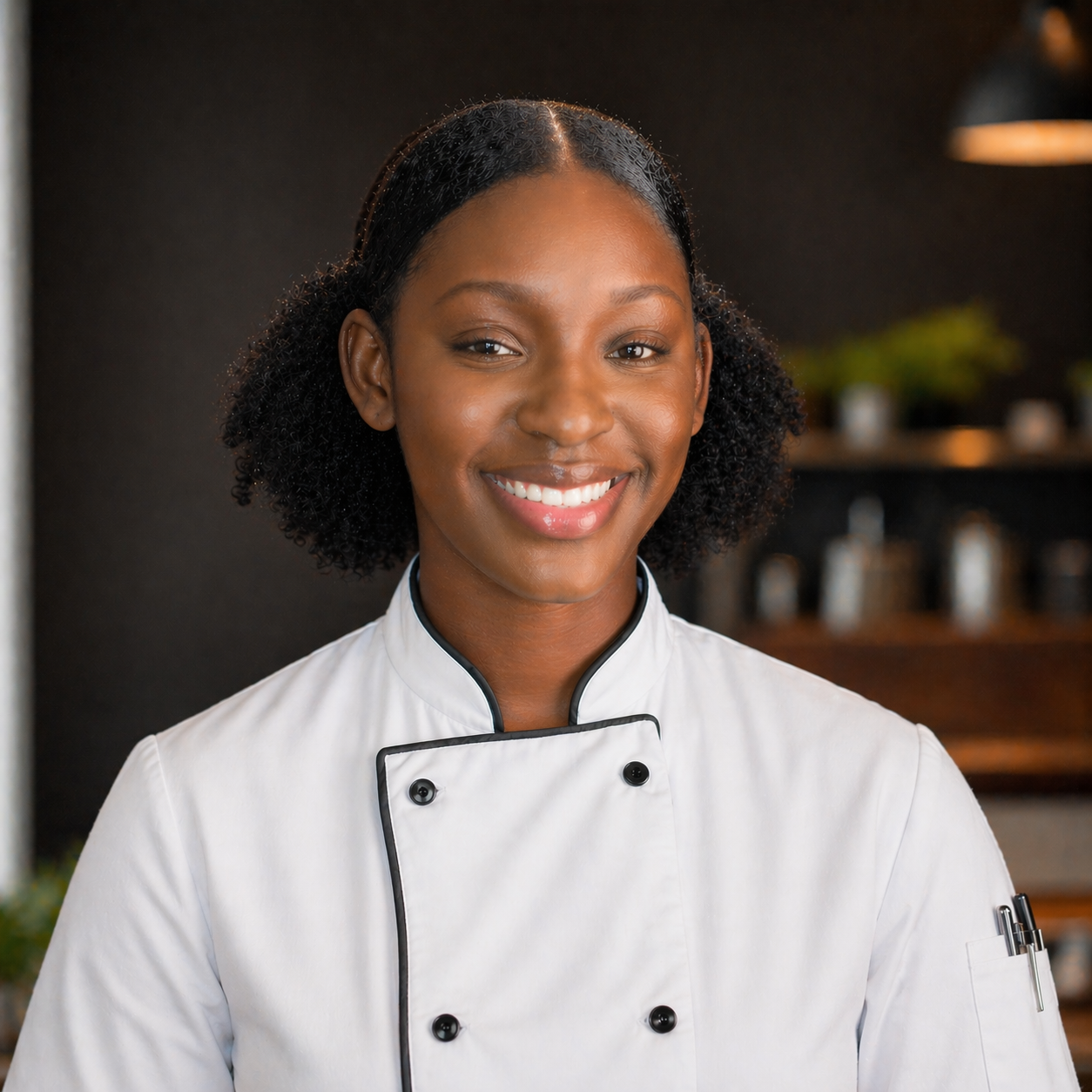
★★★★★ 4.914 reviews
Verified Host · Trinidad and Tobago · 6 years · Caribbean and African home cooking
The most granular account of a session on the whole reviews page belongs to one of her classes — early arrival, icebreaker, checks at every stage, alternatives offered on the spot, eating together, and the lesson finished inside its slot with time to spare. Another reviewer was the only attendee and got what amounted to a private class.
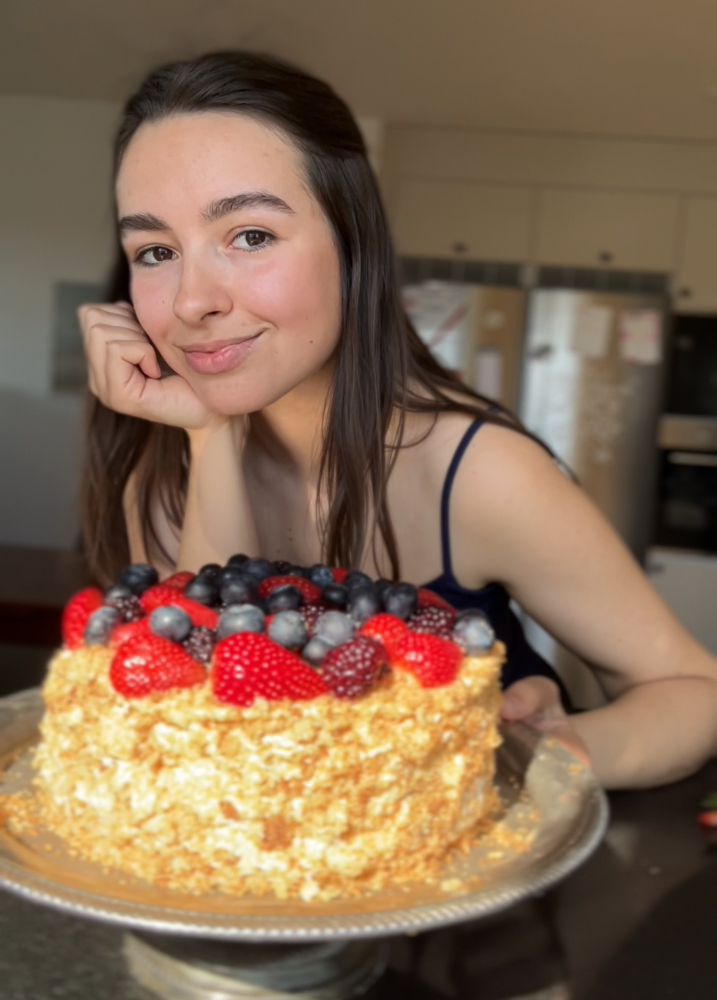
★★★★★ 4.9Premier Host · 7 experiences
Sweden · Slavic and Eastern European cooking · blini, pierogi, syrniki, pirozhki, Chicken Kyiv
Her reviews contain the clearest statement of why live beats recorded — a student describing being taught how dough should feel, and noting that a written recipe alone can't teach that. Others mention her waiting for everyone before starting and encouraging questions throughout.

★★★★★ 5.03 reviews · 12 experiences
Verified Host · United States · Chef Instructor for Columbus State, Ohio · food & travel writer · 18 years
The sceptic's arc lives in her reviews — someone who arrived nervous and unconvinced, was missing two key aromatics, had substitutions sorted before cooking, and finished having lost track of the time. Another asked in advance about swapping a seafood ingredient and was walked through the adjustment.
Browse and judge for yourself: all 276 reviews, scheduled group classes, private sessions, the culinary catalogue, packages, team sessions, every verified host, or the platform's own account of itself.
Frequently asked questions
Are live online cooking classes actually worth the money?
They are worth it when you need real-time correction — someone watching your pan who can tell you your dough is wrong or your oil is not hot enough. If you only want a recipe, or you want to pause and rewind, a recorded video is better and free. You are paying for attention.
What actually happens in a live online cooking class?
You join on Google Meet after calendar reminders. The host introduces themselves, checks what ingredients you have, and arranges substitutions if you are missing anything. You then cook alongside them with progress checks throughout, often eat together on camera, and receive the detailed recipe by email afterwards.
How many people are in a class?
Culinary group classes cap at five people, including you. Several reviewers report being the only person who booked, which effectively gives you a private lesson at the group price. That is a bonus if you wanted tuition and a disappointment if you came for the company.
What if the host does not show up?
It happens. At least five published reviews describe a host who never joined, with reported waits of 30 and 45 minutes. It is not common across 276 reviews but it is not rare enough to ignore. Booking hosts with a substantial review history reduces the risk. Contact the platform directly about a specific booking.
Can I take a class if I am missing an ingredient?
Usually yes, and this is one of the format's real strengths. Reviewers repeatedly describe hosts arranging substitutions at the start of a class, or in advance by message. One student missing two key Thai aromatics had replacements sorted before any cooking began.
How much do live online cooking classes cost?
Group culinary classes run roughly $20 to $35 per person, and private sessions from about $25 to $65. One reviewer stated plainly that $25 for a single group session felt expensive and would have preferred a package with a clear progression. Prices vary by host and change over time.
Do you get the recipe afterwards?
Reviewers mention receiving a detailed recipe by email after the class, which lets you repeat the dish alone. That is a useful way to think about the value: you pay once for the calibration on technique, and the written recipe is what you keep.
Is a live class better than a YouTube video?
Only in one respect, but it is a decisive one. A video wins on cost, convenience, range and repeatability. What it cannot do is see your pan, diagnose a problem you have not noticed, or adapt a recipe to what is actually in your kitchen. If you do not need that, use the video.
Related reading: what to prepare before your first class, choosing the right rice, and Korean banchan and the twelve-dish table.
How we sourced this
Everything in this article comes from the platform's own public reviews page — 276 reviews, read on 24 August 2026. The session walkthrough is reconstructed from what reviewers describe, not from a marketing page. Reviews are paraphrased rather than reproduced; you can read them in full at the link and check our reading against them.
The criticisms come from the same source as the praise. We have not filtered the reviews page for favourable comments. Where complaints recur, we have said so and given the reported waiting times. We have deliberately not named which hosts the complaints attach to — the pattern is what matters to a reader deciding whether to book, and naming individuals in a negative context would not be fair to them.
What we could not verify. Cancellation terms, refunds and whether sessions are recorded are not stated on the public pages, so this article does not describe them. Ask via contact or read the terms and conditions. Class prices, review counts and host rosters change — treat the figures as a snapshot.