









Jasmine vs Basmati vs Glutinous vs Bomba: Choosing Rice
One molecule decides all of it. Amylose is a straight-chain starch that keeps grains separate; amylopectin is branched and makes them stick. Glutinous rice sits at 0–2% amylose, basmati and jasmine at around 22%, and paella and risotto rices in the middle. Every difference in texture follows from that one number.

One molecule decides everything
Rice starch comes in two forms, and the ratio between them is the only thing you actually need to understand.
Amylose is a straight-chain starch. It resists gelatinising, holds its structure under heat, and produces grains that stay separate and dry.
Amylopectin is branched. Its granules rupture readily, it swells aggressively, it gelatinises at a lower temperature, and it produces a cohesive, clingy result.
Every variety on the shelf sits somewhere on that spectrum, and where it sits determines what it's good for. Rouxbe Culinary School puts long-grain varieties around 22% amylose and medium grains at roughly 15–17%, which is where the creamy consistency comes from.
| Rice | Amylose | Cooked result | Use it for |
|---|---|---|---|
| Glutinous | 0–2% | Sticks in a cohesive, chewy mass | Klepon, mochi, sticky rice desserts, mango sticky rice |
| Arborio / carnaroli | ~15–19%, high surface starch | Releases starch, goes creamy | Risotto, arancini, rice pudding |
| Bomba / Calasparra | Medium grain, ~15–17% | Absorbs heavily, stays separate | Paella — and it forms socarrat |
| Jasmine | ~22%, softer in practice | Tender, faintly clingy, fragrant | Thai and Southeast Asian dishes, curries, stir-fries |
| Basmati | ~22% | Dry, separate, elongates lengthwise | Biryani, pilaf, Indian meals |
Glutinous rice contains no gluten
None. Not a trace. It's one of the worst-named foods in any kitchen.
"Glutinous" here means glue-like — it's describing texture, not chemistry. Rice contains no gluten of any kind, and the sticky varieties are no exception. The USDA's National Agricultural Library defines glutinous rice as rice with 0–2% amylose, or starch that is mainly amylopectin — a definition entirely about starch structure, with gluten nowhere in it.
It's also sold as sticky rice, sweet rice and waxy rice, which compounds the confusion. "Sweet" refers to its use in desserts, not to any sugar content. It isn't sweet.
What it does have is essentially pure amylopectin, and that's why it behaves the way it does — cohesive enough to pick up in a ball with your fingers, chewy rather than fluffy, and completely unsuited to anything where you want separate grains.
It also turns up as flour more often than as whole grain in Southeast Asian sweets. Maria Angeline R's klepon — the Indonesian palm-sugar-filled rice balls — are built on glutinous rice flour, and the chew you get from them is amylopectin doing exactly what amylopectin does.

If you avoid gluten: glutinous rice is fine. It's the name that's wrong, not the product. Check the packaging for cross-contamination warnings as you would with anything, but the rice itself carries no gluten.
Bomba and arborio are not the same thing
This is the swap that ruins dinner, and the one most likely to seem harmless. Both are medium-grain. Both sit in roughly the same amylose range. They behave in opposite ways.
The difference isn't total starch. It's surface starch, and what you do with it.
Bomba is built for absorption. It takes on up to three times its volume in liquid — far more than ordinary rice — while staying firm and separate. In a paella, that's the whole job: drink the saffron stock, don't turn creamy, and leave the pan dry enough at the end for the base layer to caramelise.
Arborio sheds starch from its surface into the liquid as you stir. That released starch is the sauce in a risotto. There is no cream in a properly made risotto — the creaminess is starch and agitation.
So the two rices want opposite treatment. Risotto is stirred constantly to encourage starch release. Paella is not stirred at all.
I'm not the authority here, and I don't need to be. Shawnie Kelley's paella class notes on P2Bridge state it outright: bomba is prized for absorbing liquid up to three times its volume while keeping a firm, separate texture — and she tells students to avoid arborio and other risotto-style rices, because they release too much starch and won't produce the caramelised bottom layer. She also lists Calasparra, Albufera and Redondo as good regional alternatives, which is the kind of detail that only comes from someone who has actually shopped for this.

Her notes on getting there are worth having: widest pan you own, no stirring once the stock is in, and listen — there's a gentle crackling near the end as the socarrat forms, and that's your cue to drop the heat rather than push through. Then rest it five to ten minutes.
My own contribution is the failure. I made paella with arborio once because it was what the shop had and medium grain is medium grain, surely. It came out as a saffron risotto with mussels in it. Perfectly edible. Nothing whatsoever like paella, and no socarrat, because the rice had turned the remaining liquid into sauce instead of leaving the pan dry.
We went deeper into the timing side of that dish in paella isn't a rice dish, it's a timing dish.
Cook paella with the right rice, live
Shawnie Kelley teaches classic paella with bomba, Calasparra or paella rice — chicken, chorizo, shellfish, saffron, and the socarrat you can hear forming. She's a chef instructor leading culinary programs for Columbus State in Ohio, with 18 years behind her.
If it's the creamy end you're after rather than the separate end, that's a different class and a different rice. Suelen Santiago teaches Creamy Italian Parmesan Risotto with Seared Steak — risotto rices being arborio or carnaroli, where the starch release is the entire objective rather than a fault.

Jasmine and basmati are closer than the shelf suggests
These two get treated as rivals. They're more like cousins.
Both are long-grain aromatics. Both sit around 22% amylose. And both owe their fragrance to the same molecule — 2-acetyl-1-pyrroline, the compound behind that popcorn-and-pandan smell, present in jasmine and basmati alike, though jasmine carries it at lower intensity.
Where they part company:
- Basmati cooks drier and more separate, and it elongates dramatically along its length rather than swelling outward. That lengthening is why it works in biryani, where you want distinct grains you can see.
- Jasmine cooks softer and faintly clingy — enough that it holds together on a spoon next to a curry, which is exactly what Southeast Asian meals want from it. Thailand grows the majority of the world's supply.
Now the honest part, and it's the useful part.
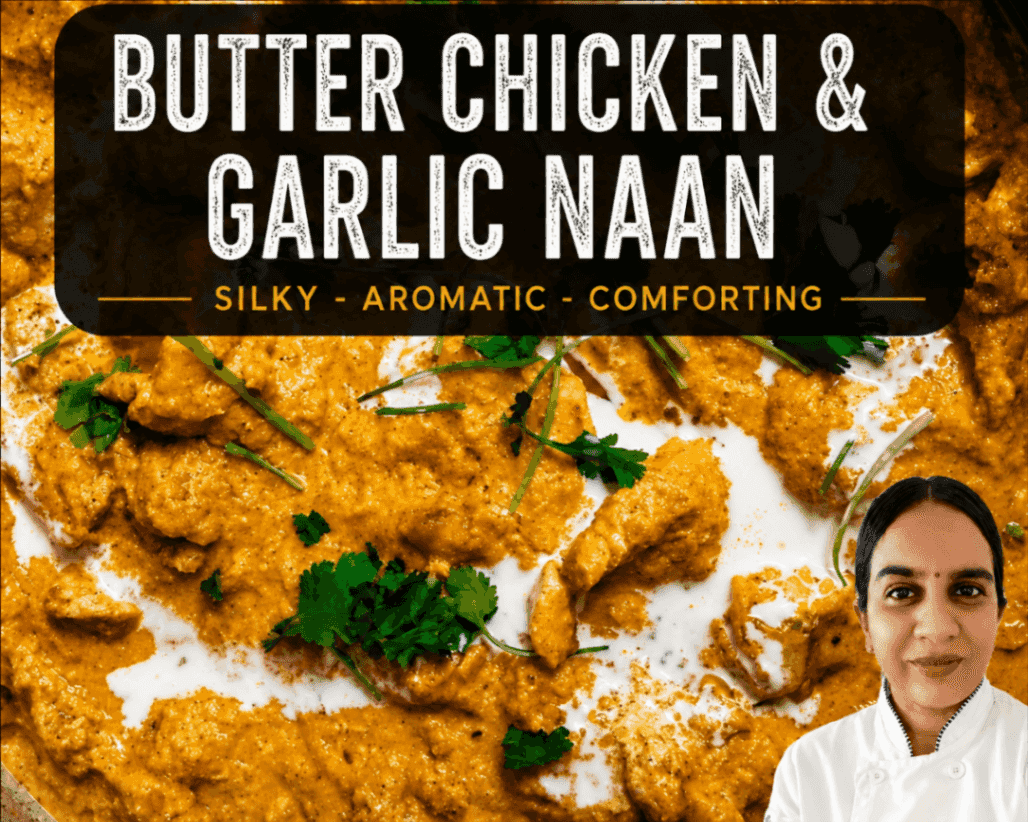
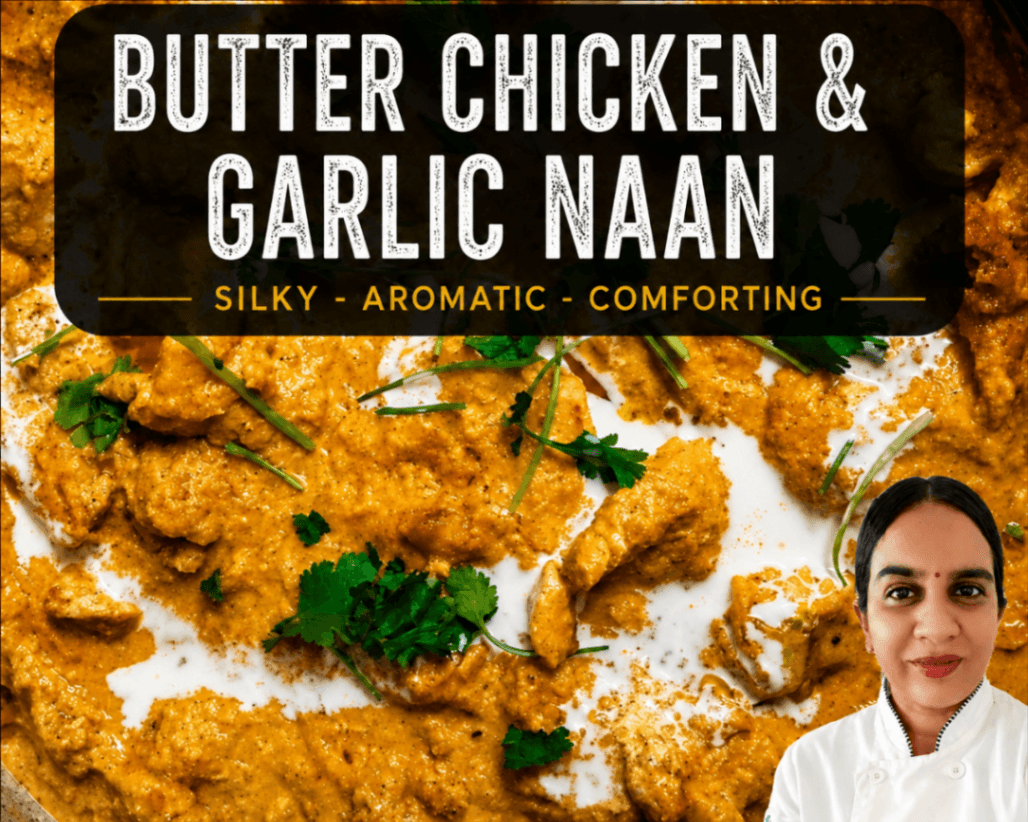
Shawnie's Indian at Home class — butter chicken, Bombay aloo and naan — tells students in the preparation notes to pre-make "Jasmine or Basmati rice" and keep it warm. Either. She doesn't specify.
That's not carelessness. In that meal the rice is a plain accompaniment to a rich, heavily spiced curry, and at that job the two really are interchangeable. Nobody at the table is going to identify which one you used.
Where it does matter: a biryani, where basmati's elongation and dryness are the point and jasmine would go soft and muddy. Or a Thai meal, where jasmine's gentle cling is what you want and basmati would sit on the plate like separate pellets.
So the rule isn't "these are different, always use the right one." It's: when the rice is a background, either works. When the rice is a component of the dish, the distinction is real. A chef treating them as swappable in one context tells you precisely where the line falls.

One practical note on basmati: soak it for about half an hour before cooking. The grains hydrate evenly and elongate properly instead of snapping, which is what causes the broken, gluey basmati people blame on the brand.
Grain length, briefly
Packets are labelled by grain length, so it's worth being able to translate.
Long grain runs about 6.6mm and up — basmati, jasmine, standard long grain. Medium grain sits roughly between 5.5 and 6.6mm and covers arborio, carnaroli and bomba. Short grain is the widest relative to its length — sushi rice and the Japonica varieties eaten daily in Japan and Korea.
Useful shorthand, but it's a proxy. Grain length correlates with amylose without determining it, which is why bomba and arborio can share a length category and still behave nothing alike. When the two disagree, trust the starch.
Rinse, or don't: one rule, four answers
Every rinsing instruction you've ever read comes from the same principle: surface starch either helps you or hurts you. Which one depends entirely on the dish.
- Basmati and jasmine — rinse. Three or four changes of water until it runs mostly clear. You're washing off loose starch that would otherwise glue the grains together, and separate grains are the entire objective.
- Arborio — never rinse. That surface starch is your sauce. Rinsing a risotto rice is throwing away the dish.
- Bomba — don't rinse, and don't stir. You want the absorption without the agitation that would release starch into the pan.
- Glutinous — rinse, then soak, then steam. Boiling it like ordinary rice gives you a gluey mass rather than the distinct chewy grains you're after.
Same molecule, four different decisions, all downstream of what the dish needs the starch to do.
The substitution table
| Swap | Verdict | What happens |
|---|---|---|
| Jasmine ↔ basmati, as a plain side | Fine | Genuinely interchangeable. Jasmine slightly softer |
| Jasmine in a biryani | Poor | Goes soft and muddy. Basmati's dryness and elongation are the point |
| Basmati beside a Thai curry | Workable | Grains sit separate rather than gathering on the spoon. Not wrong, just not right |
| Arborio for paella | Don't | Releases too much starch. No socarrat. You've made risotto |
| Bomba for risotto | Don't | Absorbs instead of releasing. Never goes creamy |
| Long grain for risotto or paella | Poor | Too much amylose, too little absorption. Thin and separate |
| Anything for glutinous rice | Don't | Nothing else is 0–2% amylose. There is no substitute |
| Carnaroli for arborio | Fine — arguably better | Holds its bite longer while still releasing starch |
The one genuinely non-negotiable line in that table is the last-but-one. Every other swap costs you texture. Substituting for glutinous rice doesn't produce a worse version of the dish — it produces a different dish, because nothing else in the aisle is pure amylopectin.
Learn it live with a chef
Rice is unusually hard to learn from writing, because the tells are sensory. Whether the socarrat is forming, whether a risotto has given up enough starch, whether basmati has soaked long enough — those are things you recognise once someone has pointed them out in real time, and struggle to infer from a paragraph.

★★★★★ 5.03 reviews · 12 experiences
Verified Host · United States · Chef Instructor, food & travel writer · 18 years experience
Leads culinary programs for Columbus State in Columbus, Ohio. Covers two of the four rices here — bomba in the paella class, and jasmine or basmati alongside the Indian menu. Her paella notes are the clearest explanation of rice selection anywhere on this platform.
★★★★★ 5.07 reviews · 6 experiences
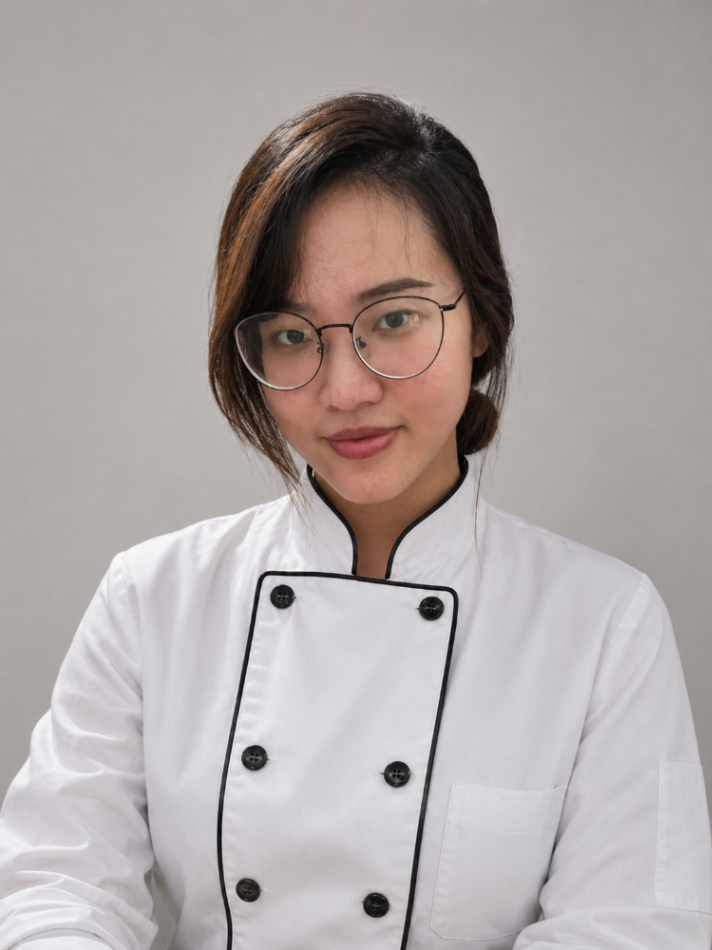
Verified Host · Indonesia · Pastry Chef, Food Stylist, Food Technologist · Le Cordon Bleu trained · 10 years
The glutinous end of the spectrum, and the technical authority for anything starch-related on this platform. Her klepon are built on glutinous rice flour — the chew is amylopectin doing what amylopectin does.
★★★★★ 4.830 reviews — the most on the platform
Verified Host · Brazil · Professional chef, 10 years across Brazil and the United States · Portuguese + English
The creamy end. Hot kitchen, pastry, bakery and high-volume hospitality across hotels, resorts and restaurants. Her risotto class is where starch release stops being a fault and becomes the technique.
More on the site: the full culinary catalogue, seafood classes, upcoming group sessions, class packages, every verified host, or request a custom experience.
Frequently asked questions
Does glutinous rice contain gluten?
No. Glutinous rice contains no gluten at all. The name describes its glue-like texture, not its chemistry. The USDA defines it as rice with 0 to 2 percent amylose, meaning its starch is almost entirely amylopectin. It is also sold as sticky rice, sweet rice or waxy rice.
Can I use arborio rice for paella?
Not really. Arborio releases surface starch into the cooking liquid, which turns paella creamy and prevents the socarrat, the caramelised bottom layer, from forming. Use bomba, Calasparra, Albufera or Redondo, which absorb heavily while keeping a firm, separate texture.
What is the difference between jasmine and basmati rice?
Both are long-grain aromatics at roughly 22 percent amylose and both carry the same aroma compound, 2-acetyl-1-pyrroline. Basmati cooks drier and elongates dramatically along its length. Jasmine cooks softer and slightly clingier. As a plain side dish they are largely interchangeable.
Should I rinse rice before cooking?
It depends on the dish. Rinse basmati and jasmine to wash off surface starch and keep grains separate. Never rinse arborio, because that surface starch becomes the sauce in a risotto. Do not rinse or stir paella rice. Rinse glutinous rice, then soak and steam it rather than boiling.
Why is my risotto not creamy?
Most likely the wrong rice or too little agitation. Risotto needs a high surface-starch variety such as arborio or carnaroli, and constant stirring to release that starch into the liquid. If you rinsed the rice first, you washed the creaminess down the sink before cooking started.
What makes bomba rice special?
It absorbs up to three times its volume in liquid while staying firm and separate, which lets it take on saffron stock without turning creamy. That combination is what makes socarrat possible. Calasparra, Albufera and Redondo are regional varieties with the same behaviour.
Why does my basmati rice break apart?
Usually because it was not soaked. Soaking basmati for around 30 minutes lets the grains hydrate evenly so they elongate cleanly instead of snapping during cooking. Rinsing first also removes loose surface starch that would otherwise make the finished rice gluey.
Is there a substitute for glutinous rice?
Not a good one. Glutinous rice is 0 to 2 percent amylose, essentially pure amylopectin, and no other common variety comes close. Substituting does not give you a slightly different version of the dish — it gives you a different dish, because the sticky, cohesive texture is the defining feature.
Related reading: fish sauce vs soy sauce, coconut milk vs coconut cream, palm vs brown vs coconut sugar, and crêpes vs pancakes vs galettes.
How we sourced this
Starch figures come from the USDA National Agricultural Library's definition of glutinous rice, Rouxbe Online Culinary School on amylose by grain length, and published reference material on grain-length categories and aroma compounds — all linked below. We did not cite rice retailers or ingredient wholesalers, several of which rank for this query and sell the product.
Class details, prices, ratings and ingredient quantities were read directly from the live P2Bridge class pages on 24 August 2026. The bomba guidance and the jasmine-or-basmati instruction are quoted from those pages. Ratings are shown with review counts — see the P2Bridge reviews page for the underlying feedback. Prices change; check before booking.
What this article does not claim. The ingredient list for the risotto class could not be retrieved, so no rice variety is attributed to it — arborio and carnaroli are named as the standard risotto rices in general, not as that recipe's specification. Amylose percentages vary by cultivar, growing conditions and harvest, so treat the ranges as typical rather than fixed. Glycemic index figures for rice differ so widely between published sources that we have left them out entirely.