












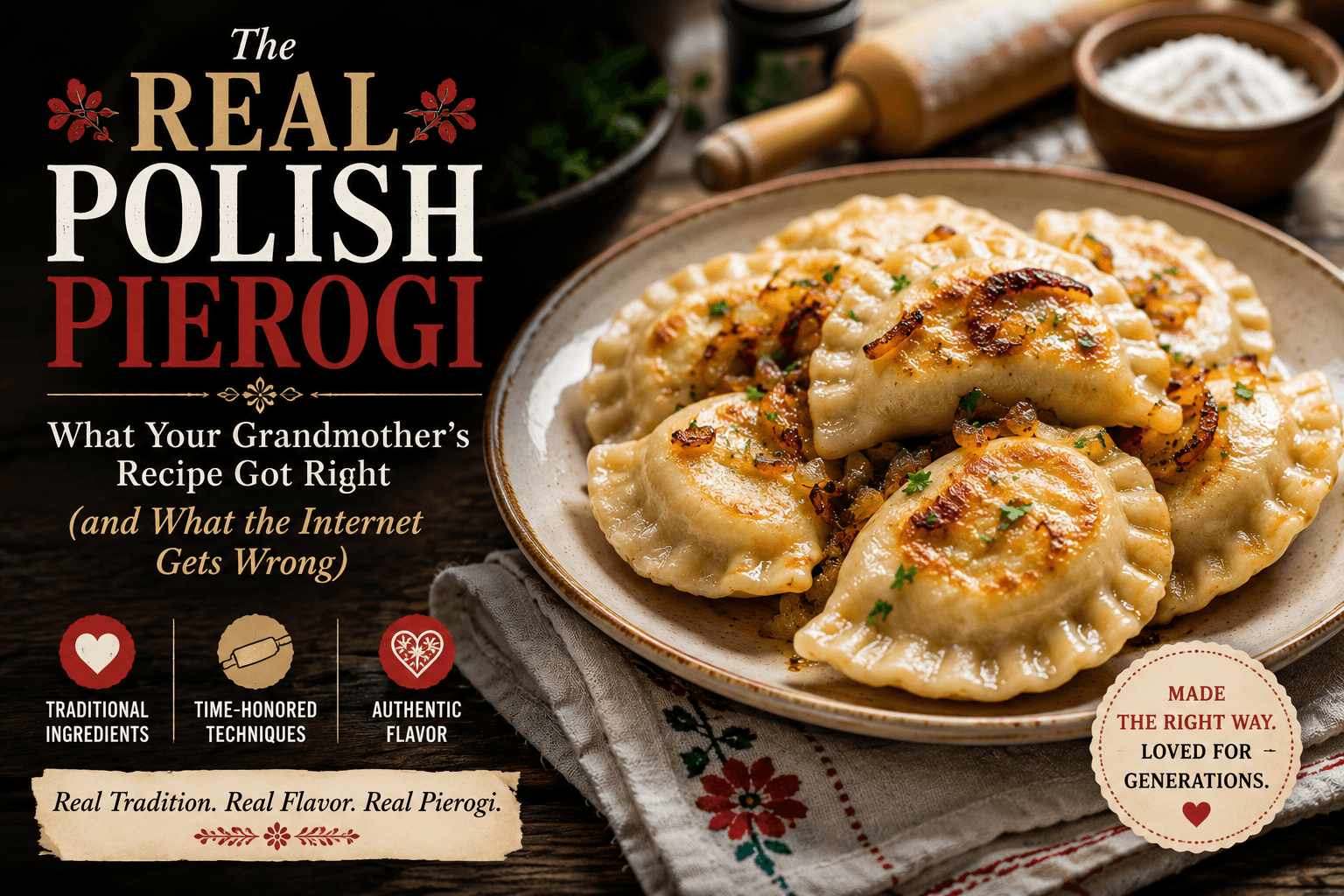
The REAL Polish Pierogi: What Your Grandmother's Recipe Got Right (and What the Internet Gets Wrong)
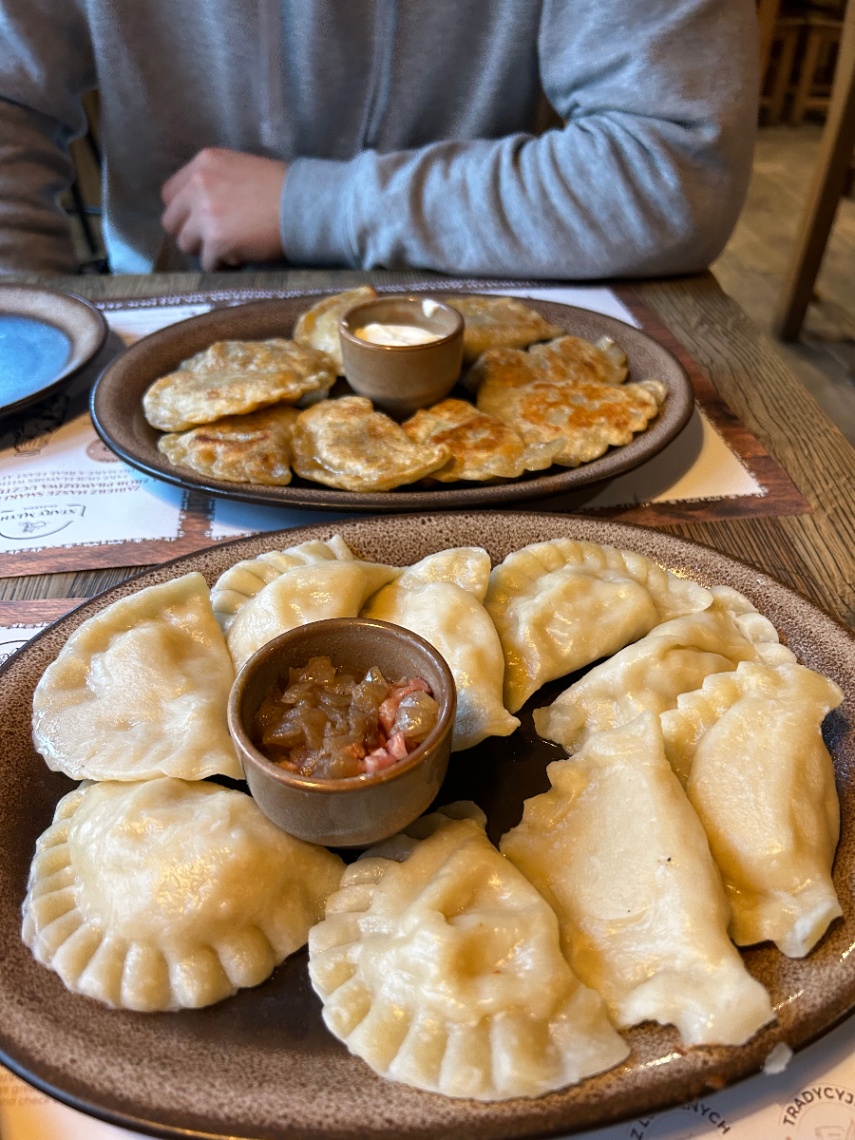
Somewhere right now, a recipe blog is telling someone to make "pierogies" with wonton wrappers. And somewhere else, a grandmother who never measured flour in her life is quietly getting it right — the way she has for fifty years.
This article is about the gap between those two kitchens. Not to be precious about it. Pierogi survived wars, migrations, and communist-era shortages precisely because home cooks adapted them. But adaptation and misinformation are different things, and the internet has plenty of the second kind.
What "real" pierogi even means
Start with the word itself, because it trips up half the English-speaking internet: pierogi is already plural. One dumpling is a pieróg. "Pierogies" is a double plural — like saying "childrens." Harmless in Pittsburgh, where the word has lived its own life for a century, but worth knowing if authenticity is the goal.
Then the bigger myth. The most famous filling — potato and cheese — is called pierogi ruskie, and no, that does not mean "Russian pierogi." The name refers to Red Ruthenia, a historical region in what is now western Ukraine and southeastern Poland. Polish cooks have been explaining this correction for years, and it matters: these dumplings are a shared Central and Eastern European inheritance with deep Polish roots, not an import. The Wikipedia entry on pierogi covers the naming history well if you want to go deeper.
Beyond that? "Real" is a family of fillings, not a single recipe. Potato and onion. Sauerkraut and wild mushroom — the Christmas Eve classic. Sweet farmer's cheese. Blueberries in summer, with sugar and cream. The constant isn't the filling. It's the dough and the hands.
What your grandmother got right
Family pierogi makers rarely explain their technique. They just do it, and the doing encodes decades of quiet corrections. Here's what that muscle memory actually knows.
She rested the dough. Twenty, thirty minutes under a bowl or a damp towel. Flour needs time to hydrate and the gluten needs time to relax — skip the rest and the dough fights you, snapping back every time you roll it. The rest is why her dough rolled thin without tearing. It wasn't magic. It was patience with a purpose.
She kept the filling dry. Watery mashed potatoes are the number one cause of blowouts in the pot. Old cooks let the boiled potatoes steam off completely before mashing, and cooked the onions until the moisture was gone. A dry filling seals; a wet one leaks steam and pops the seam.
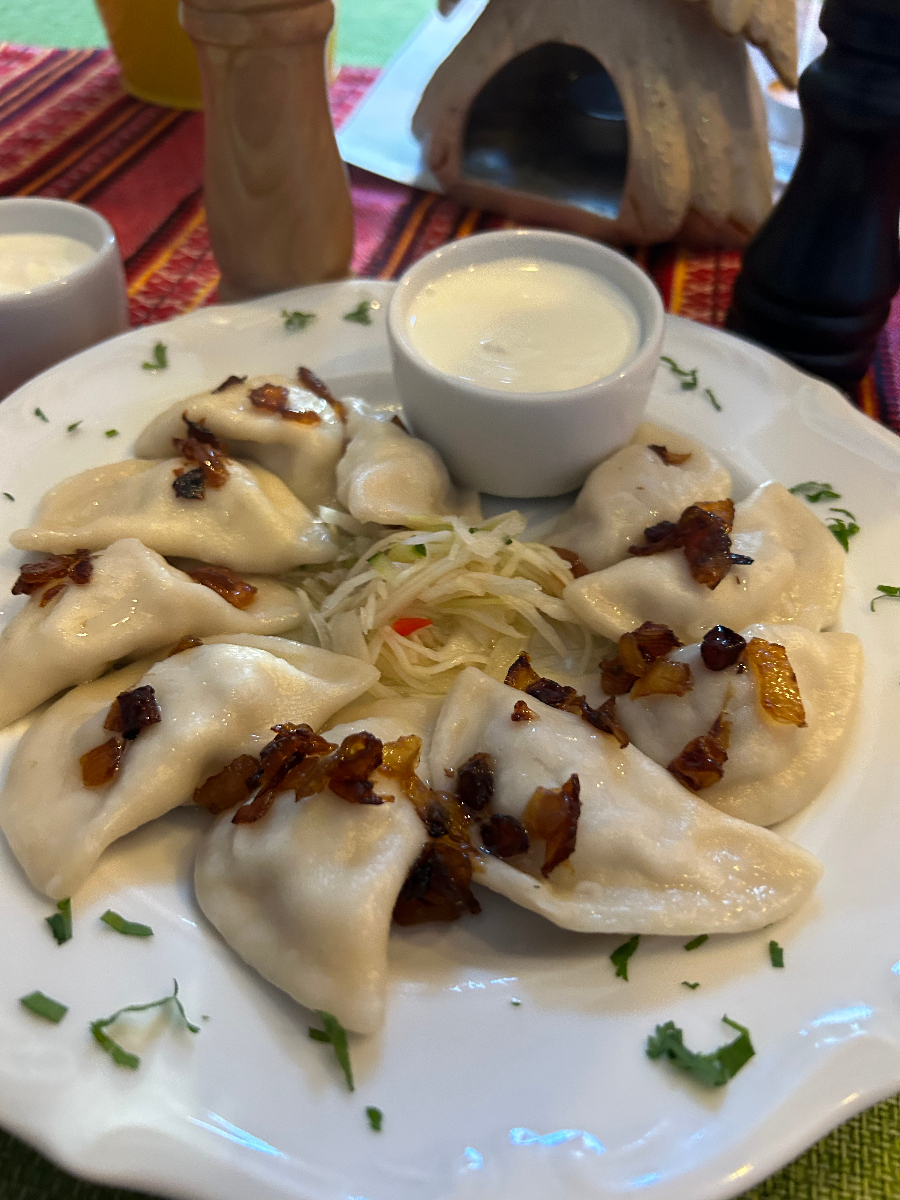
She sealed with her fingers, not a fork. Fork-crimping looks tidy in photos. But the seal — the actual thing keeping filling in and water out — comes from pinching the dough edges together firmly, pressing air out as you go. Watch experienced hands work: pinch, pinch, pinch along the crescent, maybe a decorative twist if she was feeling fancy. The fork was for the table.
She boiled gently. Pierogi go into well-salted water at a lively simmer, not a rolling boil that batters them apart. They're done shortly after they float. Then — and this is the finish most blogs skip — a quick turn in a pan of butter with fried onions. Boiled pierogi are good. Butter-finished pierogi are the memory people spend decades chasing.
What the internet keeps getting wrong
The wonton wrapper "hack." Wonton wrappers are a wheat-and-egg pasta rolled paper thin for a different dumpling tradition entirely. Pierogi dough is soft, slightly elastic, tender from fat and sometimes sour cream. Swap it out and you haven't saved time making pierogi — you've made something else and given it the wrong name.
Overstuffing. Recipe videos love a bulging dumpling. Grandmothers didn't. A modest spoonful leaves you a clean dough border to seal, and the dough-to-filling ratio is the point: you're supposed to taste both.
Deep-frying from raw. Traditional pierogi are boiled first, always. Pan-frying afterward, in butter, is the classic second act. Dropping raw pierogi in a deep fryer produces a heavy, blistered shell your babcia would not recognize.
Treating one filling as "the" authentic one. Any article declaring potato-cheese the only true pierogi is flattening a whole tradition. The savory potato-mushroom-onion combination — the one taught in the live class below — is every bit as rooted, and it happens to be naturally vegetarian.
Skipping the rest, rushing the roll. If a recipe says "roll immediately," close the tab. That writer has not fought unrested dough on a floured counter at 6 p.m. with hungry people waiting.
Learn it live: the host who teaches the real thing
Reading about dough texture only takes you so far. Knowing whether your dough is right — that's what a live cook watching your hands can tell you in ten seconds.
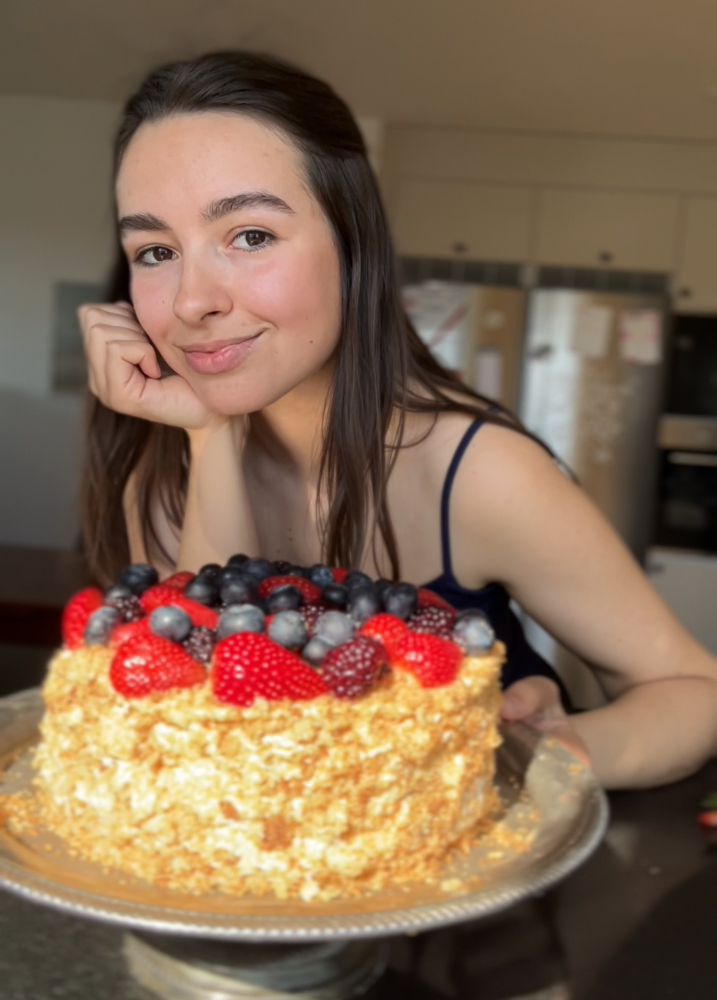
Kseniia Mishchenko — Verified Premier Host
★★★★★ 4.9
Slavic & Eastern European comfort food specialist · based in Sweden · native Russian speaker, fluent English
Kseniia grew up with this food and teaches it the way it's actually made at home: blini, pelmeni, pirozhki, borscht, Chicken Kyiv — and pierogi. Her whole teaching philosophy is the grandmother problem in reverse: not just following a recipe once, but understanding how the dough and filling should feel, so you can recreate it without her. After every session she sends a detailed written recipe.
The REAL Polish Pierogi · 90 minutes · intermediate · vegetarian (potato, mushroom & onion filling, served with sour cream)
$20/person group class · $60 private session
Prefer broader dumpling technique? Meet Shawnie

Shawnie Kelley
★★★★☆ 4.5
Chef instructor, Columbus State culinary programs · food & travel writer · 18+ years teaching
If pierogi are your gateway into dumplings generally, Shawnie teaches hand-made dumplings, fresh pasta, tamales and more, drawing on years of living and cooking across Europe. A good next step once you've mastered the pinch-and-seal.
Pierogi FAQ
Is it "pierogi" or "pierogies"?
Pierogi is already the plural — one dumpling is a pieróg. "Pierogies" is a double plural that took root in American English, especially around Pittsburgh. Everyone will understand you either way, but "pierogi" is the correct Polish form.
Do "ruskie" pierogi come from Russia?
No. Pierogi ruskie — the potato and cheese kind — are named after Red Ruthenia, a historical region spanning parts of today's western Ukraine and southeastern Poland. The name predates modern borders and has nothing to do with Russia.
Should pierogi be boiled or fried?
Boiled first, always — in well-salted water at a gentle simmer until they float. Pan-frying comes after, as an optional finish in butter with fried onions. Deep-frying raw pierogi isn't traditional and produces a heavy, blistered result.
Can I freeze homemade pierogi?
Yes, and it's the traditional way to batch them. Freeze uncooked pierogi in a single layer on a floured tray until solid, then bag them. Cook straight from frozen in simmering water — they just need an extra minute or two after floating.
What does the online pierogi class include, and what does it cost?
The REAL Polish Pierogi is a 90-minute live, interactive session with verified host Kseniia Mishchenko (rated 4.9 from 7 reviews). You'll make the dough, the potato-mushroom-onion filling, and learn to roll, fill, seal and boil properly — with a written recipe sent afterward. It costs $20 per person as a group class or $60 for a private session. Book it here.
The internet will keep publishing shortcuts. Your grandmother — or a cook like Kseniia who learned the same way — will keep being right. Ninety minutes of live instruction settles the argument for good.
Book The REAL Polish Pierogi — $20 group / $60 private Browse all live cooking classes
More food deep-dives on the P2Bridge blog, or meet all the hosts from 20+ countries.