













Coconut Milk vs Coconut Cream vs Cream of Coconut
One number sorts all three: how much water went in. Coconut milk is roughly one part coconut to one part water, about 9–15% fat. Coconut cream is four parts to one, about 19–22%. Cream of coconut is coconut cream with a great deal of sugar stirred in — a dessert product that will wreck a curry.

One number explains all three
These aren't three different ingredients. They're one ingredient at three dilutions — and in the third case, with sugar added.
All of them start the same way: grated coconut flesh steeped or simmered in water, then strained. What changes is how much water.
The Kitchn puts the ratios at roughly one part shredded coconut to one part water for coconut milk, and four parts coconut to one part water for coconut cream. Four times the coconut, same water. That's the whole difference, and everything downstream — thickness, fat, richness, how it behaves in a hot pan — follows from it.
| Coconut milk | Coconut cream | Cream of coconut | |
|---|---|---|---|
| Coconut : water | About 1:1 | About 4:1 | Cream base + sugar |
| Fat | 9–15% (canned, full fat) | 19–22% | High, plus heavy sugar |
| Sweetened? | No | No | Yes, heavily |
| Texture | Like cow's milk | Thick, spoonable | Like sweetened condensed milk |
| Use it for | Curries, stews, batters, soups | Frying curry paste, whipping, desserts | Piña coladas, desserts |
| Savoury cooking? | Yes | Yes | No. Never. |
Cream of coconut belongs nowhere near your curry
Take the sweetened one out of the running first, because it's the mistake that actually ruins dinner.
Cream of coconut is not a concentrated coconut cream. It's a confectionery product — coconut cream with a large amount of sugar blended in, thick and syrupy, somewhere near sweetened condensed milk in consistency. It exists for piña coladas and desserts, and it does that job beautifully.
Put it in a Thai curry and you get something that tastes like a mistake. Not too sweet in a fixable way — wrong in a way you can't season out, because the sugar has already gone in at dessert concentration.
I did this once, in a hurry, in a supermarket where the cans were shelved together. I salted it, added lime, added chilli, added fish sauce. It was still a pudding with beef in it. We had toast.
The test that never fails: if the tin has a picture of a cocktail on it, or the word "sweetened" anywhere, it's not going in a savoury dish.
The fourth can nobody warns you about
Three products in the title, but there's a fourth in the shop, and it causes as many failures as cream of coconut does.
Carton coconut milk — the stuff in the chilled or long-life aisle next to the oat and almond milk — is a beverage. It's heavily diluted, typically under 9% fat, usually stabilised, and sometimes sweetened or fortified with vitamins. It's built for cereal, coffee and smoothies.
Cook with it and you get thin liquid that splits the moment the pan gets hot, because there isn't enough fat to hold the emulsion together. No amount of reducing fixes it — you just get less thin liquid.
The rule is simple enough to put on a fridge magnet. If you're drinking it, buy the carton. If you're cooking with it, buy the can.
Why the labels can't be trusted
You'd think this would be settled by regulation. It isn't.
Naming varies by brand and by country. "Creamed coconut" is a different thing again — a solid block of coconut flesh and fat you grate or dissolve. Some coconut creams are labelled loosely enough to be mistaken for cream of coconut, and occasionally the reverse. The practical advice is to look for the word "unsweetened" on the label rather than trusting the product name.
Better still: turn the tin around and read the sugar line. Cream of coconut can't hide there.
This is why careful recipe writers spell it out. Shawnie Kelley's live Thai class on P2Bridge specifies "1 14-ounce can unsweetened coconut milk" for the panang curry. That word is doing real work — it's a chef writing a safeguard into her own ingredient list because she knows what people come home with.
The Thai trick: crack the cream, then add the milk
Here's the technique that separates people who cook Thai curry from people who follow Thai curry recipes.
Coconut cream and coconut milk go into the same curry at different stages, doing different jobs. Thai chef Suansilphong describes it to Food Network: the cream goes in first and is cooked until the oil separates out, the curry paste is fried in that released oil, and the thinner coconut milk goes in afterwards to give the curry body.
Cooks call that first step cracking the cream. You heat coconut cream until the emulsion breaks and clear coconut oil pools out at the edges — it looks like the pan has gone wrong, and it hasn't. That oil is the point.
Curry paste is built on aromatics whose flavour compounds are fat-soluble: lemongrass, galangal, chilli, shrimp paste, kaffir lime. Fry them in released coconut oil and those compounds dissolve into the fat and distribute through the whole dish. Stir the paste into thin liquid instead and a lot of that flavour never gets extracted at all.

Higher fat also means a more stable emulsion, which is why coconut cream takes direct heat that would split a carton beverage in seconds. Fat is what's holding the whole suspension together.
There's a neat illustration of dilution-as-a-decision in Shawnie's class notes too: tom yum becomes the creamier tom kha by swapping one cup of the broth for a can of coconut milk. Same soup, one ratio changed, different dish and a different name. We pulled that pair apart in tom yum vs panang.
Same ingredient, three completely different jobs
The clearest way to understand coconut milk is to watch what different cuisines ask it to do. Three live classes on P2Bridge, three continents, and three quantities that aren't remotely comparable.
100ml — a braising medium
Suelen Santiago's Brazilian moqueca uses 100ml of coconut milk, and that's the whole amount for the dish. It's there to loosen and enrich a seafood stew that's already carrying lime juice, tomato, peppers and red palm oil. The coconut isn't the flavour. It's the thing that makes the other flavours sit together.
Her ingredient list also calls for 30ml of red palm oil, with a documented swap — olive oil with paprika, or an annatto seasoning — if you can't find it. Worth noting that palm shows up twice in this article's orbit; we covered the sugar side in palm vs brown vs coconut sugar, and the dish itself in moqueca, the Brazilian seafood stew worth knowing.
A full can — the body of the dish
Shawnie Kelley's panang curry uses one 14-ounce can, unsweetened. Fourteen ounces against Suelen's 100ml, in a dish for roughly the same number of people. Here the coconut milk isn't enriching the sauce — it is the sauce. Everything else is seasoning suspended in it.

In the batter — standing in for dairy
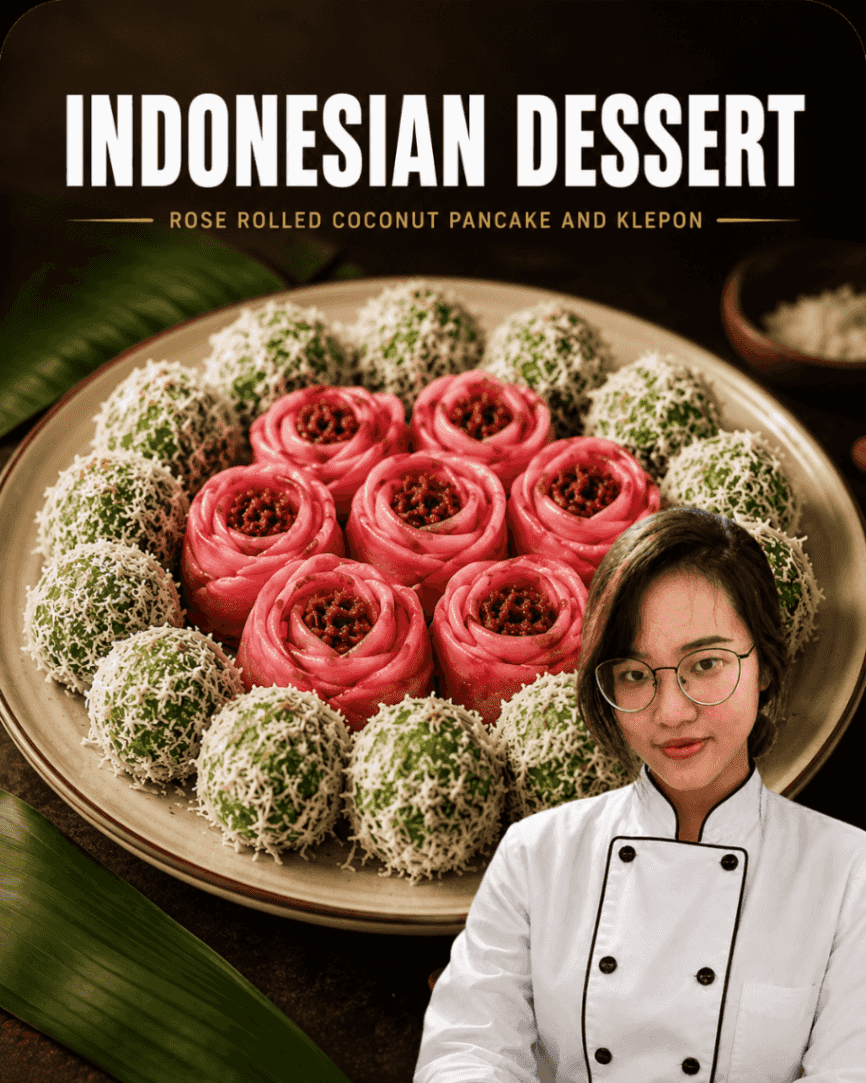
Maria Angeline R's dadar gulung batter uses coconut milk exactly where a French crêpe recipe would use dairy milk. Flour, egg, coconut milk, water. Same ratio, same technique, different liquid — which is the thing that makes the crêpe a formula rather than a nationality. We went into that in crêpes vs pancakes vs galettes.

Braising medium, sauce base, dairy substitute. If you only ever meet coconut milk in one of those roles you end up with a distorted idea of what the ingredient is for — which is roughly what's happened to it in Western kitchens, where it mostly turns up as "the thing you put in curry."
Making one from another
You rarely need to buy both. Two conversions cover almost everything.
Coconut milk to coconut cream. Put a can of full-fat coconut milk in the fridge overnight. The fat rises and firms into a solid plug at the top — America's Test Kitchen describes exactly this, the fat separating and rising where it can be siphoned off. Open the can without shaking it, spoon off the solid layer, and that's coconut cream. It's also what you whip.
Coconut cream to coconut milk. Roughly four tablespoons of coconut cream whisked into three-quarters of a cup of warm water. You're just putting the water back.
One thing that catches people, and it isn't a fault in your can: many canned coconut milks contain guar gum as a stabiliser, and its entire job is to stop the separation you're trying to cause. If your can comes out of the fridge uniformly thick with no distinct cream layer, that's the gum working as designed. Check the ingredients — if you want to skim cream, buy a can whose list reads coconut, water, and nothing else.
The substitution table
| Swap | How | What to expect |
|---|---|---|
| Cream → milk | 4 tbsp cream + ¾ cup warm water | Works well. Whisk properly or it stays lumpy |
| Milk → cream | Chill the can overnight, skim the solid top layer | Works well — unless the can contains guar gum, which blocks separation |
| Milk → cream (in a hurry) | Simmer coconut milk to reduce it | Thickens, but concentrates flavour too. Watch it doesn't split |
| Cream → milk in a curry | Use cream, add water or stock to loosen | Richer than intended, which is rarely a complaint |
| Carton → canned | Don't | Under 9% fat. Splits under heat, adds no body |
| Cream of coconut → anything savoury | Don't | Heavily sweetened. Unrecoverable |
| Coconut cream → cream of coconut | Add sugar and dissolve | Fine for a cocktail. Won't match commercial thickness |
Dairy going the other way is worth a line too. Coconut milk substitutes for dairy milk in most non-baking applications, but it carries far more fat, so in baked goods a straight swap gives you a denser crumb than you wanted.
Learn it live with a chef
Reading about cracking coconut cream and watching it happen are different experiences. The moment the oil breaks out looks, the first time, exactly like a pan going wrong — which is why most people pull it off the heat a minute too early.

★★★★★ 4.830 reviews — the most on the platform
Verified Host · Brazil · Professional chef, 10 years across Brazil and the United States · Portuguese + English
Hot kitchen, pastry, bakery and high-volume hospitality — hotels, resorts, restaurants and private consulting, with influences from New Orleans, Nashville and the Northeast of Brazil. Her moqueca is coconut milk used with restraint: 100ml, doing structural work rather than dominating.
Rich & Flavorful Brazilian Moqueca · Tex-Mex Fish & Shrimp Taco

★★★★★ 5.03 reviews · 12 experiences
Cuisine Specialist · United States · Chef Instructor, food & travel writer · 18+ years, five published books
Leads culinary programs for Columbus State in Ohio. Coconut milk as the body of the dish — a full unsweetened can in the panang curry, and layered through the tom yum. Her notes also cover turning tom yum into tom kha by changing one ratio.

★★★★★ 5.07 reviews · 6 experiences
Verified Host · Indonesia · Pastry Chef, Food Stylist, Food Technologist · Le Cordon Bleu trained · 10 years
Coconut milk as a dairy replacement, in a batter rather than a pan. For questions about fat percentages and why emulsions hold or break, a food technologist is the most relevant credential on this platform.
More on the site: seafood classes, dessert classes, the full culinary catalogue, upcoming group sessions, class packages, and every verified host. Looking for something we don't run yet? Request a custom experience.
Frequently asked questions
What is the difference between coconut milk and coconut cream?
The amount of water. Coconut milk is roughly one part grated coconut to one part water and runs about 9 to 15 percent fat. Coconut cream uses around four parts coconut to one part water and reaches 19 to 22 percent fat. Same process, different dilution.
Can I use cream of coconut instead of coconut cream?
Not in savoury cooking. Cream of coconut is coconut cream with a large amount of sugar added, with a consistency close to sweetened condensed milk. It is made for cocktails and desserts. In a curry or stew the sweetness cannot be seasoned out afterwards.
Can I use carton coconut milk for cooking?
It is a poor substitute. Carton coconut milk is a beverage, typically under 9 percent fat, often stabilised and sometimes sweetened. There is not enough fat to hold the emulsion together under heat, so it thins and splits. For any cooking application, use canned coconut milk.
How do I make coconut cream from coconut milk?
Refrigerate a can of full-fat coconut milk overnight. The fat rises and sets into a firm layer at the top, which you spoon off without shaking the can. That layer is coconut cream. If your can contains guar gum as a stabiliser it may not separate, since preventing that is exactly what the gum does.
Why does my coconut milk split when I heat it?
Usually because the fat content is too low to hold the emulsion, which is common with carton or lite coconut milk. In Thai cooking, splitting coconut cream is deliberate — it is called cracking, and the released oil is used to fry the curry paste. Unwanted splitting is a fat problem.
What does "cracking" coconut cream mean?
Heating coconut cream until the emulsion breaks and clear coconut oil separates out. Thai cooks then fry the curry paste in that released oil, which extracts the fat-soluble aromatics from lemongrass, galangal and chilli. Thinner coconut milk is added afterwards to give the curry body.
Is creamed coconut the same as coconut cream?
No. Creamed coconut is a solid block of coconut flesh and fat that you grate or dissolve in hot water. Coconut cream is a pourable liquid sold in cans or cartons. Names vary between brands and countries, which is why checking for the word unsweetened is more reliable than trusting the product name.
How much coconut milk should a recipe use?
It depends entirely on the role it plays. A Brazilian moqueca uses around 100ml to enrich a stew that already has other liquids. A Thai panang curry uses a full 14-ounce can, because there the coconut milk is the sauce. In a batter it simply replaces the dairy milk one for one.
How we sourced this
Ratios, fat percentages and technique come from America's Test Kitchen, Food Network (quoting a Thai chef on the cracking method), The Kitchn and The Healthy, all linked below. We deliberately did not cite retailers or wholesalers selling coconut products, several of which rank for this query.
Class details, prices, ratings and ingredient quantities were read directly from the live P2Bridge class pages on 24 August 2026. Every quantity attributed to a host in this article appears in that class's published ingredient list. Ratings are shown with review counts — see the P2Bridge reviews page for the underlying feedback. Prices change; check the class page before booking.
What this article does not claim. Fat percentages vary between brands and countries, so treat the ranges as typical rather than universal. We have not stated the coconut content of classes whose ingredient lists we could not read.