







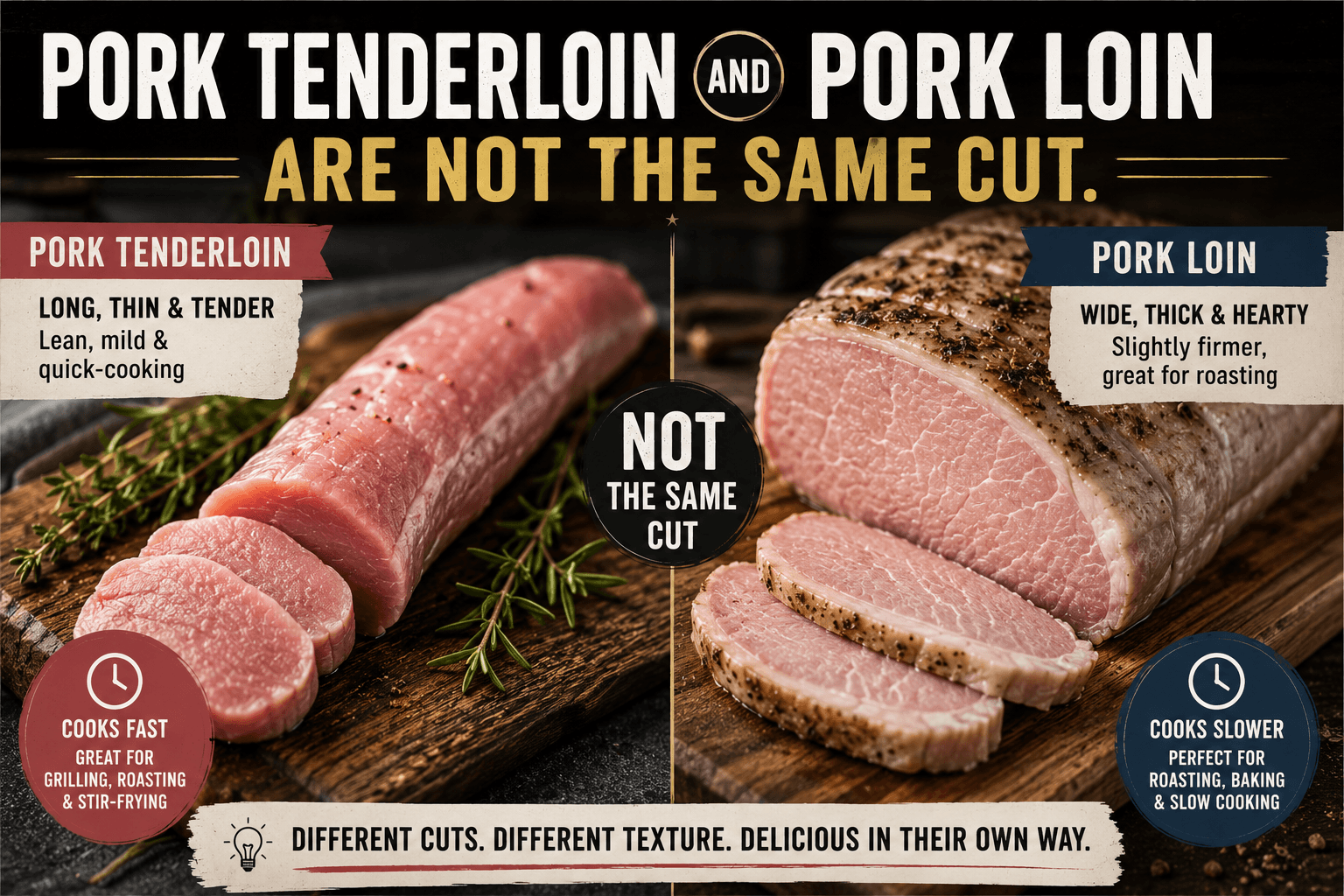
Pork tenderloin and pork loin are not the same cut
They sit next to each other in the case, their names differ by one word, and they are anatomically different muscles that did completely different jobs. Swap the recipes and you'll ruin dinner in one of two very predictable ways.
The short answer
Tenderloin is the psoas major — a small postural muscle under the spine that barely moves. Long, thin, 1–2 lb, extremely lean, the most tender cut of pork. Cooks in 20–30 minutes.
Loin is the longissimus dorsi — the working back muscle above the ribs. Wide, thick, 4–5 lb, with a fat cap. A roast that takes an hour or more.
Both are safe at 145°F with a three-minute rest. They just get there at wildly different times, which is exactly why the recipes don't swap.
Two muscles, two jobs
This isn't a naming quirk or a marketing distinction. They are different muscles from different parts of the animal, and everything else follows from what each one did while the pig was alive.
The tenderloin is the psoas major. It lies underneath the backbone, tucked beneath the loin, running along the lumbar vertebrae. Its job is postural — it's an internal stabiliser, not a mover. It does almost nothing.
A muscle that does almost nothing develops almost no connective tissue, keeps its fibres small, and carries very little marbling. That is the entire reason the tenderloin is the most tender cut of pork by a wide margin. Nothing was ever asked of it.
The loin is the longissimus dorsi — the "loin eye" — running along the back between the backfat and the ribs. It works. It holds the animal's frame and moves with it.
A working muscle is firmer, carries more fat, and tastes more of something. That's not a defect. It's why a loin roast has flavour a tenderloin can't match, and why it needs a different approach to get there.
Two per pig, and a specification to prove it
USDA's meat purchase specifications treat the tenderloin as a distinct item — number 415 — removed intact from the bone-in loin, item 410. There is one tenderloin per side of the carcass, two per animal.
Which explains the price. A whole pig yields two tenderloins totalling a few pounds, against a great deal of loin.
Side by side
| Tenderloin | Loin | |
|---|---|---|
| Muscle | Psoas major | Longissimus dorsi |
| Position | Under the spine, beneath the loin | Along the back, above the ribs |
| Shape | Long, narrow cylinder tapering to a tail | Wide, thick, rectangular |
| Size | 12–14 in long, 2–3 in across, 1–2 lb per pack | 4–5 lb boneless roast, often larger |
| Fat | Almost none. No marbling. | Fat cap on top, some marbling |
| Tenderness | The most tender cut of pork | Firm but not tough |
| Method | Fast, high heat — sear and roast | Sear, then low and slow |
| Time | 20–30 minutes | An hour or more |
Nothing in that table is a small difference. Two of them — the weight and the cooking time — differ by a factor of three or four.

Telling them apart at the counter
Ignore the label first and look at the meat. Four checks, in order of reliability.
- Weight. The single fastest test. Under 2 lb, it's a tenderloin. Over 3 lb, it's a loin. There's very little in between.
- Shape. A tenderloin is a long narrow cylinder that tapers to a thin tail at one end. A loin is broad and rectangular with a fairly even cross-section.
- Fat. A loin has a visible white fat cap along one side. A tenderloin has essentially none — just a bit of silvery membrane.
- Price per pound. Tenderloin costs noticeably more, because there are only two per animal.
Then read the label — and read it properly. "Pork loin" and "pork tenderloin" differ by one word, and that word changes your dinner by about forty minutes.
The two ways this goes wrong
Loin cooked as tenderloin: you follow a 25-minute recipe on a four-pound roast and serve pork that's raw in the middle. Recoverable, but the meal is late and the sear is wasted.
Tenderloin cooked as loin: you follow an hour-long roast recipe on a one-pound cut. Not recoverable. Lean meat with no marbling has nothing to fall back on once it's overcooked — it goes from juicy to dry with nothing in between.
Neither is a skill failure. Both are identification failures, and the supermarket labelling doesn't help.
Silverskin: the tenderloin's one chore
Run your hand along the top of a tenderloin and you'll feel a thin, pearlescent membrane. That's silverskin, and it needs to come off before cooking.
It does not dissolve. Unlike the collagen in a shoulder, which melts into gelatin over hours, silverskin is elastic connective tissue that simply contracts when heated. Leave it on and it tightens as the meat cooks, curling the tenderloin into a banana and leaving a chewy strip that nobody enjoys.
Removing it: slide the tip of a thin sharp knife under one end to lift a small flap. Grip that flap, angle the blade slightly upward — away from the meat — and push it along the length in short strokes. Aim to take the membrane and nothing else. It takes about a minute and you'll waste a little meat the first few times.
The other consequence of that leanness: marinades work unusually well on tenderloin. With almost no intramuscular fat to carry flavour, surface seasoning alone leaves the interior plain. A few hours in a marinade — or overnight — makes a genuine difference in a way it doesn't on a fattier cut.
The fat cap: the loin's advantage
The loin's fat cap is the opposite situation — not a chore, an asset.
Leave it on. During a long roast it renders slowly, basting the meat from above and protecting it from drying. Score it in a diamond pattern if you like, which helps it render evenly and crisp, but don't trim it off before cooking. Trim afterwards if you'd rather not eat it.
That fat cap is a large part of why a loin can survive an hour in the oven and a tenderloin cannot. One has a built-in buffer. The other has nothing.
Fast and hot vs sear and settle
Tenderloin
Get a heavy pan properly hot, sear all sides to a deep brown, then finish in a hot oven. Total time from cold pan to rested meat is usually 25 to 30 minutes, and the oven portion may be as little as ten.
Because it's uniform in thickness apart from the tail, it cooks evenly — which is a genuine advantage, as long as you're watching. Tuck the thin tail underneath and secure it if you want the whole thing done at once.
Loin
Sear it too — that part doesn't change — then drop the heat right down and let it roast slowly, fat cap up. An hour and upward depending on weight, and low temperatures beat high ones here: gentler heat gives the interior time to come up without the outer inch overshooting.
The loin also takes well to a slow cooker, which the tenderloin absolutely does not.
Learn the Tenderloin Live
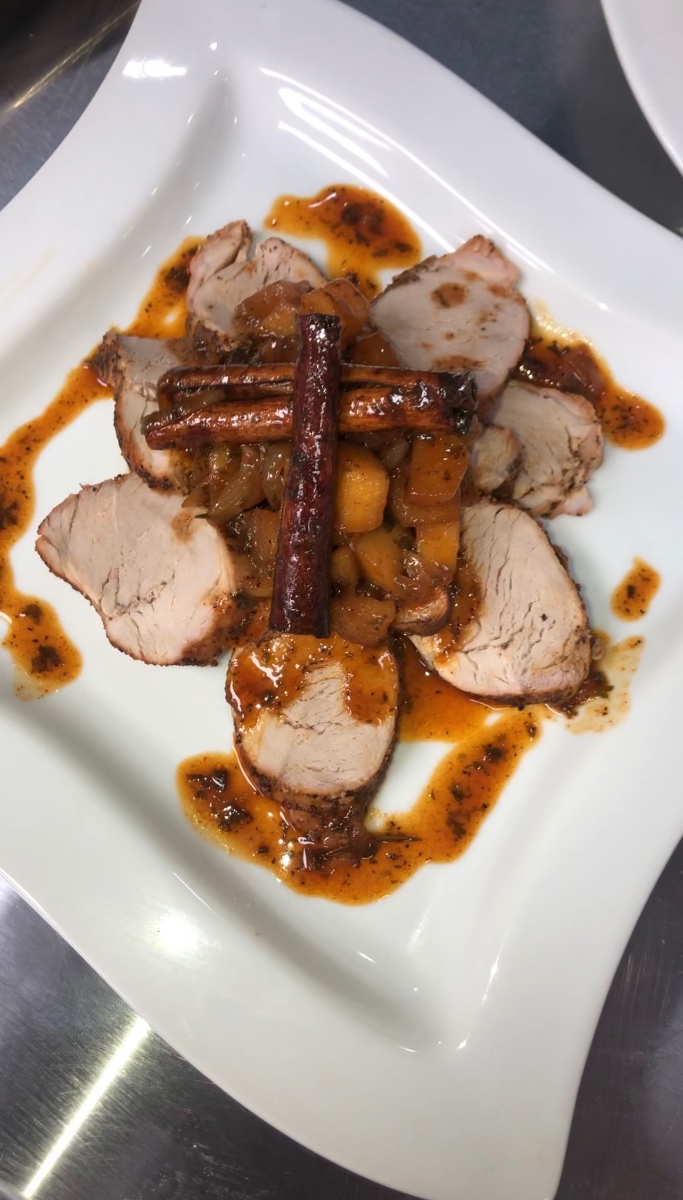
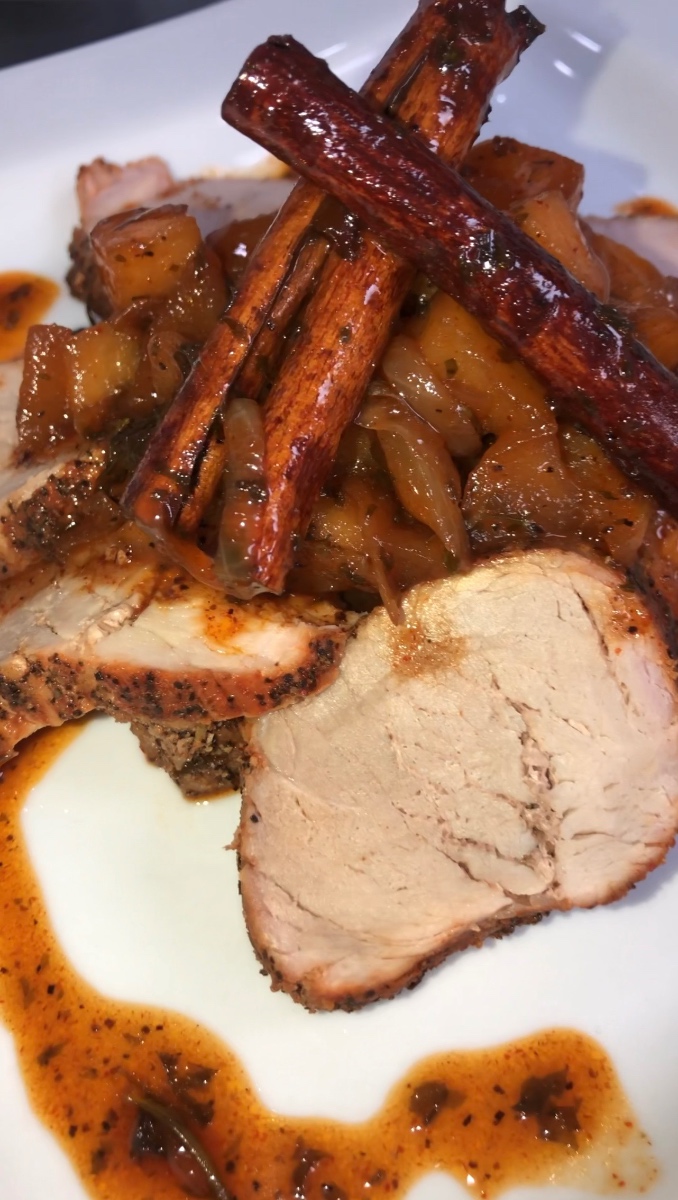
Mackaeda Mc Kenzie's Juicy Pork Tenderloin with Spiced Rum & Apple Reduction runs 60 minutes, beginner level — $30 in a group or $60 private. Verified Premier Host, rated 4.9★ from 14 reviews.
Book Pork Tenderloin — $30 group All pork classesSame 145°F, very different clocks
Here's the part that trips people who know the temperature rule but not the cuts.
Both are whole cuts, so both are governed by the same USDA standard: 145°F with a three-minute rest. The number is identical. The time to reach it is not remotely.
Which makes a thermometer more useful than a timer for both, and essential for the tenderloin — a cut that lean can move from 140°F to 160°F in a couple of minutes, and there's no marbling to disguise the damage.
And then there's minced pork
Worth adding, because it's a third category with a different rule entirely.
Once pork is ground, the cut it came from stops mattering and the safe temperature changes to 160°F, with no rest required. Grinding takes bacteria that lived only on the surface and distributes them through the whole mass, so all of it has to reach temperature. It's the same reason a burger and a steak are treated differently.
So: three forms of pork, three different jobs. Tenderloin fast and lean, loin slow with a fat cap, mince at a higher temperature regardless of origin.
The Third Form, Taught Live
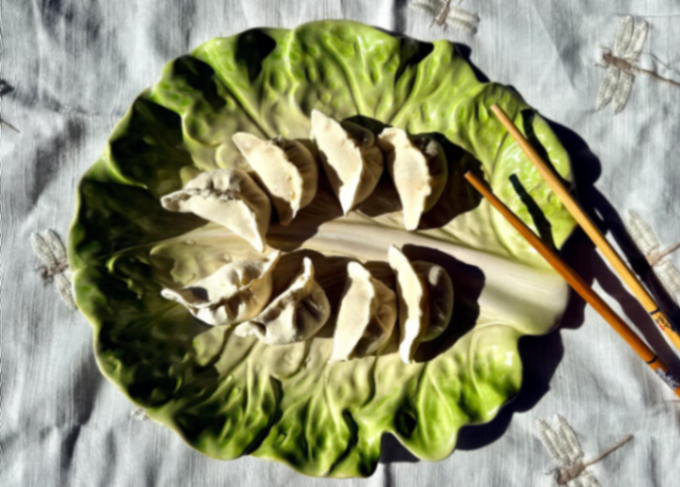
Denise Fan's Pork & Cabbage Pot Stickers is a minced-pork class — 60 minutes, intermediate, $50 group or $60 private. Rated 5.0★ from 3 reviews. Verified Host, South Africa, 10 years' experience.
Book Pot Stickers — $50 group Denise's profileThe other names you'll see
The labelling gets worse before it gets better.
- Pork fillet — British for tenderloin. If you're following a UK recipe, this is the small cut, not the roast.
- Boneless pork loin roast — the loin, bones removed. The most common supermarket form.
- Rack of pork or crown roast — the loin with the rib bones left on and frenched. Same muscle, dramatic presentation.
- Loin chops — the loin, cut across into steaks. Same cooking logic as the roast but far faster.
- Medallions — the tenderloin, cut across into rounds. Minutes per side.
- Sirloin roast — from the hip end. Related, but tougher and not a clean substitute for either.
The useful rule underneath all of it: work out which muscle you're holding, then decide how to cook it. The name on the sticker is a hint, not an instruction.
Learning it live
Cut identification is a genuinely awkward thing to learn from text — including this article. You can read the description of a tapering cylinder and still stand at the counter unsure. Watching someone handle the actual meat, and being able to ask "is this the right one," short-circuits a lot of that.
One honest note: P2Bridge currently has a pork tenderloin class but no pork loin class. That's the cut most people ruin, so it's arguably the more useful of the two to learn — but it does mean the classes below sit on one side of this comparison.

Juicy Pork Tenderloin with Spiced Rum & Apple Reduction
★★★★★ 4.9 (14 Reviews)The lean cut, taught with a sauce — which is the right pairing, since a tenderloin has no marbling of its own and borrows richness from what's around it. Beginner level, sixty minutes, and the reduction gets built while the meat rests.
Pork and Cabbage Pot Stickers with Dipping Sauce
★★★★★ 5.0 (3 Reviews)Where the cut stops mattering and the grind takes over. Also the one form of pork where you have no visual cue at all — the filling is sealed inside dough, so the timing has to be right rather than judged.

Thai Classics: Tom Yum & Panang Curry Beef
★★★★★ 5.0Beef has the identical confusion built in: beef tenderloin is also the psoas major, and striploin is also the longissimus dorsi. Learn to read the cuts on one animal and you can read them on another — the anatomy doesn't change, only the label does.

More reading: our guide to shrimp and grits covers another dish where knowing the ingredient decides the method. Browse the culinary category, pork classes, the host directory, private sessions, group classes, current offers, member reviews, or the blog. Teams can cook together via P2Bridge for Teams, and you can become a host.
Questions people ask
Are pork loin and pork tenderloin the same thing?
No. They're different muscles. The tenderloin is the psoas major, a small postural muscle under the spine weighing 1–2 lb. The loin is the longissimus dorsi, the working back muscle above the ribs, sold as a 4–5 lb roast. They differ in size, fat, tenderness and cooking time, and they're not substitutable in recipes.
How can I tell them apart at the shop?
Weight is the fastest test — under 2 lb is a tenderloin, over 3 lb is a loin. Then shape: a tenderloin is a long narrow cylinder tapering to a thin tail, while a loin is broad and rectangular. A loin also has a visible white fat cap; a tenderloin has essentially none. Tenderloin costs more per pound, since there are only two per pig.
Can I substitute one for the other in a recipe?
Not without adjusting substantially. A tenderloin cooked on a loin's timetable will be dry and unrecoverable — it has no marbling to fall back on. A loin cooked on a tenderloin's timetable will be raw in the middle. If you must swap, ignore the stated time entirely and cook to 145°F on a thermometer.
What is silverskin and do I have to remove it?
It's the thin pearlescent membrane on top of a pork tenderloin, and yes. Unlike the collagen in a shoulder, it doesn't dissolve — it contracts with heat, curling the meat and leaving a chewy strip. Slide a thin knife under one end, lift a flap, then push the blade along at a slight upward angle to take the membrane without much meat.
Should I trim the fat off a pork loin?
Not before cooking. The fat cap renders during the roast, bastes the meat and protects it from drying — it's a large part of why a loin survives an hour in the oven when a tenderloin can't. Score it in a diamond pattern to help it render evenly, and trim after cooking if you'd rather not eat it.
What temperature should each be cooked to?
Both are whole cuts, so both are 145°F with a three-minute rest per USDA guidance. The temperature is identical; the time to reach it is not. A tenderloin gets there in 20–30 minutes total, a loin in an hour or more. Ground pork is different again at 160°F.
Why is pork tenderloin more expensive?
Scarcity. There are only two tenderloins per pig, one per side, and they're small — typically 1–2 lb between them. A single animal yields far more loin. Combine that with its being the most tender cut of pork and the price difference follows.
What's "pork fillet" in a British recipe?
Tenderloin. British recipes use "pork fillet" for the small cut and "pork loin" for the roast, so a UK recipe calling for pork fillet wants the 1–2 lb cylinder, not the four-pound joint. Worth checking before you shop from an unfamiliar recipe.