









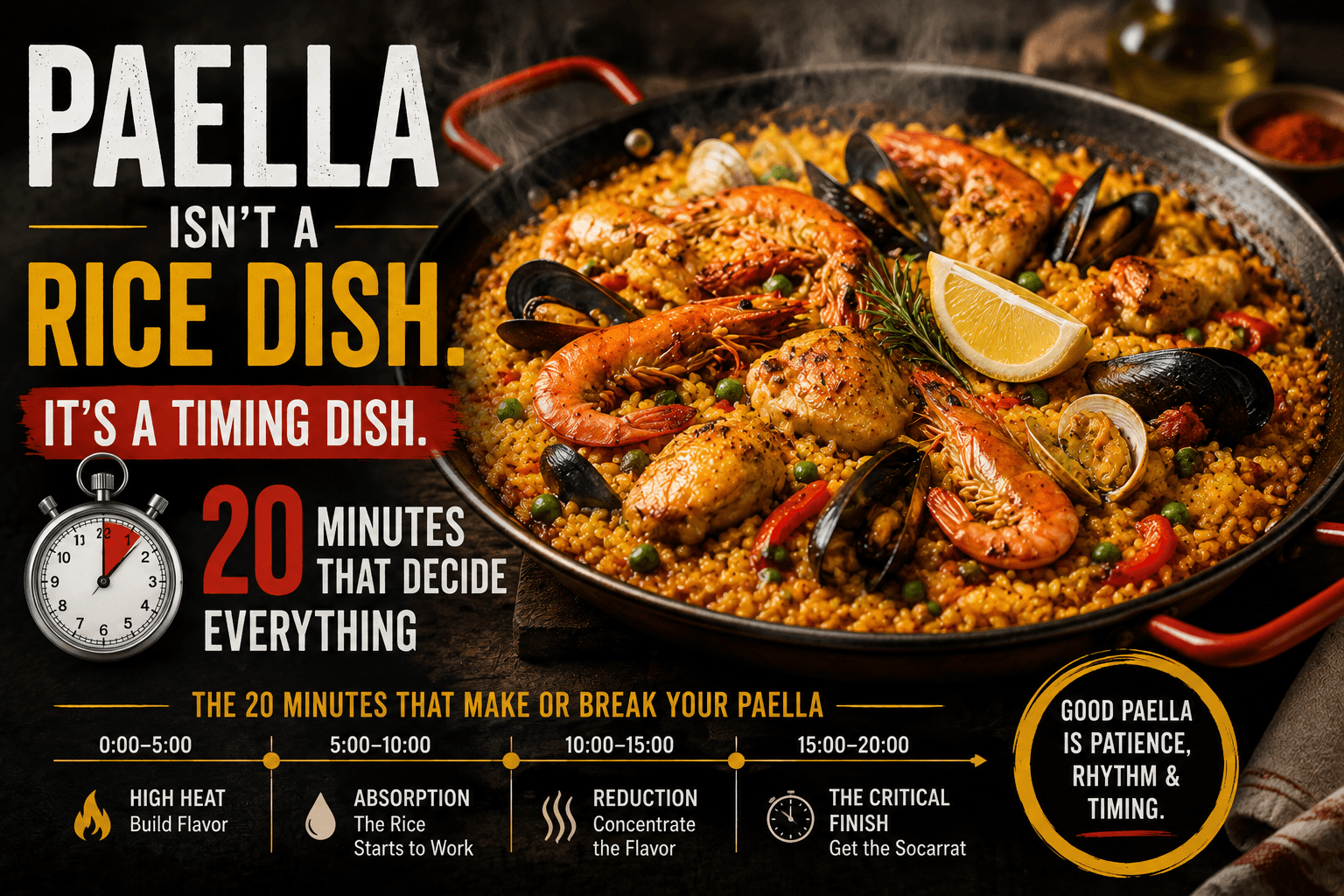
Paella Isn't a Rice Dish. It's a Timing Dish — Here's the 20 Minutes That Decide Everything
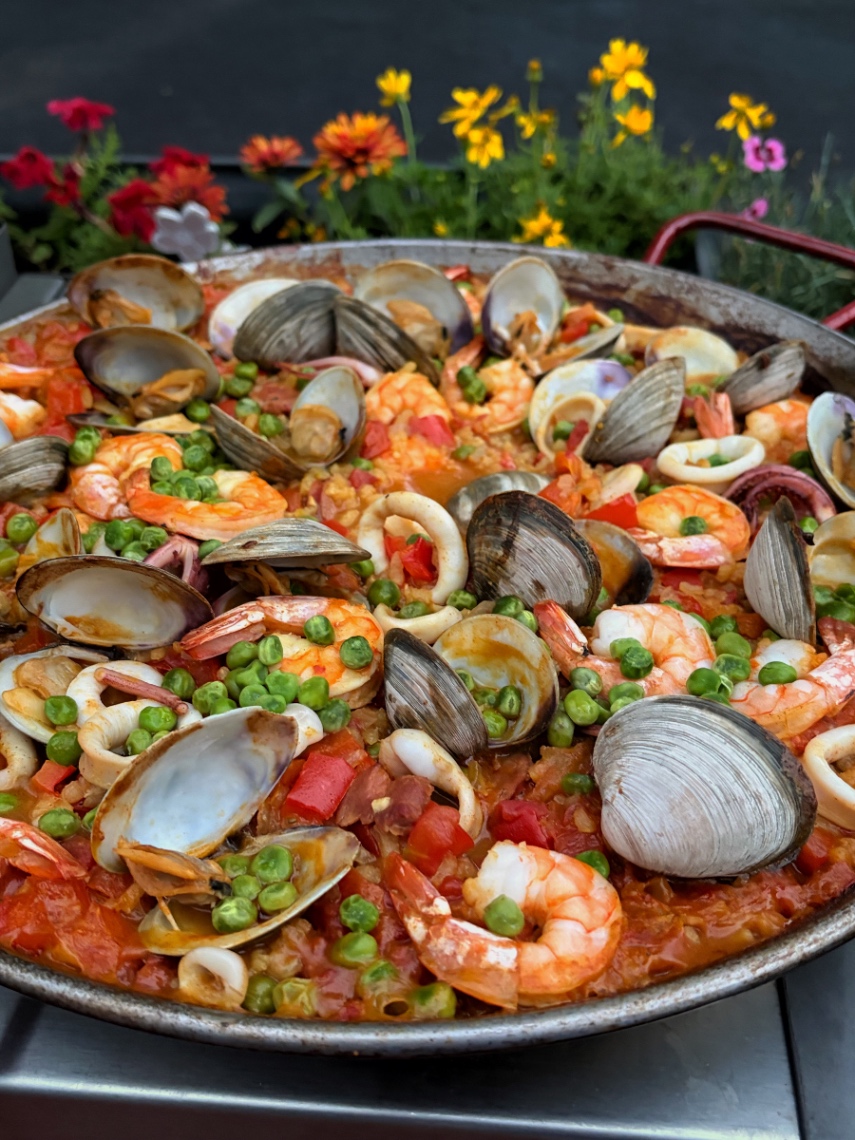
Every ruined paella dies the same death. Not in the shopping, not in the chopping — in a twenty-minute window where the cook did the one thing the dish cannot forgive.
Usually? They stirred it.
Here's the reframe that fixes everything: stop thinking of paella as a rice dish you assemble and start thinking of it as a timed sequence you commit to. Once the broth hits the pan, you're not cooking anymore. You're conducting. And the clock is running.
Why "rice dish" is the wrong mental model
The word paella doesn't refer to rice at all. It's the Valencian word for the pan itself — wide, shallow, two-handled — likely descended from the Latin patella. That etymology isn't trivia. It's the whole design philosophy: the dish is named after the vessel because the vessel's geometry is the recipe. A broad, shallow pan cooks rice in a thin layer, evaporates liquid fast, and makes possible the thing paella lovers actually chase — the socarrat, that golden, crackling layer of caramelized rice on the bottom. (The history of the dish runs deeper than most weeknight cooks suspect.)
One honest disclosure before we go further. The class this article draws on teaches paella mixta — the generous, everything-in version with chicken, chorizo and shellfish together. Valencian purists have strong feelings about chorizo in paella. Strong enough to argue about it at weddings. Paella mixta doesn't apologize for itself, and neither should you; it's the version most of the world fell in love with. Just know the debate exists, and enjoy being part of it.
Minute 0: what must already be done
The twenty minutes only work if minute zero finds you ready. By then, four things are non-negotiable.
The sofrito is built. Onion, garlic, red pepper — Spain's holy trinity — sweated slowly in olive oil, then enriched with tomato until it's a concentrated, jammy base. Rush this and the whole dish tastes shallow, no matter what happens later.
The saffron is steeping. Threads crumbled into warm stock, given time to bloom. Saffron added dry at the end colors nothing and flavors less.
The rice is right. Bomba (or Calasparra) is a short, stubby grain that drinks up to three times its volume in liquid while staying firm and separate. Arborio — the substitution every pantry wants to make — releases starch, turns creamy, and will never give you socarrat. It's not a lesser choice. It's the wrong dish.
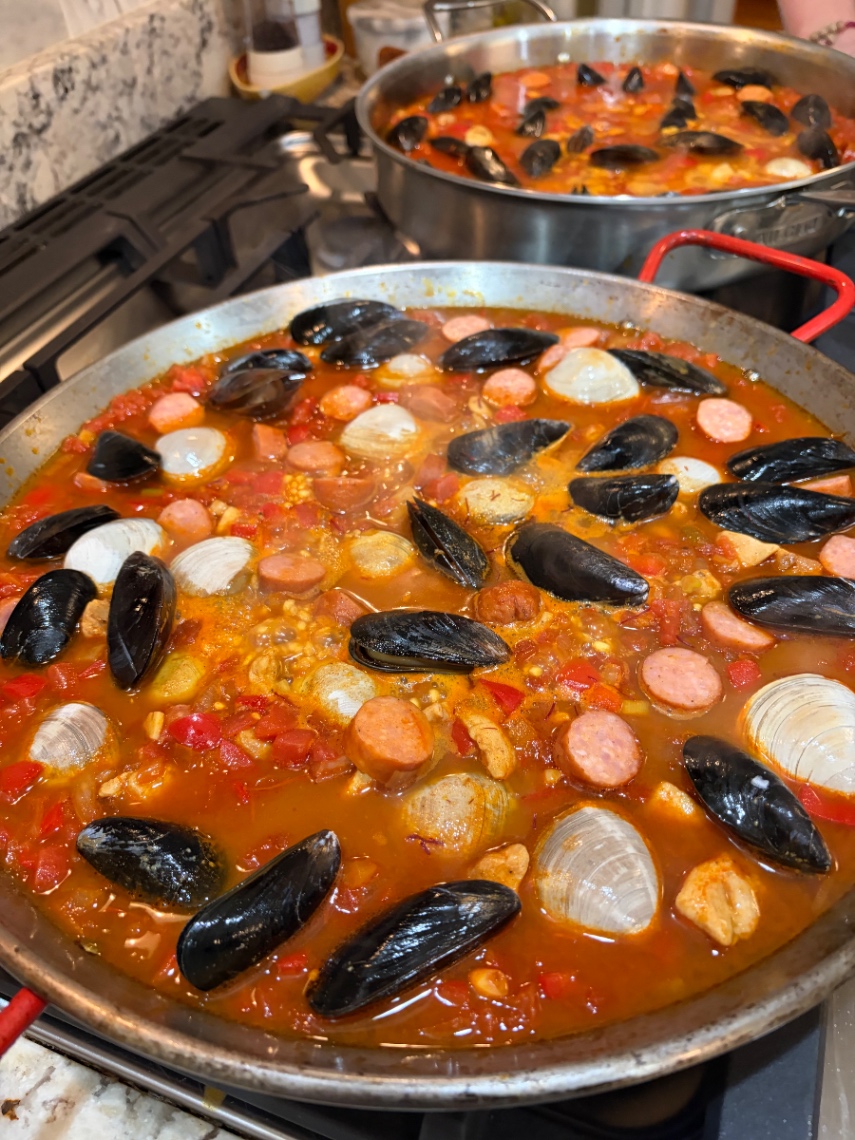
Proteins are prepped. Mussels debearded, clams rinsed of grit, chicken diced even, chorizo in rounds. Once the clock starts, there is no pausing to debeard anything.
The 20 minutes that decide everything
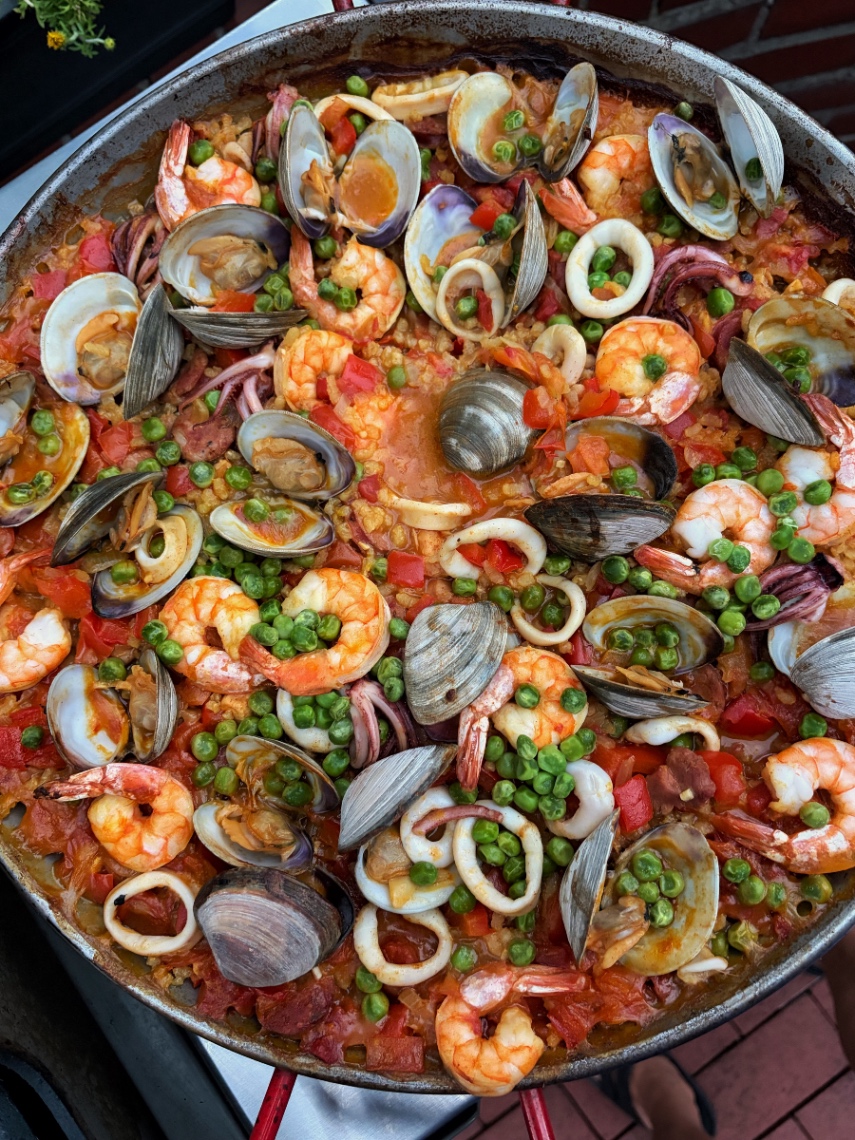
Minutes 0–2: broth in, one shake, hands off. Pour the saffron stock over the toasted rice, distribute everything evenly with one confident shake of the pan — and then stop. This is the moment paella stops being like any other rice you've cooked. From here on, stirring is sabotage: it releases starch, wrecks the texture, and murders the socarrat before it's born.
Minutes 2–12: the wide simmer. The liquid should bubble across the whole surface, not just the middle. If your burner is small, rotate the pan every few minutes. This stretch tests nothing but your nerve. The rice looks unattended. It is supposed to look unattended.
Minutes 12–16: shellfish go on, not in. Shrimp, mussels and clams get nestled into the surface — placed, not buried — so they steam open in the dish's final act instead of overcooking through the whole cook.
Minutes 16–18: listen. This is the part no written recipe can teach, and the reason live instruction beats a blog post. Near the end, the bubbling goes quiet and a new sound starts — a gentle crackle, like rain just beginning. That's the socarrat forming. Drop the heat and let it build. There's maybe a ninety-second gap between "perfect crust" and "burnt regret," and your ears find it before your nose does.
Minutes 18–20 (plus rest): walk away. Off the heat, tented with foil, five to ten minutes. The moisture redistributes, the flavors settle, the bottom sets. Then the pan goes to the center of the table — paella is served from the pan, family-style, because gathering is half the dish. If you love that one-pot-feeds-everyone spirit, it's the same instinct behind West Africa's jollof rice — a different continent chasing the same smoky bottom-of-the-pot glory.
Paella vs. risotto: opposite religions
Learn it live with a chef watching your pan
You can read about the crackle. You cannot read your own pan. That's the entire case for learning this dish live — someone with eighteen years of teaching experience looking at your heat, your liquid line, your rice, in real time.

Shawnie Kelley — Verified Host
Chef instructor leading culinary programs at Columbus State (Ohio) · food & travel writer · 18+ years teaching · cooked and lived across Europe
★★★★☆ 4.5
Shawnie's teaching runs on exactly the idea this article is built around: technique you can hear, feel and repeat, not steps you follow once. Her paella class covers the sofrito, the saffron steep, the no-stir rule and the socarrat sound cue — then finishes with a bright arugula-citrus salad with Manchego and a glass of cava, because paella is a gathering, not just a pan.
Spanish Paella Mixta and Citrus Salad · 90 minutes · beginner-friendly · chicken, chorizo & shellfish
$35 per person — group class or private session
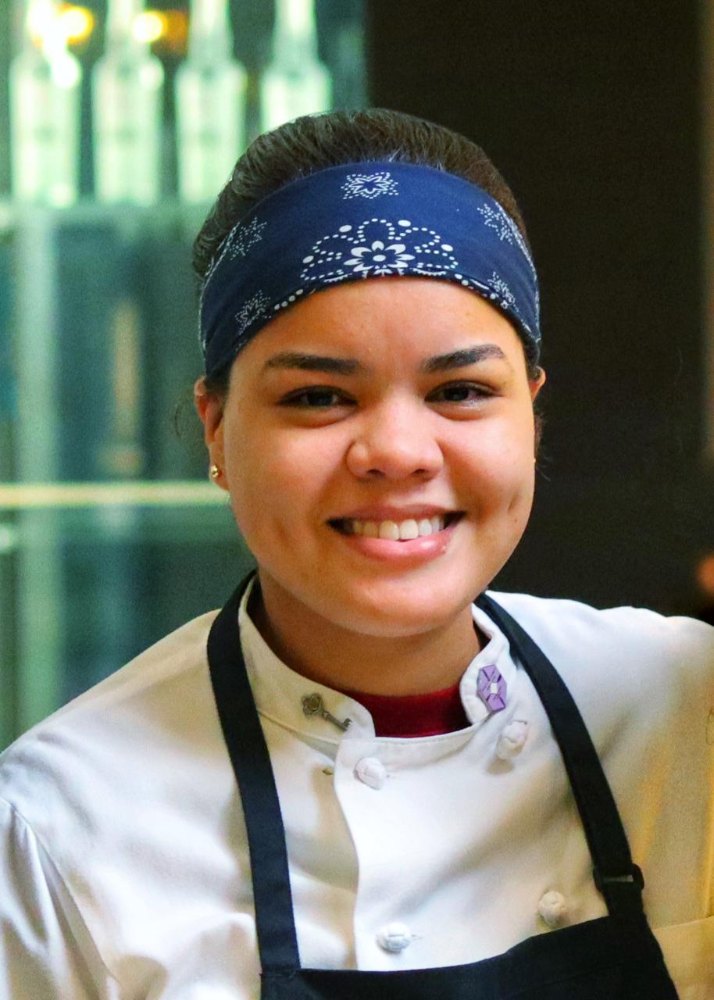
Suelen Santiago — Verified Host
★★★★★ 4.8
Professional chef · 10 years international experience across Brazil and the United States
Want the other side of the stirring argument? Suelen teaches the risotto method — the constant-motion, starch-coaxing opposite of everything above — plus seafood technique in dishes like her Brazilian moqueca (read our deep-dive on that stew).
Book the risotto class — $30 group / $60 private See Suelen's profile
Paella FAQ
What is socarrat, exactly?
Socarrat is the thin, crispy, caramelized layer of rice that forms on the bottom of the paella pan — deep, nutty, and prized as the best part of the dish. It needs a wide pan, evenly distributed rice, zero stirring after the broth goes in, and careful heat control in the final minutes. You'll hear a gentle crackling when it starts to form.
Can I use arborio or basmati rice for paella?
Not if you want real paella texture. Bomba or Calasparra rice absorbs up to three times its volume in liquid while staying firm and separate. Arborio releases starch and turns creamy — great for risotto, fatal for socarrat. Basmati stays too dry and separate to bind the dish. Bomba is worth ordering.
Do you stir paella while it cooks?
No — and this is the single biggest mistake home cooks make. Distribute the rice once when the broth goes in, then leave it alone. Stirring releases starch, ruins the texture, and prevents the socarrat from forming. Paella is the anti-risotto.
What's the difference between paella and risotto?
Opposite techniques with similar-looking grains. Risotto is stirred constantly to coax out starch and build creaminess; paella is never stirred so the grains stay distinct and the bottom crisps. One adds liquid gradually; the other adds it once and lets it evaporate on a timed clock.
What does the online paella class include, and what does it cost?
Spanish Paella Mixta and Citrus Salad is a 90-minute live, beginner-friendly session with verified host Shawnie Kelley, a chef instructor with 18+ years of teaching experience. You'll build the sofrito, steep the saffron, cook the full timed sequence — chicken, chorizo and shellfish — and finish with an arugula-citrus salad with Manchego. It costs $35 per person, for either a group class or a private session. Book it here.
The recipe was never the hard part. The twenty minutes are. Cook them once with a chef listening alongside you, and you'll own this dish for life.
Book Spanish Paella Mixta — $35 per person Browse all live cooking classes
More food deep-dives on the P2Bridge blog, or meet all the hosts from 20+ countries.